Storage for Marina del Rey and Venice Residents - Minutes Away Without the Beach-Adjacent Price
Key Takeaways
- Storage near the Marina waterfront and Abbot Kinney costs 30 to 50 percent more than facilities a short drive inland due to premium real estate.
- Lincoln Boulevard and Washington Boulevard connect Venice and Marina del Rey to affordable inland storage in 10 to 15 minutes.
- A 5x10 unit fits one-bedroom overflow plus surfboards and bikes, while a 10x10 holds a full one to two-bedroom home.
- The coastal marine layer brings humidity that rusts metal and mildews wood, so climate control protects electronics, wood, and documents.
- Use plastic bins, desiccant packs, and breathable covers to fight rust and mildew on stored coastal belongings.
- Popeye Moving & Storage Co. combines moving and storage in one trip, saving handling, time, and labor cost for Westside residents.
- Right-sizing your unit, renting in off-peak months, and downsizing over time keep monthly storage costs low.
- Check for gated access, cameras, unit alarms, flexible access hours, and month-to-month terms before choosing a facility.
In This Article
Imagine a Venice renter in a 600-square-foot bungalow off Abbot Kinney. The surfboards lean against the kitchen wall, the bikes hang over the couch, and the closet gave up months ago. When that renter finally searches for a nearby storage unit, the quote for a small space near the water lands somewhere north of what a car payment costs. The sticker shock is real, and it is one of the frequent frustrations we hear from Westside residents.
Marina del Rey condo dwellers face the same squeeze. Waterfront living looks great on paper, but square footage runs tight and beach-adjacent storage facilities charge a premium for the same zip code that makes rent so high. The good news is that a short drive inland changes the math completely.
Why Storage Costs So Much Near the Beach?
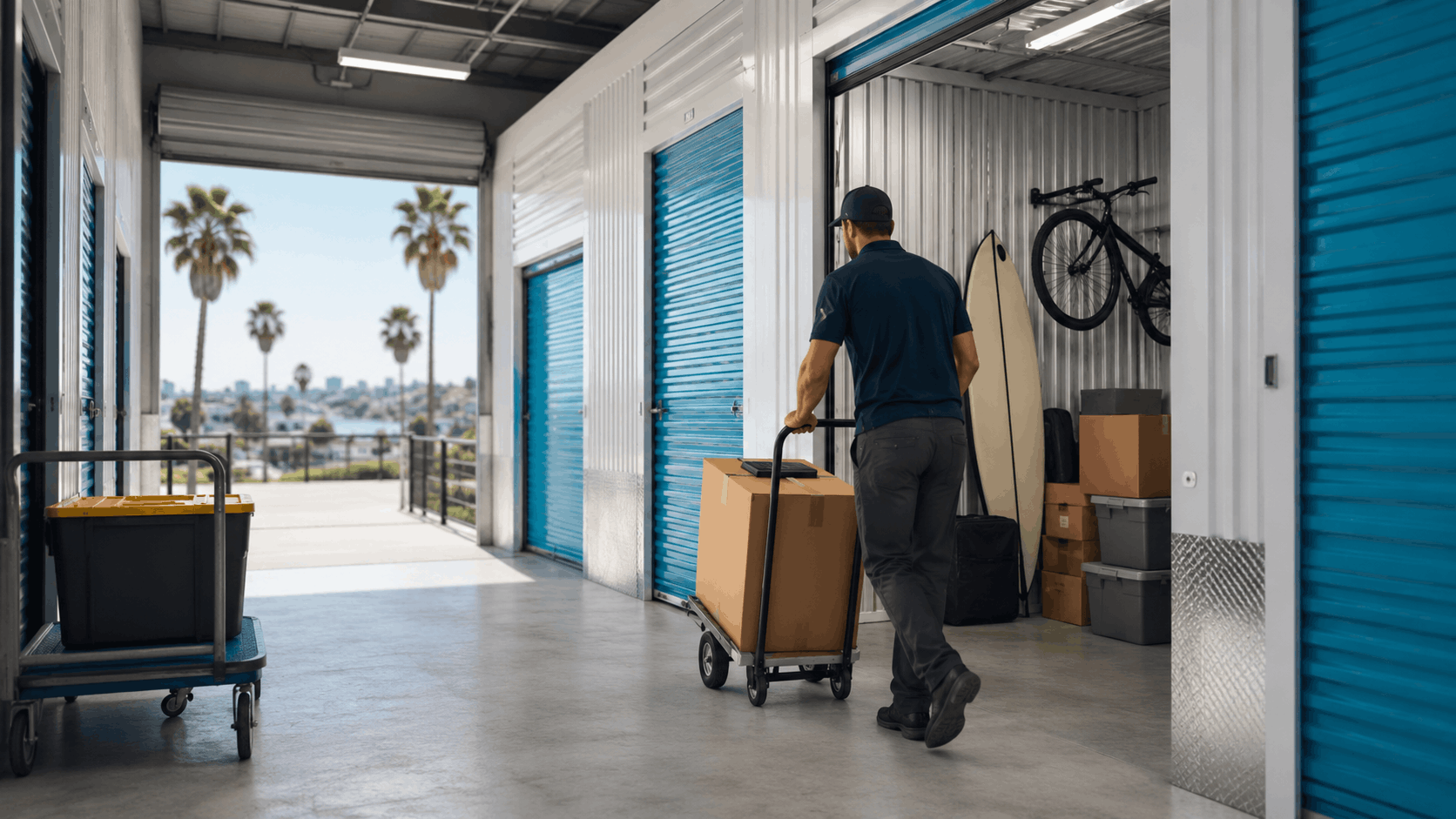
Storage cost near the water follows the same logic as everything else on the coast. Land is expensive, demand is high, and facilities pass those numbers straight to renters. Beach-adjacent pricing reflects the ground the building sits on more than the box you rent inside it.
Once residents understand what drives Marina del Rey storage rates, the choice to look a few miles east starts to feel obvious. The value gap between the waterfront and inland Los Angeles is wide, and it grows the closer a facility sits to the sand.
The Premium You Pay for a Beach Zip Code
Real estate along Abbot Kinney and the Marina harbor ranks among the priciest on the Westside. Commercial land near the waterfront trades at figures that would surprise most people, and storage operators build those costs into every monthly bill. A facility sitting three blocks from the boat slips simply pays more for its footprint than one near the 405.
Waterfront rents also climb because demand never really cools off. Restaurants, boutiques, and boat services all compete for the same limited commercial space near Fisherman's Village and Washington Boulevard. When storage operators bid against those uses, they charge more per square foot to justify holding the property.
That premium gets divided among renters. A 5x10 unit near the coast can run 30 to 50 percent higher than the same unit a short drive inland. The metal walls and roll-up door are identical, but the address carries the markup.
We have watched this pattern hold for years across the Marina and Venice. The lesson is simple: paying for a beach zip code on a storage unit rarely makes sense when the unit itself never sees the ocean view.
Small Apartments and the Space Squeeze
Venice bungalows charm buyers with their character, but many were built decades ago with tiny closets and no garages. A classic Venice cottage near the canals might offer one usable closet for an entire household. Owners and renters run out of room within the first year.
Marina condos have the opposite problem for a modern reason. Newer buildings maximize views and amenities while trimming storage down to a single hall closet and a shared parking spot. Residents there love the waterfront lifestyle but struggle to stash seasonal gear, luggage, and anything they do not use weekly.
Small apartment storage becomes the release valve for both groups. When the home cannot absorb another box, an off-site unit keeps the living space breathable. Our crews regularly help residents clear out cluttered walk-ups so the apartment feels twice as large.
The tight square footage also means people accumulate more than they realize. Beach towels, wetsuits, holiday decor, and sports equipment pile up in a compact space. A modest unit a few minutes away solves the crunch without forcing anyone to give up their belongings.
How a Short Drive Cuts the Bill
The price difference between coastal and inland facilities is dramatic once you compare real numbers. A small unit that runs $180 to $250 near the Marina waterfront often drops to $110 to $160 a few miles east toward Culver City or the 405 corridor. That gap adds up to hundreds of dollars a year.
Affordable storage does not require driving to another county. Facilities along inland stretches of Lincoln Boulevard and near the 90 freeway sit within a 10 to 15 minute drive of most Venice and Marina addresses. Residents trade a few extra minutes on the road for meaningful savings every month.
Monthly storage rates scale with unit size, so the savings grow for larger spaces. A 10x10 that costs $400 near the water might run $250 to $300 inland. For anyone storing a full apartment's worth of furniture, that difference funds a weekend trip or more.
Our team helps residents weigh drive time against cost, and the inland option wins for most people. If you want to compare rates and unit types, our storage solutions team can lay out the numbers side by side.
Get Your Free Quote
Tell us about your move. We'll be in touch soon.
Getting to Storage From Marina del Rey and Venice
Reaching an inland facility is easy once you know which streets to use. The Westside grid gives residents a handful of reliable driving routes that skip the worst congestion. The trick is choosing the right road for your starting point and time of day.
Venice storage access and Marina del Rey directions both come down to two workhorse streets: Lincoln Boulevard and Washington Boulevard. Learning how to use them saves time and frustration on every trip.
Routes From the Marina and Fisherman's Village
From the Marina harbor and Fisherman's Village, the most direct paths head inland. Drivers can pick the route that matches traffic conditions that day.
- Lincoln Boulevard north or south: This is the main artery connecting the Marina to inland facilities and the 90 freeway. It moves well outside of rush hour.
- Washington Boulevard east: Starting near Fisherman's Village, Washington runs straight into Culver City and connects to plenty of storage options along the way.
- Via Marina to Admiralty Way: Residents on the harbor side use this loop to reach Lincoln without cutting through the busiest intersections.
Each of these routes keeps drive time under 15 minutes for most inland facilities. We use them ourselves when running moves in and out of Marina del Rey, so we know which turns bog down and which stay clear.
The Washington Boulevard route works especially well for anyone hauling a loaded trailer. It has fewer sharp turns and wider lanes than the smaller streets threading through the Marina.
Getting Out of Venice Without the Traffic
Venice Beach traffic can turn a 10 minute errand into an hour of crawling. Weekend crowds pour toward the boardwalk and Abbot Kinney, clogging the streets that residents need most. Timing and route choice make all the difference.
- Avoid Abbot Kinney on weekends: The shopping strip draws heavy foot and car traffic Friday through Sunday. Use Lincoln or Venice Boulevard instead.
- Skip Windward and the boardwalk approach: Anything near Venice Beach itself jams up by late morning on warm days.
- Head east early: Venice Boulevard and Washington both flow toward inland storage and clear out before the beach crowds arrive.
Our crews plan Venice moves around these patterns constantly. A load-out that starts at 8 a.m. on a Saturday beats one that starts at noon by a wide margin.
Weekend traffic peaks during summer and any stretch of warm weather, so residents moving items in those windows should build in extra time or move on a weekday. If you would rather skip the drive entirely, our local residential moving crews handle the transport for you.
Timing Your Trips Around Local Conditions
The marine layer shapes Westside mornings more than newcomers expect. Thick fog rolls in overnight and often lingers until late morning near the water. Loading a truck in that damp air can leave boxes and furniture slightly moist before they even reach the unit.
The best times to move fall in the late morning after the fog burns off and before the afternoon beach rush. On weekdays, mid-morning through early afternoon stays calm on most Westside streets. Weekends demand an early start to beat the crowds.
Street parking rules add another layer to plan around. Many Venice and Marina blocks enforce permit zones and time limits, and moving trucks need space to load. Checking posted signs and city parking rules before a move day prevents a ticket or a towed vehicle.
We advise residents to scout their block ahead of time and note where a truck can legally sit. On tight streets, we sometimes coordinate a temporary loading spot so the crew can work without blocking traffic or drawing a citation.

Need Help in Los Angeles?
Popeye Moving & Storage serves Los Angeles and all of Los Angeles County.
Choosing the Right Unit Size for Coastal Living
Picking the correct storage unit size saves money and headaches. Rent too small and belongings will not fit. Rent too large and you pay every month for empty air. The right choice starts with an honest look at what you own.
Coastal storage tends to hold a specific mix of items: sports gear, seasonal clothing, and furniture that does not fit a compact apartment. Unit selection should match that reality rather than a generic guess.
| Unit Size | Best For | Rough Capacity |
|---|---|---|
| 5x5 | Studio extras, boxes, seasonal gear | A large closet |
| 5x10 | One-bedroom overflow, bikes, boards | A small walk-in room |
| 10x10 | Full one to two-bedroom contents | Half a garage |
| 10x20 | Full home move or remodel storage | A one-car garage |
Small Units for Studio and One-Bedroom Renters
A 5x5 unit works well for someone in a compact Venice studio who needs to clear a little space. It holds boxes, a few pieces of small furniture, and seasonal items like holiday decorations or winter clothes. Think of it as an extra closet you rent by the month.
The 5x10 unit steps up to handle one-bedroom overflow. It fits a mattress set, a dresser, several boxes, and still leaves room for bikes or a surfboard along one wall. Many Marina renters choose this size to keep their condo uncluttered.
Studio storage rarely needs anything larger unless a resident is between homes. For everyday overflow, these smaller units keep monthly costs low while freeing up real living space. We help renters test-fit their belongings on paper before committing.
The savings on a small unit inland versus the waterfront stand out most at this size. A 5x10 might cost $120 inland against $200 near the Marina, so the smaller unit is where careful shoppers see the biggest percentage difference.
Room for Surfboards, Bikes, and Beach Gear
Coastal residents own gear that eats up apartment space. Surfboard storage tops the list, since a longboard alone can run over nine feet and refuses to fit in a hall closet. A storage unit gives boards a home during flat seasons or the colder months.
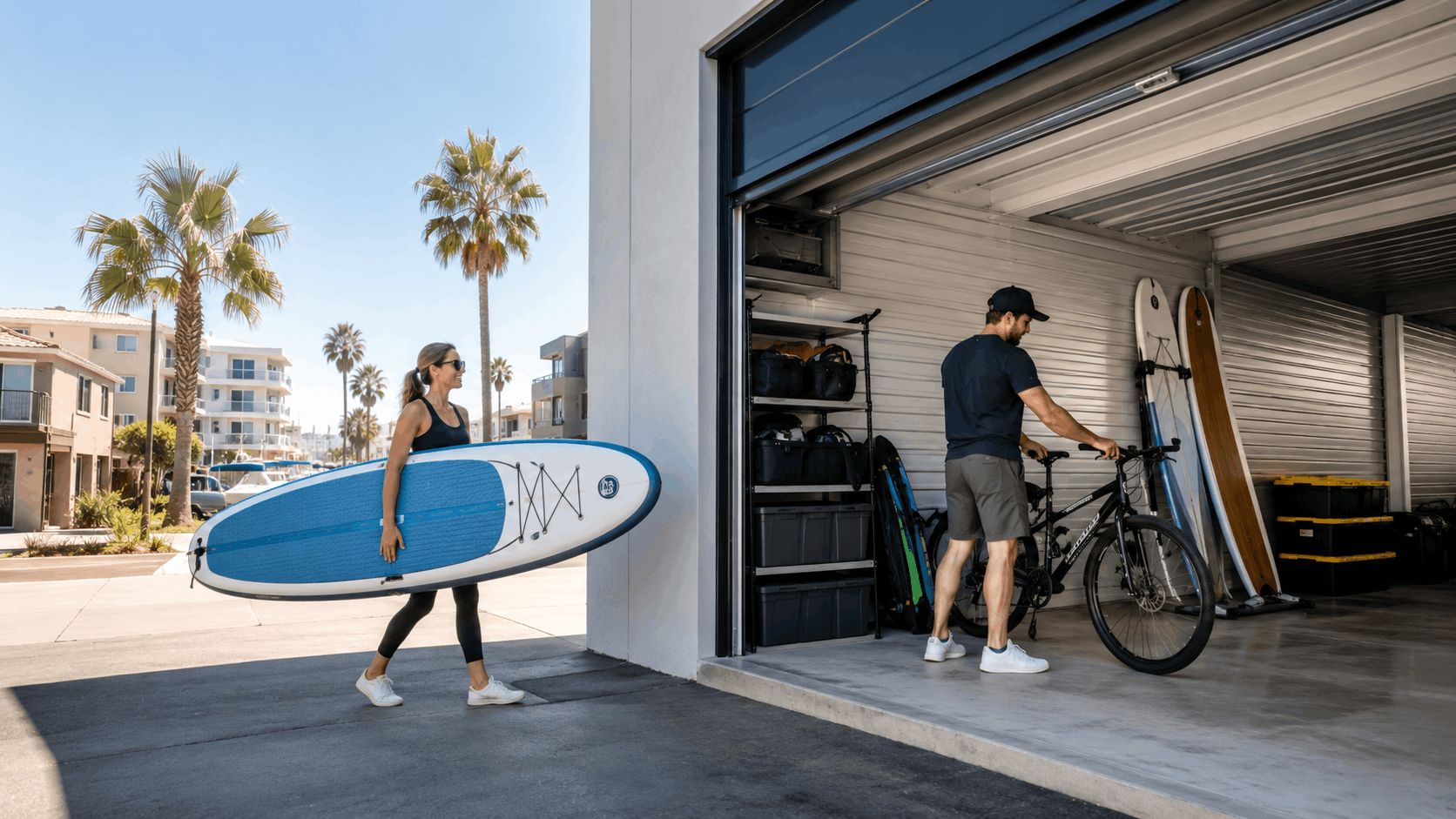
Bike storage matters just as much on the Westside, where cycling to the beach path is a daily ritual for many. Wall-mounted hooks or a floor rack inside a unit keep bikes off the apartment floor and out of the salty air when not in use.
Beach gear piles up beyond boards and bikes. Wetsuits, paddleboards, kayaks, umbrellas, and coolers all need somewhere to live between outings. A 5x10 or 10x10 easily absorbs a season's worth of equipment for an active household.
We recommend keeping frequently used gear near the front of the unit for easy grab-and-go access. Our team can arrange belongings so the boards and bikes stay reachable while off-season items sit toward the back.
Larger Units for a Full Move or Home Remodel
A 10x10 unit holds the contents of a one to two-bedroom home. Residents between leases or waiting on a new place use this size to store everything in one spot. It fits a couch, bed, dining set, appliances, and a stack of boxes with room to move around.
The 10x20 steps up to full home or remodel storage. Older Venice properties near the canals often need renovation, and homeowners clear entire rooms while contractors work. This unit swallows a house worth of furniture during that stretch.
Remodel storage runs longer than a typical move, so residents should plan for several months. Our long term storage options fit renovation timelines that stretch across a season or more.
For homeowners updating a classic Westside property, keeping furniture safe and out of the construction zone protects it from dust and damage. A larger unit inland costs far less than the same space near the water, which matters when the rental lasts months.
Estimating What You Actually Need
Measuring belongings before renting keeps you from overpaying. Start by grouping items into piles by room, then estimate how much floor space each pile covers. Furniture stacks, so a couch and a mattress can share vertical space in the same footprint.
A simple storage estimate method: count your boxes, then add up large furniture pieces. Roughly 15 to 20 standard boxes plus a few furniture items fit in a 5x10. A full one-bedroom usually needs a 10x10.
When in doubt, sketch the unit dimensions on paper and place items to scale. This simple step reveals whether everything fits or whether you need the next size up. It beats guessing and getting stuck on move day.
Our estimators walk through this process with residents all the time. A short conversation about what you own often prevents renting a unit that is too big or too cramped, saving money from the first month.
Protecting Belongings From Salt Air and Humidity
Coastal air carries salt and moisture that inland storage never deals with. Items coming from a Venice or Marina home already sit in a damp environment, and the wrong storage setup can make matters worse. A little planning prevents rust, mildew, and warped wood.
Salt air damage builds slowly, so residents often miss it until belongings come out ruined. Knowing which items are at risk and how to protect them keeps stored goods in good shape for years.
Why the Marine Layer Affects Stored Items
The marine layer blankets the Westside most mornings, and the moisture it carries reaches farther inland than people assume. Even a facility a few miles from the water sees higher humidity than one deep in the Valley. Items stored near the coast face constant low-level dampness.
Moisture damage shows up first on metal and wood. Bike chains rust, tool surfaces spot, and wooden furniture can swell or develop mold at the joints. Fabric and paper absorb humidity too, leading to musty smells and mildew over time.
Electronics suffer quietly in humid conditions. Circuit boards and connectors corrode, and stored devices may fail when powered on months later. Anything with metal contacts deserves extra protection in a coastal unit.
We see the effects of the marine layer on belongings all the time when residents open units after a long storage stretch. The damage is preventable, but only if people plan for the humidity before they store anything.
When Climate-Controlled Units Make Sense
Climate-controlled storage keeps temperature and humidity within a steady range. For coastal residents, this feature is worth the extra cost on certain items. It stops the swings that cause condensation and mold.
Electronics, wood furniture, and important documents all benefit from temperature control. Leather goods, musical instruments, artwork, and photographs also hold up far better in a controlled space. If an item would suffer in a hot, damp garage, it belongs in climate control.
Not everything needs the upgrade. Plastic bins of camping gear, metal patio furniture, and outdoor equipment usually survive fine in a standard unit. Residents can split the difference by putting sensitive items in climate control and rugged gear in a cheaper space.
Our team helps residents sort belongings into what needs climate control and what does not. That split keeps costs reasonable while protecting the items that matter most from coastal humidity.
Packing Tips to Fight Rust and Mildew
The right packing habits protect belongings from salt air and moisture. Start with sealed plastic bins instead of cardboard, since plastic blocks humidity and keeps out pests. Cardboard absorbs moisture and can collapse or grow mildew over time.
Desiccant packs make a big difference in a coastal unit. Toss silica gel packets into bins with electronics, documents, or fabric to pull moisture from the air. Rechargeable desiccant containers work well for long-term storage and can be dried out and reused.
Rust prevention for metal items starts with a light coat of oil or a corrosion-blocking spray on bare surfaces. Wrap tools, bike parts, and metal furniture in moving blankets or breathable covers rather than sealing them in plastic that traps condensation.
For furniture and fabric, our packing and crating team uses proper wrapping to keep pieces safe from mildew. A little extra care during packing saves belongings from the slow damage that coastal air causes.
Need Help in Los Angeles?
Popeye Moving & Storage serves Los Angeles and all of Los Angeles County.
How Popeye Moving & Storage Co. Serves the Westside
Our roots run deep across the Westside, from the canals of Venice to the harbor slips of the Marina. We move and store belongings for residents up and down the coast every week. Combining local knowledge with real logistics is what sets our service apart.
As Westside movers and a Los Angeles storage provider, we handle the whole process so residents do not have to juggle multiple companies. Here is how our services line up with what coastal residents actually need.
| Service | What It Covers | Best For |
|---|---|---|
| Local Moving | Door-to-door transport across the Westside | Apartment and condo moves |
| Storage Solutions | Short and long-term unit options | Overflow and full-home storage |
| Packing & Crating | Professional wrapping and boxing | Fragile and coastal items |
| Combined Move & Store | One crew handles both in a single trip | Residents between homes |
Local Movers Who Know the Neighborhoods
Venice and Marina buildings challenge crews that do not know the terrain. Narrow one-way streets, walk-up apartments, and tight staircases slow down anyone unfamiliar with the area. Our team has worked these blocks for years and plans each job around their quirks.
Walk-up buildings near Abbot Kinney and the Venice canals often lack elevators and loading zones. We bring the right equipment and enough hands to carry furniture down tight stairwells without damaging walls or belongings. Experience turns a stressful haul into a smooth one.
The Marina's condo towers come with their own rules, from elevator reservations to service entrances. We coordinate with building management ahead of time so move day runs on schedule. Knowing these details prevents the delays that catch out-of-area movers.
Residents across the Westside, including nearby Culver City and Santa Monica, rely on our crews for the same reason. We treat every narrow street and tricky staircase as a problem we have already solved.
Combining Moving and Storage in One Trip
Handling a move and storage together saves time and cuts down on wear. Instead of loading items twice, our crew picks up belongings and delivers them straight to a storage unit in one trip. Fewer handoffs mean less risk of damage.
This combined approach works well for residents between homes or waiting on a lease. We store the belongings, then deliver them to the new place when the time comes. One team manages the whole chain from start to finish.
Moving and storage in one trip also trims labor costs. Paying a crew once instead of twice keeps the total lower, and the belongings spend less time exposed to the coastal air. Efficiency protects both the budget and the goods.
Our clients appreciate not having to coordinate separate companies for each step. A single call sets up the move, the storage, and the eventual redelivery, all handled by people who already know the route.
Packing and Loading Help for Tight Spaces
Tight Westside spaces demand careful packing and loading. Elevators, stairs, and limited loading zones test any moving crew. Our packing services prepare belongings so they survive the trip and the coastal storage environment.
We wrap fragile items, disassemble furniture, and box up belongings with materials built for the job. Proper packing matters even more near the water, where moisture threatens anything left exposed. Our full service packing takes that work off the resident's plate entirely.
Loading help makes a real difference in buildings with no easy access. Our crew maps the fastest path from the unit to the truck and stages items to keep the loading zone clear. On short-window parking blocks, speed keeps everyone out of trouble.
For residents who only need a hand with the heavy lifting, we scale our help to fit. Whether it is a full pack-and-load or just muscle for the awkward pieces, our team adapts to the job and the space.
What to Look for in a Storage Facility
Not every storage facility offers the same value. Before signing, residents should check the features that protect belongings and keep access convenient. A little research prevents regret later.
Good storage facility features cover three areas: security, access, and rental terms. Weighing all three helps residents get real value for their monthly payment.
Security Features Worth Checking
Storage security protects belongings from theft and damage. Gated access with a personal code keeps out anyone who does not belong on the property. This is the first line of defense and a baseline any decent facility should offer.
Cameras covering entrances, hallways, and drive lanes add another layer. Recorded footage deters break-ins and helps resolve any dispute. Ask whether the cameras record around the clock and how long footage is kept.
Individual unit alarms take protection further. Some facilities alarm each unit so any unauthorized entry triggers an alert. For high-value belongings, this feature is worth seeking out.
Good lighting and on-site staff round out a secure facility. A well-lit property with regular staff presence discourages trouble and gives renters confidence when visiting after dark. We point residents toward facilities that take these measures seriously.
Access Hours and Drive-Up Convenience
Access hours matter for busy Westside residents who cannot always visit during banker's hours. Look for facilities with extended or 24-hour access so a late-night gear grab or early-morning drop is possible. Restricted hours can turn a short errand into a scheduling puzzle.
Drive-up units save serious effort on move day. Pulling a truck right up to the roll-up door beats hauling everything through hallways and elevators. For heavy furniture or a full load, drive-up access is a genuine time-saver.
Ground-floor units without drive-up still beat upper floors for convenience. Climbing stairs or waiting on a freight elevator with a couch gets old. Residents should ask about unit location within the building before committing.
For coastal residents balancing work, surf, and a packed schedule, convenience carries real weight. We help clients weigh access features against price so they land on a facility that fits their routine.
Reading the Fine Print on Rental Terms
Rental terms hide details that affect the total cost. Month-to-month agreements offer flexibility, which suits residents unsure how long they will need storage. Check whether the facility locks you into a longer commitment before signing.
Rate increases catch many renters off guard. Some facilities advertise a low introductory rate, then raise it after a few months. Ask directly how often rates change and by how much, so the bill does not surprise you later.
Deposit and administration rules vary widely. Some places charge a deposit, an admin fee, and require insurance, all of which add to the first month's cost. Read the full agreement and total the real out-the-door price.
We encourage residents to ask these questions upfront and compare facilities on total cost, not just the headline rate. A transparent operator answers plainly and puts the terms in writing.
Need Help in Los Angeles?
Popeye Moving & Storage serves Los Angeles and all of Los Angeles County.
Saving Money Without Sacrificing Quality
Affordable storage does not mean settling for a bad facility. Smart choices around size, timing, and ongoing review keep costs down while protecting belongings. A few tactics make a real dent in the monthly bill.
Saving money on storage comes from planning rather than luck. Residents who apply these ideas often cut their spending without any drop in quality or security.
Right-Sizing to Avoid Overpaying
Right-sizing is the simplest way to trim storage costs. Paying for a 10x10 when a 5x10 would do wastes money every single month. The correct unit size matches your belongings without leaving empty floor space.
The cost jump between sizes is steep, so choosing wisely pays off. Moving from a 10x10 to a 5x10 can cut the bill by a third or more. Over a year of storage, that difference funds a real chunk of savings.
Measuring belongings before renting prevents the overpay trap. Sketch out what you own and pick the smallest unit that fits comfortably. Leave a little room to move, but not a half-empty box you rent by the month.
Our estimators help residents nail the right size from the start. Getting it correct on day one avoids the hassle and cost of switching units later.
Timing Your Rental for Better Rates
Seasonal rates shift with demand, and the coast has clear busy periods. Summer brings peak moving and storage activity as leases turn over and residents shuffle. Prices tend to run higher when everyone wants a unit at once.
Off-peak storage in the fall and winter months often comes with lower rates and better move-in deals. Facilities compete harder for renters when demand cools. Booking in a slower month can lock in a rate that holds through the busy season.
Watching for promotions helps too. Many facilities offer a first-month discount or waived fees to fill units. Residents who stay flexible on timing can catch these storage deals and save from the start.
We keep an eye on the market and steer clients toward the best windows to rent. A little patience on timing can mean a noticeably lower monthly rate.
Sharing or Downsizing a Unit Over Time
Reviewing stored items every few months keeps a unit from becoming a money pit. Belongings pile up and sit forgotten, so a periodic check reveals what you truly still need. Selling or donating the rest opens the door to a smaller, cheaper unit.
Downsizing storage is one of the most overlooked ways to save. A resident who cleared out half a unit could drop from a 10x10 to a 5x10 and cut the bill in half. The savings recur every month afterward.
Sharing a unit with a trusted friend or roommate can also work for compatible belongings. Splitting the cost of a single unit stretches the budget for both parties. Just agree clearly on access and responsibility upfront.
Our team helps clients reassess their storage needs whenever they move or reorganize. If a smaller unit fits, we make the switch simple and handle the transfer of belongings.
Final Thoughts
Venice and Marina del Rey residents do not have to pay beach-adjacent prices to store their belongings. A short drive inland along Lincoln or Washington Boulevard opens up affordable units that cost far less than waterfront facilities. The savings are real and recur every month.
Picking the right unit size, protecting items from salt air, and reading the fine print on rental terms all keep storage smart and affordable. With a little planning, coastal residents get the space they need without the coastal markup.
Our team at Popeye Moving & Storage Co. handles the moving, packing, and storage so you can focus on enjoying the beach life. Reach out through our contact page or give us a call to talk through your options and get a quote. We are ready to help Westside residents move and store the easy way.
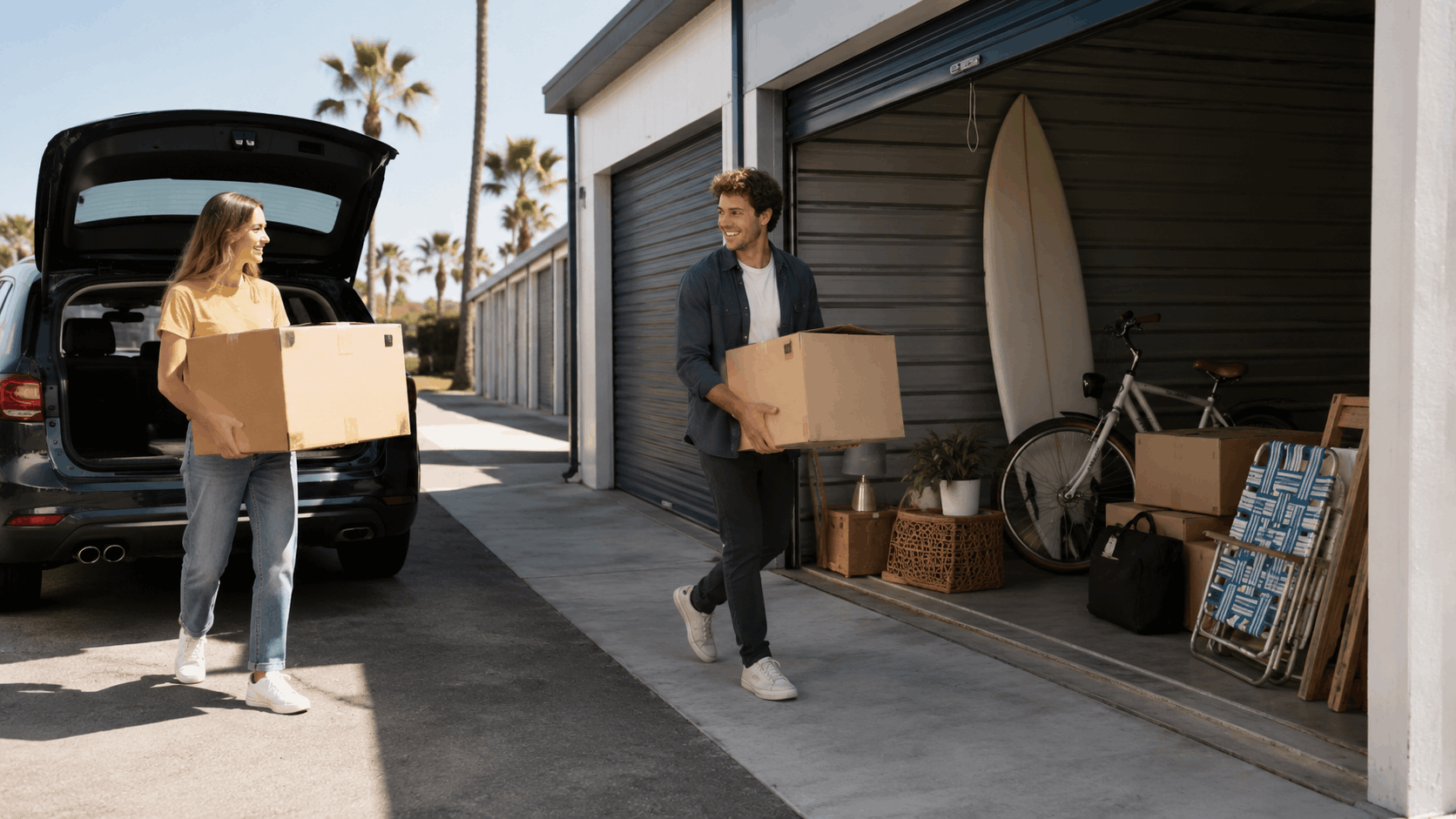
Frequently Asked Questions
- How far is affordable storage from Marina del Rey?
- Lower-priced facilities sit just a few minutes inland from the Marina. Heading east along Lincoln Boulevard or Washington Boulevard reaches storage options in 10 to 15 minutes, often near Culver City or the 90 freeway. That short drive can cut monthly costs by 30 to 50 percent compared to waterfront facilities, making it well worth the extra few minutes on the road.
- How much does storage cost for Venice residents?
- Prices vary by unit size and location. A 5x10 near the beach might run $180 to $250 a month, while the same unit inland often costs $110 to $160. A 10x10 runs around $400 near the water versus $250 to $300 a short drive east. Venice residents save the most by choosing an inland facility over a beach-adjacent one.
- What size unit fits a one-bedroom apartment?
- A 10x10 unit typically holds the contents of a one-bedroom apartment, including a bed, couch, dining set, and a stack of boxes. If you are only storing overflow rather than the full apartment, a 5x10 may work. Measuring your belongings first helps confirm the right size and avoids paying for space you will not use.
- Do I need a climate-controlled unit near the coast?
- It depends on what you store. Electronics, wood furniture, documents, leather, artwork, and instruments all benefit from climate control given coastal humidity and the marine layer. Rugged items like patio furniture, camping gear, and plastic bins usually survive fine in a standard unit. Splitting sensitive items into climate control and keeping tough gear in a standard space balances protection and cost.
- Can Popeye Moving & Storage Co. move and store my items together?
- Yes. Our combined moving and storage service lets one crew pick up your belongings and deliver them straight to a storage unit in a single trip. This cuts down on handling, lowers labor costs, and reduces the time your items spend exposed to coastal air. When you are ready, we redeliver everything to your new place.
- How do I store surfboards and beach gear safely?
- Rinse and dry boards thoroughly before storing to remove salt. Stand or rack them off the floor to prevent warping, and use padded covers to guard against dings. Keep bikes on hooks or a rack, and coat metal parts lightly to fight rust. Store wetsuits clean and dry, and use plastic bins with desiccant packs for smaller gear.
- What are the best times to move items to avoid Venice traffic?
- Aim for late morning on weekdays, after the marine layer burns off and before the afternoon rush. Weekends draw heavy beach crowds near Abbot Kinney and the boardwalk, so start early, around 8 a.m., if a weekend move is unavoidable. Using Venice or Washington Boulevard heading east helps you skip the worst congestion around Venice Beach.
- Is month-to-month storage available?
- Yes, month-to-month storage is common and offers flexibility for residents unsure how long they need a unit. Before signing, check whether the facility locks you into a longer term, how often rates increase, and what deposit or admin fees apply. Reading the full agreement and totaling the real cost prevents surprises down the line.
- How can I lower my monthly storage cost?
- Start by right-sizing to the smallest unit that fits your belongings, since size drives the bill. Rent during off-peak fall and winter months when rates drop and deals appear. Review your stored items every few months and downsize to a smaller unit when possible. Sharing a unit with a trusted friend can also split the cost.
- What security features should I expect at a good facility?
- Look for gated access with a personal entry code, cameras covering entrances and drive lanes, and good lighting throughout the property. Individual unit alarms add protection for valuable belongings. On-site staff and around-the-clock recorded footage also signal a facility that takes security seriously. Ask how long footage is kept and whether staff monitor the grounds regularly.
Popeye Moving & Storage Co. Team Team
Licensed moving and storage professionals serving Los Angeles and Los Angeles County.
Licensed in California · License #CAL T 189749 | USDOT 1472924 | MC 498816C
Why trust Popeye Moving & Storage?
Founded in 1994, Popeye Moving & Storage is a licensed and insured moving and storage service serving Los Angeles and Los Angeles County. All content is reviewed by our licensed technicians.

Need Help in Los Angeles?
Popeye Moving & Storage serves Los Angeles and all of Los Angeles County.
Related Articles
Manhattan Beach Movers: Beach Cities Premium Service Pricing
A clear breakdown of Manhattan Beach premium moving pricing, what drives cost in the Beach Cities, seasonal timing, add-ons, and how to plan a smooth, fairly priced move.
What Vaulted Storage Costs in Los Angeles - and Why It Beats a Self-Storage Unit for Furniture
Vaulted storage in LA runs $75-$150 per vault monthly and protects furniture better than a self-storage unit. See real costs, hidden fees, and when a vault wins.
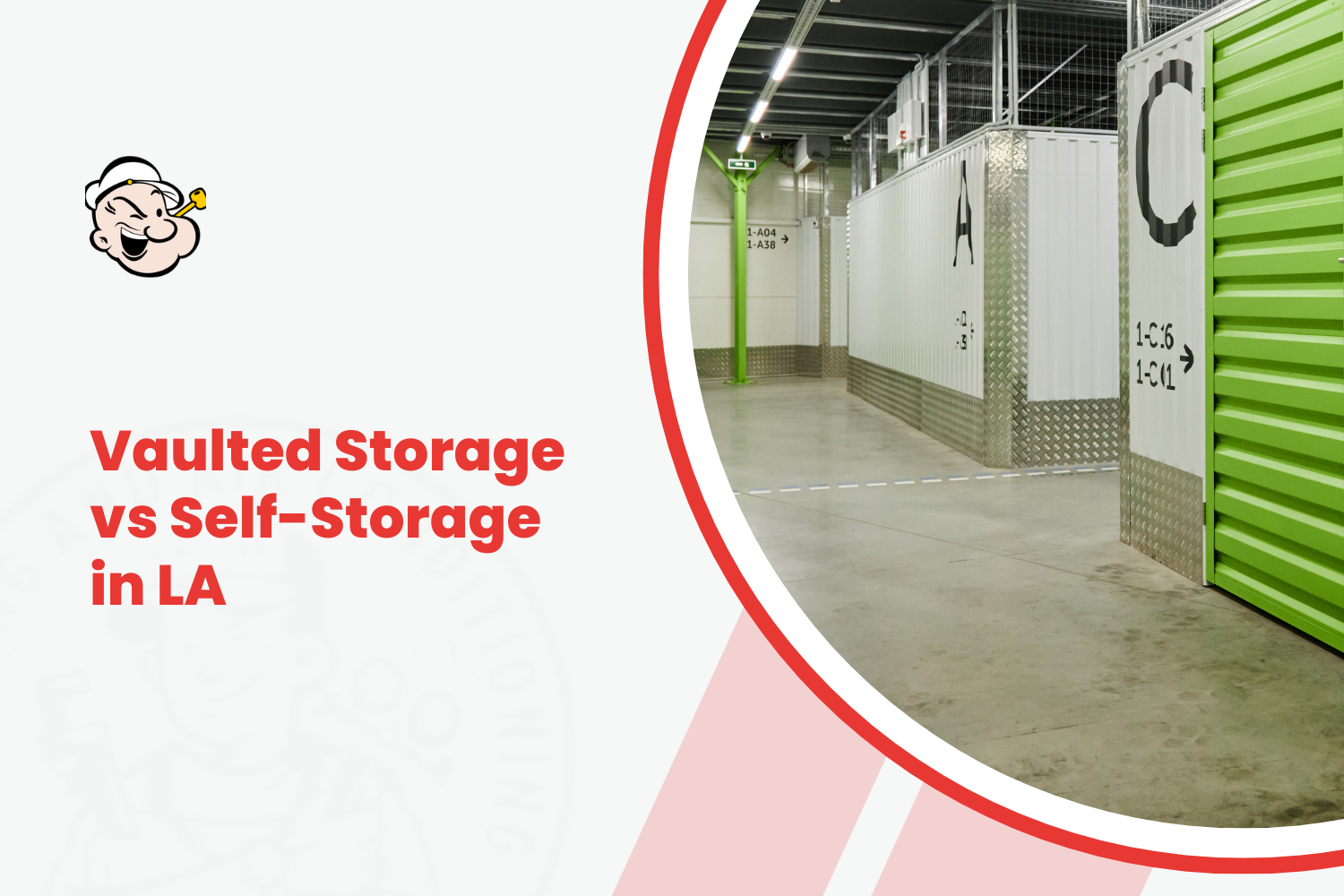
Vaulted Storage vs Self-Storage in LA: Why Full-Service Storage Saves You Money
Vaulted full-service storage vs self-storage in LA: see the real costs, hidden fees, and why more Angelenos are switching to vault storage with Popeye Moving.