Storage Inventory Lists: Reading Yours, Updating It, and Using It for Insurance
Key Takeaways
- A storage inventory list records each item's name, condition, and estimated value so nothing gets lost or forgotten.
- Learn to read condition codes like SC, D, and M, and verify item numbers before you sign the sheet.
- Update the list with every item added or removed, and do a full review every three to six months.
- Photograph high-value items and record serial numbers to back up future insurance claims.
- Match your list's total declared value to your policy limits so you are not underinsured.
- Never keep the only copy inside the unit - back it up in the cloud to survive fire, flood, or theft.
- LA climate varies: Valley heat warps wood and electronics, while coastal humidity damages fabrics and paper.
- Popeye Moving & Storage documents items during pack-and-store jobs and helps pull records when a claim arises.
In This Article
A few months back, a customer called our office in a panic. She had packed a storage unit near Culver City the previous spring, filling it with family furniture, boxed photo albums, and a small collection of framed art. When a pipe above her unit leaked, water soaked the bottom row of boxes before anyone noticed. The first question her insurance adjuster asked was simple: "Do you have an inventory list?"
She did not. What followed was weeks of guesswork, back-and-forth emails, and a payout that fell far short of what she actually lost. That story is more common than most Los Angeles renters realize, and it almost always traces back to one missing document.

What a Storage Inventory List Actually Is?
A storage inventory list is a written or digital record of everything inside your storage unit. It names each item, notes its condition, and often assigns a value. Think of it as the master receipt for your belongings while they are out of your sight.
Every renter in Los Angeles benefits from having one before boxes go into storage. Here is what a good list gives you:
- A clear count of how many boxes and pieces of furniture you stored
- A record of each item's condition on the day it went in
- An estimated value you can hand to an insurer
- Proof that a specific item was yours if it goes missing
Without that record, you are trusting your memory to hold hundreds of details for months or years. Memory fades, and adjusters do not pay out on "I think I had a leather couch in there."
The Purpose Behind the Paperwork
The main job of an inventory list is to track each item so nothing gets lost or forgotten. When you write down a nightstand, a box of kitchenware, and a flat-screen TV, you create a paper trail that survives long after the truck pulls away. That trail is what protects you months later.
Recording item condition matters just as much as the item name. A note like "oak dresser, small scratch on left side" tells the story of how the piece looked before storage. If it comes out with a cracked leg, the difference is obvious and easy to prove.
The list also carries an estimated value for each entry. This is the number that decides how much you can claim if something is damaged or stolen. A couch listed at $1,200 with a matching receipt carries far more weight than a vague guess scribbled after the fact.
Together, these three pieces - name, condition, and value - turn a stack of boxes into a documented set of assets. That documentation is the whole reason the paperwork exists.
Digital Lists Versus Paper Lists
Renters usually pick one of three formats. A handwritten sheet is simple and needs no tools, but it is easy to lose and hard to update cleanly. Once you cross out and rewrite a few times, the page turns into a mess.
A spreadsheet solves most of those problems. Columns for item, condition, value, and date let you sort, edit, and total everything in seconds. For renters storing goods near Downtown LA, a shared spreadsheet in the cloud stays reachable from a phone even if the paper copy vanishes.
A digital inventory app takes it a step further by letting you attach photos and barcodes to each entry. Apps like Sortly or a simple Google Sheets file work well for people who add and remove items often. The photos alone can settle a dispute that words never would.
For most LA customers, we suggest a spreadsheet or app backed up to cloud storage. Paper is fine as a working copy, but it should never be the only record you keep.
Who Creates the List: You or the Moving Company
There are two kinds of inventory lists. A self-made list is one you write yourself as you pack, which gives you full control but depends on your own care and honesty. Many renters do this well, though it takes discipline.
A moving company inventory is prepared by the crew handling your move. When our team runs a pack-and-store job, we document each item and box with condition notes before anything goes on the truck. That record becomes an official part of your storage service paperwork.
The advantage of using professional packers is consistency. Our crews use the same codes and standards on every job, so the list reads clearly to an insurance adjuster later. We also number each piece, which makes the count easy to verify at both ends.
Whether you build the list or we do, the goal is the same. You end up with an accurate, dated record that reflects exactly what went into the unit and what shape it was in.
Get Your Free Quote
Tell us about your move. We'll be in touch soon.
How to Read Your Inventory List Line by Line
Reading inventory list paperwork can feel like decoding a foreign language the first time. Movers use shorthand to save space, and those letters and numbers throw people off. Once you know the pattern, the whole sheet makes sense.
Every professional inventory follows a similar layout. You get a column of inventory codes, a column of item names, and a section that acts as a condition report. Learning to read each part protects you before you ever sign your name.
Decoding the Condition Symbols
Movers record item condition with short abbreviations to keep the sheet tidy. Common ones include SC for scratched, D for dented, and M for marred. You may also see R for rubbed, BR for broken, and SO for soiled.
These condition symbols usually sit next to a location number that shows where on the item the flaw appears. A code like "SC-3" might mean a scratch on the right side of a dresser, with the number matching a diagram legend on the sheet. That level of detail keeps disputes short.
The damage codes exist to protect both sides. They record the honest condition of your goods on move day, so no one can later blame the mover for a scratch that was already there. They also give you leverage if a new dent appears after storage.
Take a minute to find the code legend, usually printed at the bottom or on the back of the form. Match a few symbols to your actual items before you accept the list as accurate.
Understanding Item Numbers and Box Labels
Every entry on a professional inventory gets a number. That item number matches a sticker or tag placed on the matching box or piece of furniture. When you see "Item 042" on the sheet, there is a tag reading 042 somewhere on that item.
The box labels serve as a checklist during loading and unloading. As the crew carries each numbered piece off the truck, someone can call out the number and check it against the list. Nothing slips through when the count is verified out loud.
Cross-checking the count is your job too. When items arrive or when you visit the unit, walk the list and confirm each number is present. If the sheet says 48 items and you count 46, you know something needs to be found before you sign off.
This numbering system also speeds up future access. Months later, when you want just the holiday decorations, the list tells you exactly which box number to pull instead of opening ten random ones.
Spotting Errors Before You Sign
The moment before you sign is the moment you have the most power. Signing inventory paperwork tells the world you agree the list is correct and the conditions are accurate. Once your name is on it, changing it later gets much harder.
Read every line and review errors against what you actually own. Check that the item count matches, that no condition codes overstate damage, and that high-value pieces are listed with fair values. Slow down here even if the crew is ready to roll.
When a customer near Silver Lake caught a mismatch on a recent job - two boxes marked as one - our crew stopped and corrected the sheet on the spot before the truck moved. We would rather fix a number in the driveway than argue over it during a claim. A good moving team welcomes your questions instead of rushing past them.
If something looks wrong and cannot be fixed immediately, note it in writing on the form before signing. A short handwritten correction with your initials carries real weight if a dispute comes up later.
Need Help in Los Angeles?
Popeye Moving & Storage serves Los Angeles and all of Los Angeles County.
Keeping Your Inventory List Updated Over Time
A list is only worth something when it matches reality. Updating inventory records is the step most renters skip, and it is the step that costs them at claim time. A current inventory reflects what is actually in the unit today, not what went in a year ago.
LA renters add and remove items all year. Someone stores winter gear in April, pulls the beach chairs out in June, and drops off a new bookshelf in fall. Keeping your storage records in step with those moves takes only a few minutes each visit.
Logging New Items You Add to the Unit
The simplest habit is recording each new item the moment it goes in. Before you close the door, add the box or piece to your list with its condition and value. Doing it right then beats trying to remember it weeks later.
When adding items, keep the same format you started with. If your list uses item numbers, assign the next number in line. If you use an app, snap a photo and type in the value while you are standing there.
The reason to record new items immediately is that memory does not hold small details. You might recall storing "some boxes," but not that one held a $600 espresso machine. That missing detail is exactly what an insurer will not pay for.
A short note on your phone works fine as a stopgap. Just make sure it lands on your master list before you forget the specifics.
Removing Items You Take Back Home
Taking things out matters just as much as putting them in. When you pull an item home, cross it off cleanly so the list always matches what is really inside. A list that claims items no longer there can actually hurt a claim.
Removing items the right way means marking the date you took them out, not just erasing the line. That way you have a clear history of when each piece left the unit. Insurers notice when a list is kept with that kind of care.
An accurate list also protects you from confusion during a claim. If a burst pipe damages the unit, you do not want to spend an hour explaining why three listed items were actually at your house. A clean, current list answers that question before it is asked.
Make crossing off a fixed part of every pickup. Grab the box, update the list, lock the unit - three steps, every time.
Scheduling Regular Reviews
Even careful renters miss an entry now and then. A scheduled inventory review catches those gaps. We suggest a full walkthrough every three to six months for anyone using long-term storage.
Tie the review to something you already do. Many families near Pasadena and the San Fernando Valley move seasonal items in and out anyway, so a seasonal check fits naturally into those trips. Pick spring and fall, and the habit sticks.
During each review, walk the unit with your list open. Confirm every item is present, add anything missing, and update values that have changed. For customers with a long-term storage arrangement, this rhythm keeps the record trustworthy year after year.
A twenty-minute review twice a year is far cheaper than a denied claim. It also gives you a fresh dated record, which insurers value when they see recent activity on the list.
Photographing High-Value Items
Words describe an item, but photos prove it. Adding item photos to your list gives an adjuster something concrete to look at. A clear picture of your TV, sofa, or bicycle settles questions that text alone cannot.
For electronics, art, and jewelry, go one step further and record serial numbers and model numbers. A serial number ties a specific device to you and helps police recover it after a theft. It also confirms the exact model when you claim replacement value.
Photograph each high-value piece from a few angles and capture any existing wear. Store those images with the list in the cloud so they travel with the record. Date-stamped photos are some of the strongest proof you can hold.
You do not need every fork and towel photographed. Focus on the items worth real money, since those are the ones a low estimate would hurt most.
Using Your Inventory List for Insurance
A solid list is your best friend when a claim hits. Storage insurance pays out based on evidence, and your inventory is the centerpiece of that evidence. Without it, an insurance claim turns into a memory contest you usually lose.
Insurers ask LA storage customers for specific documents, and a good list checks most of those boxes. It also serves as proof of ownership, showing that a specific item belonged to you before the loss.
Matching Your List to Your Policy
Your inventory means little if it does not line up with your coverage. Compare the total declared value on your list against the policy coverage limit on your renter or storage policy. If your goods are worth $30,000 but your policy caps at $15,000, you are underinsured by half.
The declared value on each item helps you see where the gaps sit. High-value pieces like jewelry or art often carry sub-limits, meaning the policy pays only a small amount per item unless you add a rider. Reading those limits before a loss lets you adjust in time.
Add up your list total and set it next to your policy number. If the two do not match, call your provider and either raise the limit or reduce what you store. This one comparison prevents the most painful surprise renters face after a claim.
Review this match at each inventory check. Values change, policies renew, and a number that fit last year may fall short now.
What Documentation Insurers Want
Adjusters work from paperwork, so knowing what they ask for saves time. Most requests include a dated inventory, photos of the items, receipts where you have them, and a copy of your storage contract. Gathering these before a loss makes the claim far smoother.
Your insurance documentation is stronger when the pieces support each other. A list that says "sofa, $1,200" backed by a photo and a store receipt is nearly impossible to dispute. That combination is what pushes a claim toward full payment.
Hold onto receipts for major purchases and keep digital copies with your inventory. If a receipt is long gone, model numbers and current replacement prices fill the gap. The Federal Trade Commission offers helpful guidance on keeping records that hold up in disputes.
Keep the storage contract itself handy too. It confirms the dates, the unit, and the terms, which frames the entire claim for the adjuster.
Filing a Claim After Damage or Loss
When damage strikes, act promptly and in order. Start by documenting the scene with photos, then report the loss to your insurer, and pull your inventory and supporting records together. Filing claim paperwork goes quicker when everything is in one place.
The steps for a damage loss claim usually run like this: notify the insurer, submit your dated inventory and photos, provide receipts and the contract, and let the adjuster inspect. Respond to their requests promptly to keep the file moving. Delays on your end often stall the payout.
Our team helps customers pull records after events like a burst pipe or a break-in. We can supply copies of the original inventory sheet and any condition notes we recorded during your job. That extra documentation often makes the difference between a full and a partial payout.
Keep a copy of everything you send. A claim can take weeks, and having your own file lets you follow up without starting over each time.

Need Help in Los Angeles?
Popeye Moving & Storage serves Los Angeles and all of Los Angeles County.
Common Mistakes Los Angeles Renters Make
We have seen the same handful of inventory mistakes trip up renters across the city. Most are easy to avoid once you know they exist. These storage errors tend to surface at the worst possible moment - during a claim - and they often leave people underinsured.
Guessing Item Values Instead of Documenting Them
The typical error is guessing at worth. A renter jots "furniture, about $2,000" and calls it done. When a claim comes, that rough number gives the adjuster room to pay far less than the goods were worth.
Recording real item value takes more effort but protects your money. List each major piece separately with its own price rather than lumping everything into one line. A detailed list of ten items at fair values beats one vague total every time.
The problem with estimating worth loosely is that you carry the burden of proof. If you cannot show why the couch was worth $1,200, the insurer pays what they think it was worth. Photos, receipts, and model numbers move that decision back into your favor.
Update values as prices change too. Replacement cost for electronics and furniture shifts over time, and a five-year-old estimate rarely matches today's store prices.
Forgetting to Update After Big Moves
A stale list causes real trouble. Renters update carefully at first, then stop, and the record slowly drifts from reality. By claim time, the outdated list no longer matches the unit at all.
This hits families in the middle of a relocation hardest. A household moving between Santa Monica and the Eastside often shuffles items in and out of storage for weeks. If the list never catches up, the paperwork becomes useless.
We see this most during multi-stage moves handled through our local residential moving service. When belongings move in phases, the inventory has to move with them. A short update after each phase keeps the record honest.
Build the update into your moving checklist. Every time boxes shift, the list gets a matching edit before you move on to the next task.
Storing the List in the Same Place as the Items
Keeping the only copy of your list inside the storage unit is a quiet disaster waiting to happen. If a fire, flood, or theft hits the unit, the list burns, soaks, or walks out with everything else. Then you have no record of what you lost.
A backup copy solves this instantly. Keep one copy at home, one in the cloud, and treat the unit copy as optional. The whole point of a list is to survive whatever happens to the goods.
Using cloud storage means the record follows you anywhere. A Google Drive folder, Dropbox, or even an email to yourself keeps the list reachable from any phone. That copy stays safe no matter what happens at the unit.
Set this up the day you create the list. Backing up takes two minutes and removes the single biggest risk to your record.
Climate and Location Factors That Affect Stored Items in LA
The Los Angeles climate is not one climate at all. Conditions near the coast differ sharply from those in the inland valleys. Smart stored items protection starts with knowing which conditions your unit faces, since heat humidity patterns shape what needs extra care.
Heat and Warping in Valley Units
Summer heat in the San Fernando Valley climbs well past what the coast sees. Non-climate-controlled units in areas like Van Nuys and Reseda can bake for months. That heat warps wood, cracks vinyl, and shortens the life of electronics.
Heat damage shows up on furniture as split joints and peeling veneer. Vinyl records, candles, and some plastics soften or deform. Batteries and screens inside stored electronics degrade sooner in that trapped heat.
For sensitive items, a climate controlled unit is worth the extra cost. On your list, flag anything vulnerable to heat so you remember to store it in a temperature-managed space. That note guides both your storage choice and any future claim.
Wood furniture, musical instruments, and electronics top the heat-risk list. Keeping those in controlled conditions protects both the items and your ability to claim them intact.
Coastal Moisture Near the Westside
Closer to the coast, the enemy shifts from heat to moisture. Marine layer humidity near Venice and Marina del Rey creeps into units and lingers. That damp air works slowly but does real harm.
Coastal humidity attacks fabrics, paper, and anything organic. Books swell and grow musty, upholstery breeds mildew, and photographs stick together. Metal fittings can start to rust in the salty air.
Moisture damage often goes unnoticed until you open a box months later. Storing near the water calls for sealed containers, moisture absorbers, and ideally a climate-controlled space. Our teams serving Marina del Rey customers see this pattern often and pack accordingly.
Note humidity-sensitive items on your list too. If mildew ruins a boxed art collection, your dated inventory and photos become the proof you need for a claim.
Earthquake and Fire Considerations
Beyond everyday weather, LA County faces bigger threats. Quakes and wildfires are part of life here, and both can reach a storage unit. A current inventory speeds up recovery when they do.
After a quake, items can topple and break inside a unit before you ever see them. A list with photos lets you show what was intact beforehand. Earthquake insurance often comes separate from standard coverage, so check whether your policy includes it.
Wildfire risk runs high across the foothills and canyons every dry season. During an evacuation, a cloud-stored inventory means you can start a claim even while you are away from home. That head start matters when thousands of people file at once. The Ready.gov home inventory resource offers a useful checklist for disaster preparation.
Keeping your list current is the single best defense against these events. When the ground shakes or the hills burn, a ready record turns a chaotic loss into a manageable claim.

Need Help in Los Angeles?
Popeye Moving & Storage serves Los Angeles and all of Los Angeles County.
How Popeye Moving & Storage Helps With Inventory Management
Our Los Angeles team builds inventory into every storage job. Popeye Moving Storage treats the list as part of the service, not an afterthought. Good inventory management is one of the reasons customers trust us with their goods across Los Angeles storage facilities.
Detailed Inventory Sheets During Every Job
Our crews create a detailed inventory before anything leaves your home. Each item gets a number, a description, and condition notes recorded on the spot. That record travels with your goods through the entire storage period.
The condition notes follow the same coding standard on every job. When your list uses consistent symbols, an insurance adjuster reads it easily later. That consistency is what makes a professional list more useful than a handwritten one.
We document these items during our full-service packing work so nothing gets missed in the rush of a move. You get a clean, dated sheet that reflects exactly what we loaded. That sheet becomes yours to keep and back up.
Ask for a copy before we drive off. Having the record in hand from day one puts you ahead on any future claim.
Secure Storage Options Across the City
We offer secure storage for customers moving through neighborhoods all over LA. From Koreatown to Highland Park to Sherman Oaks, our facilities keep goods safe and accessible. Location matters, and we help you pick the right one.
Our storage options include short-term holds, long-term units, and climate-controlled space for sensitive items. Whether you need a spot for a few weeks between homes or a place to keep furniture for a year, we have a fit. Businesses can also use our commercial and business storage for records and equipment.
We match the storage type to what you are keeping. Heat-sensitive and humidity-sensitive goods go into controlled units, while durable furniture can use standard space. That matching protects your items and your budget.
Every unit ties back to your inventory record. When your goods and your list live together in an organized system, retrieval and claims both get easier.
Help When You Need Records for a Claim
When an insurance claim comes up, we step in with claim support. We keep copies of the inventory and paperwork from your job on file. Pulling those records is often the first thing an adjuster needs.
Our inventory records include the original condition notes and item numbers from move day. That documentation shows what shape your goods were in before storage. It gives your claim a solid, professional foundation.
Reach us through our contact page and we will help you gather what your insurer requests. We have walked many LA customers through claims after leaks, break-ins, and disasters. Having done it before, we know what adjusters want to see.
The sooner you call after a loss, the sooner we can pull your file. Easy access to clean records keeps your claim moving toward a fair result.
Final Thoughts
A storage inventory list is one of those small tasks that pays off big at exactly the wrong moment - when something goes wrong. Reading it correctly, keeping it current, and backing it up in the cloud turns a pile of boxes into documented, insurable assets.
The renter near Culver City learned this the hard way. You do not have to. Build the list, update it every few months, photograph your valuables, and match the total to your policy limits.
If you are storing goods anywhere in the LA area, our team can build and maintain that record for you from the start. Call Popeye Moving & Storage or reach out through our contact page for a consultation, and we will make sure your inventory is ready long before you ever need it.

Frequently Asked Questions
- What should a storage inventory list include?
- A strong list includes each item's name, the count or quantity, its condition on the day it went into storage, and an estimated value. Adding photos and serial numbers for high-value pieces like electronics, art, and jewelry makes it far stronger. Together these details give you a record that holds up during an insurance claim and helps you track exactly what is inside your unit.
- How often should someone update their inventory list?
- Update the list with every change - each time you add or remove an item, log it right away. On top of that, do a full review every three to six months to catch anything you missed. Tying the review to seasonal storage trips, like swapping winter and summer gear, makes the habit easy to keep. A current list is the only kind that helps at claim time.
- Does a storage inventory list count as proof for insurance?
- A dated list strengthens a claim, but it works best alongside other records. Insurers give the most weight to a list backed by photos, receipts, and your storage contract. On its own, a list shows what you had, and the supporting documents confirm the values. Keeping all of these together in one cloud folder gives an adjuster everything they need to approve a fair payout.
- Who is responsible for creating the inventory list?
- The renter owns the responsibility for the list, since the goods and the insurance policy are theirs. That said, a moving company can create a detailed sheet during a pack-and-store job. When our crews handle your move, we document each item with condition notes and numbers, then hand you a copy. You still keep and back it up, but the professional record gives you a strong head start.
- What do the codes on a moving inventory list mean?
- Movers use short abbreviations to record condition. Common ones include SC for scratched, D for dented, M for marred, R for rubbed, BR for broken, and SO for soiled. These often pair with a location number showing where the flaw sits on the item. A legend on the form explains each symbol, so check it and match a few codes to your actual items before signing.
- Are stored items covered by homeowners or renters insurance?
- Coverage varies by policy and provider. Many homeowners and renters policies extend some protection to off-site storage, but usually at a reduced limit. Some storage facilities also offer their own coverage. Before you store anything, confirm the limits with your provider and ask specifically about items kept in a separate unit. Knowing the cap ahead of time lets you add coverage if your goods are worth more.
- How do I value items I no longer have receipts for?
- Use photos, current replacement prices, and model numbers to build a fair estimate. Look up what the same or a similar item sells for today and record that figure. Photographs prove you owned the item, and model or serial numbers confirm the exact version. This combination gives an adjuster a reasonable basis for value even when the original receipt is long gone.
- What happens to my list if I lose access to the unit?
- If the only copy sits inside the unit, losing access means losing the record. That is why a cloud backup matters so much. Keep the list in Google Drive, Dropbox, or emailed to yourself so it survives even if the physical copy is lost, damaged, or locked away. A cloud copy lets you start a claim or verify contents from any phone, anywhere.
- Does Popeye Moving & Storage provide inventory sheets in Los Angeles?
- Yes. Our team documents items during pack-and-store jobs across the LA area, from Koreatown to Sherman Oaks to Highland Park. We number each piece, note its condition, and give you a dated sheet to keep. That professional record uses consistent codes an adjuster can read easily, which makes any future claim smoother. Reach out through our contact page to arrange it.
- How long should I keep old inventory records?
- Keep records for as long as the items stay in storage, plus the claim window afterward. Even after you empty a unit, hold the paperwork for a while in case a delayed claim or dispute comes up. A year past retrieval is a safe cushion for most situations. Since digital copies take no space, there is little reason to delete them early.
Popeye Moving & Storage Co. Team Team
Licensed moving and storage professionals serving Los Angeles and Los Angeles County.
Licensed in California · License #CAL T 189749 | USDOT 1472924 | MC 498816C
Why trust Popeye Moving & Storage?
Founded in 1994, Popeye Moving & Storage is a licensed and insured moving and storage service serving Los Angeles and Los Angeles County. All content is reviewed by our licensed technicians.

Need Help in Los Angeles?
Popeye Moving & Storage serves Los Angeles and all of Los Angeles County.
Related Articles
Contents Storage During an LA Remodel: Pack-Out, Vaulted Hold, and Redelivery Room by Room
A complete guide to contents storage during an LA remodel: how pack-out, vaulted hold, and room-by-room redelivery protect your belongings from demolition to final walkthrough.
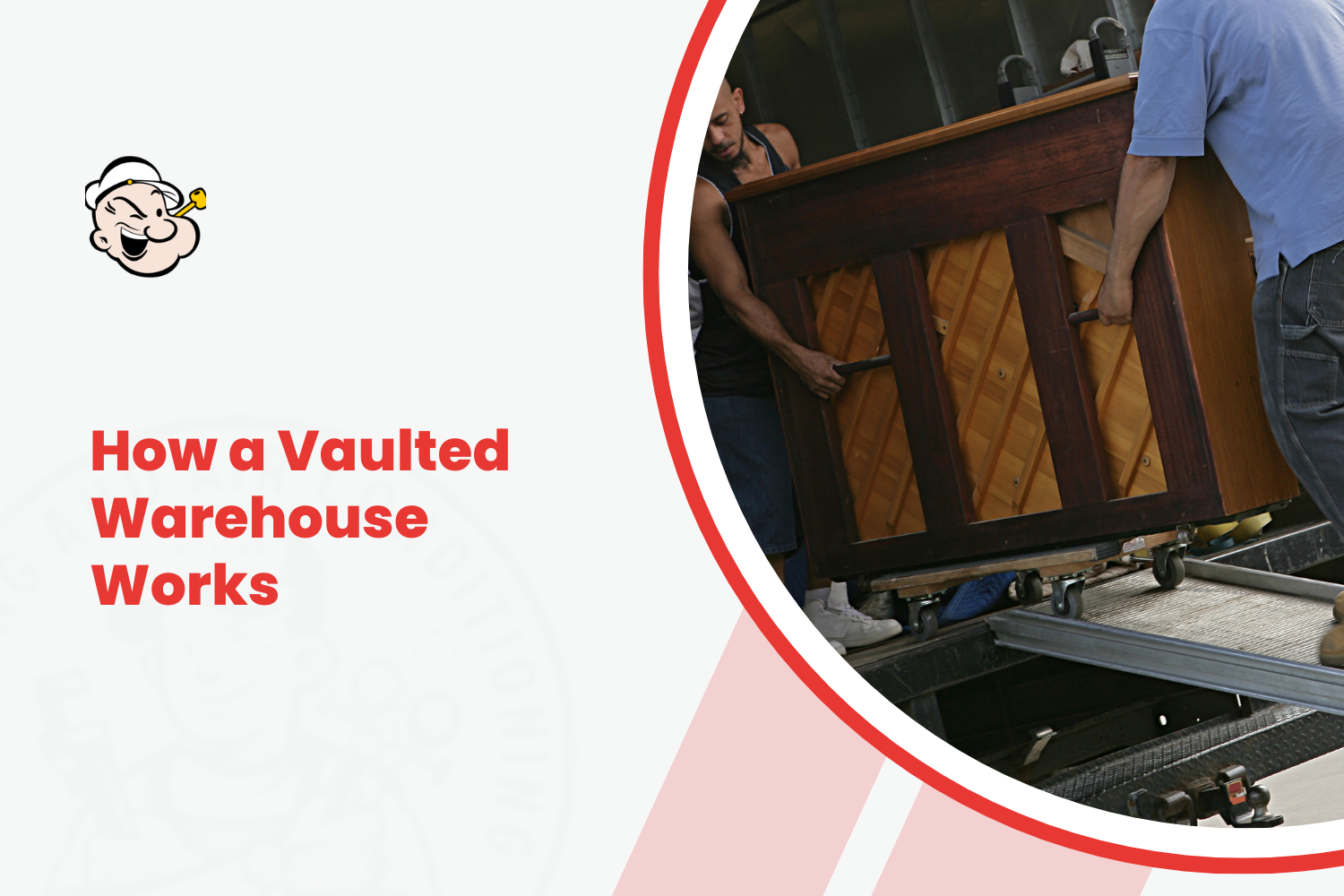
How a Vaulted Warehouse Works: Sealed Vaults, Inventory Tags, and Why Items Are Handled Less
Learn how a vaulted warehouse works: sealed vaults, numbered inventory tags, and a load-once system that means your belongings are handled less and stored safer in LA.

Office Furniture Storage Between Leases: Decommission Today, Refurnish the Next Space Later
Learn how LA businesses store office furniture between leases, decommission the old space, and refurnish later - with costs, timing, and practical tips from Popeye Moving.