San Marino Movers: Historic Mansion and Heritage Home Service
Key Takeaways
- San Marino heritage homes from the 1910s-1930s have narrow staircases, tight doorways, and original hardwood floors that need specialized handling.
- High-value contents like antiques, fine art, and grand pianos require custom-built wooden crates, foam padding, and added valuation coverage.
- Protecting the architecture starts with floor runners, corner guards, and wrapped banisters installed before any furniture moves.
- Tree-lined streets near Lacy Park, long driveways, gated estates, and city parking rules all require advance planning and sometimes a shuttle or permit.
- Climate-controlled and secure storage protects antiques and art collections between homes or during renovations.
- A heritage move should include a pre-move walkthrough, assigned crew roles, careful loading, and a final inventory check at the new home.
- Choose a mover with proven heritage-home experience, verified license and insurance, and a clear itemized estimate.
- Booking three to four weeks ahead, or more in busy seasons, allows time for crating, permits, and planning.
In This Article
The Hendersons called us on a Tuesday morning. They had just inherited a 1926 estate off Oak Grove Avenue, a few blocks from the Huntington Library, and they had no idea how to move a house full of hand-carved furniture, oil paintings, and a Steinway grand down a narrow original staircase. The home was gorgeous, with plaster walls, stained glass windows, and hardwood floors that had not been touched in nearly a century. One wrong move with a dolly and they could scratch a banister that could never be truly replaced.
That is the reality of moving a heritage home in San Marino. These are not average houses, and they cannot be handled by an average crew. The building itself is part of the value, and so is nearly everything inside it.
Why San Marino Heritage Homes Need Specialized Movers?
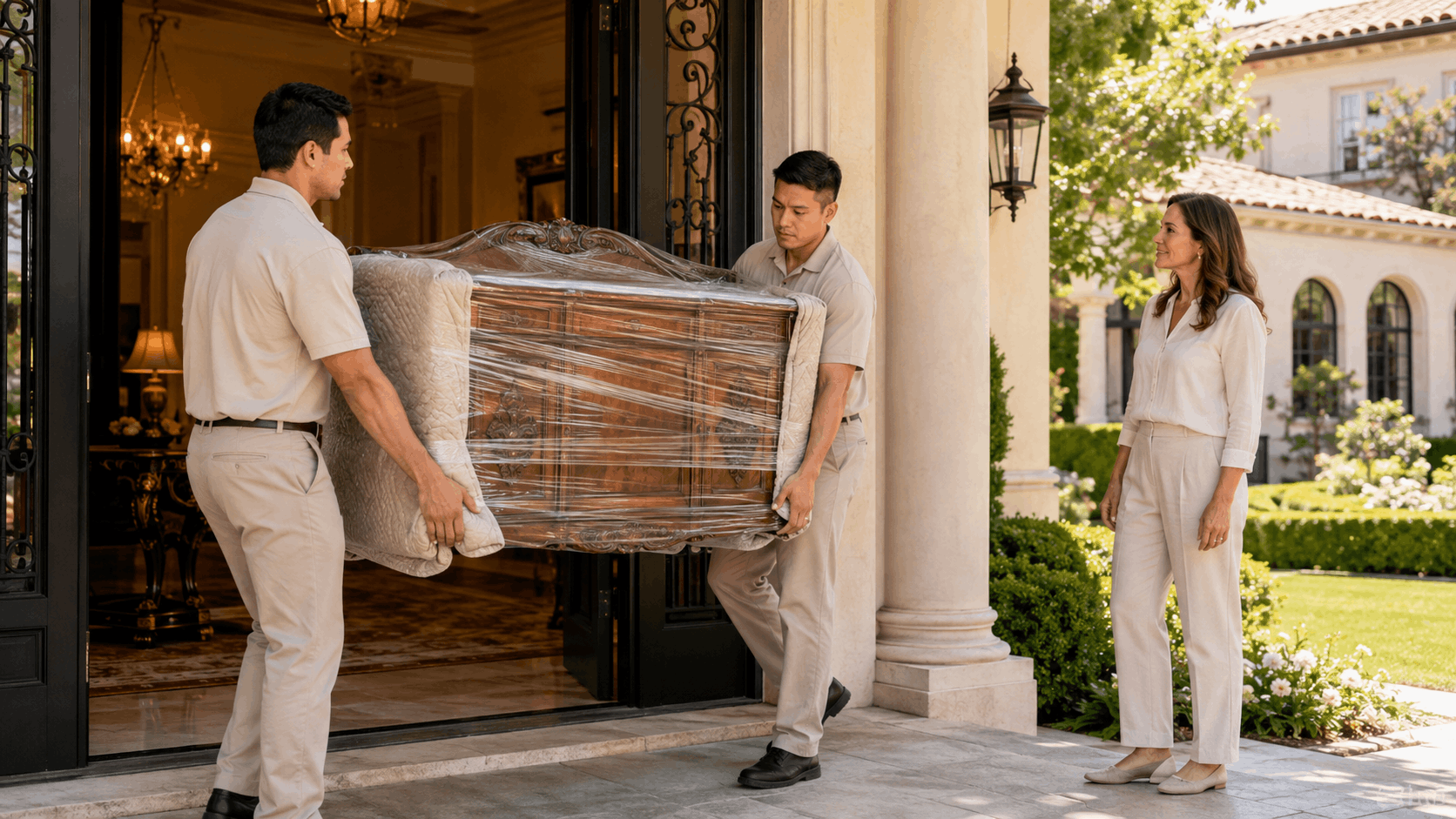
San Marino is one of the most architecturally rich pockets in the San Gabriel Valley. The homes near Lacy Park and the Huntington were built to last, with materials and craftsmanship you rarely see today. That beauty comes with real challenges when it is time to move.
A standard moving crew is trained to move boxes in volume. Historic home movers work slower and smarter, because the stakes are higher. Here is what sets these estates apart:
- Original construction that damages easily and cannot be perfectly repaired
- Layouts built for a different era, with tight halls and steep stairs
- High-value contents like fine art, antiques, and grand pianos
- Period fixtures such as chandeliers and stained glass that block clear paths
- Owners who expect careful, documented handling of every piece
Moving a heritage property is a different job than moving a modern tract home. Treating them the same is how expensive mistakes happen.
The Age and Layout of San Marino Mansions
Most of the grand homes around Oak Grove Avenue and the streets near the Huntington were built between the 1910s and 1930s. This 1920s architecture favored formal floor plans, with rooms divided by narrow doorways and long central hallways. Movers who are used to open modern layouts often underestimate how tight these spaces really are.
Narrow staircases are the biggest hurdle in these San Marino estates. Many were designed as elegant focal points, not as freight paths for oversized armoires or a grand piano. The steps are often steep, the turns are sharp, and the handrails sit close to the wall, leaving little room to maneuver large furniture.
Then there are the hardwood floors. Original oak and maple flooring in these homes has decades of patina that adds real value, and a single deep scratch stands out against the aged wood. Our crew treats these floors as part of the home's character, not as a surface to drag furniture across.
Because every one of these homes is a little different, we plan each move around its exact layout. We measure doorways, study the staircases, and map the route before anyone lifts a box. That planning is what keeps a heritage property intact.
High-Value Contents in Historic Estates
Heritage homes tend to hold heritage belongings. We regularly move antiques that have been in the same family for generations, along with fine art, sculptures, and rare collectibles. These items are not just expensive, they are often one of a kind.
Fine art moving is its own discipline. Oil paintings, framed prints, and mirrors need protection from pressure, temperature swings, and any contact that could crack a frame or tear a canvas. A moving blanket and a cardboard box are not enough for a piece worth tens of thousands of dollars.
The grand piano is another common feature in San Marino estates. These instruments weigh 600 to 1,200 pounds, and they are both heavy and delicate at the same time. Moving one safely takes trained hands, the right equipment, and a plan for every stair and threshold along the route.
Because of what these homes contain, custom crating and added insurance coverage are often part of the job. We would rather build a crate to fit a sculpture than gamble on a standard box. For heirloom pieces, that extra care is worth every minute.
Risks of Hiring an Untrained Crew
We have been called in to clean up after other companies more than once. Untrained movers cause the kind of damage that a heritage home cannot easily recover from. A gouged banister, a chipped plaster wall, or a cracked stained glass panel can cost thousands to repair, if it can be repaired at all.
The most frequent moving damage we see comes from rushing. A crew forces a dresser through a narrow doorway and scrapes the original trim. Someone sets a marble tabletop down too hard and it cracks. These are avoidable mistakes that happen when speed matters more than property protection.
The bigger risk is to the contents. A dropped antique or a torn canvas is not something you can simply replace. Even with insurance, the loss of a family heirloom is permanent, and no check makes that right.
This is why experience matters so much for historic homes. The right crew knows where to slow down, where to add padding, and when to disassemble a piece rather than force it. That judgment is the difference between a smooth move and a costly one. You can learn more about our team and how we approach these jobs.
Get Your Free Quote
Tell us about your move. We'll be in touch soon.
How Our Team Protects Original Architecture During a Move
Protecting the house is just as important as protecting what is inside it. In older San Marino homes, the architecture is a big part of the property's value, and our move preparation reflects that.
Architectural preservation starts before we carry a single item. Here is a brief look at how we shield the different parts of a heritage home:
| Home Feature | Protection Method | Why It Matters |
|---|---|---|
| Hardwood floors | Floor runners and padded mats | Prevents scratches and dents in aged wood |
| Staircases and banisters | Rail wraps and corner guards | Shields carved details from impact |
| Doorways and trim | Padded jamb protectors | Avoids scraping original woodwork |
| Walls and plaster | Corner guards and moving blankets | Stops chips and cracks |
| Chandeliers and fixtures | Route mapping and removal when needed | Keeps period pieces out of harm's way |
Floor, Wall, and Banister Protection
The first thing our crew does on arrival is lay down floor runners along the main paths. On original wood floors, we use padded runners and hard mats that grip in place, so nothing slides underfoot. This gives the crew a clear, protected lane from every room to the truck.
Corner guards go on doorframes, wall corners, and any spot where a large piece has to make a turn. In homes along San Marino Avenue, the plaster and trim carry fine period detail that chips easily, so we pad these edges before any furniture moves through.
Staircase protection gets extra attention in these estates. We wrap banisters and newel posts, and we pad the treads to guard against scuffs and drops. The carved handrails in many of these homes are original, and once they are damaged, a perfect match is nearly impossible.
All of this padding goes up during the setup phase, not partway through the move. By protecting the building first, we keep the whole job calm and controlled instead of reacting to problems as they come.
Handling Vintage Doorways and Tight Corners
Original doorways in 1920s homes are often narrower than modern standards. Before we move anything large, we take doorway measurements and compare them to the dimensions of each big piece. That tells us exactly what will fit and what needs another plan.
When a sofa or armoire is wider than the opening, we look at furniture disassembly first. Removing legs, feet, drawers, or backs can shrink a piece enough to clear the frame without force. Forcing furniture through a tight space is how both the item and the doorway get damaged.
Tight corners are just as tricky as narrow doors. A long hallway with a sharp turn can trap a large item if the route is not planned. Our crew walks the full path first and figures out the angles, so we are not improvising with a heavy piece in hand.
Sometimes the smartest route is not the obvious one. We may bring a piece out through a different door or use a window opening on the ground floor. Knowing when to change the plan keeps both the home and the furniture safe.
Working Around Historic Fixtures and Details
Heritage homes are full of features that get in the way of a move. Low-hanging chandeliers, built-in cabinetry, and stained glass all sit right where crews need to carry large items. We map these hazards before lifting anything.
Chandeliers are a frequent concern in the formal rooms of San Marino estates. When one hangs in a path we need, we either plan a route around it or remove it temporarily and store it safely. A single swing of a dresser near a fragile fixture can shatter decades-old glass.
Built-in cabinetry and millwork also need care, because these pieces are part of the house and cannot be moved out of the way. We pad exposed edges and keep traffic clear of them. Period fixtures like sconces and stained glass windows get the same respect.
Our pre-move walkthrough is where we catch all of this. We note every fixture, low ceiling, and fragile detail, then build the plan around them. That mapping is why our crews rarely run into surprises. For truly delicate pieces, our specialty moving services add another layer of protection.
Need Help in Los Angeles?
Popeye Moving & Storage serves Los Angeles and all of Los Angeles County.
Custom Crating and Packing for Antiques and Fine Art
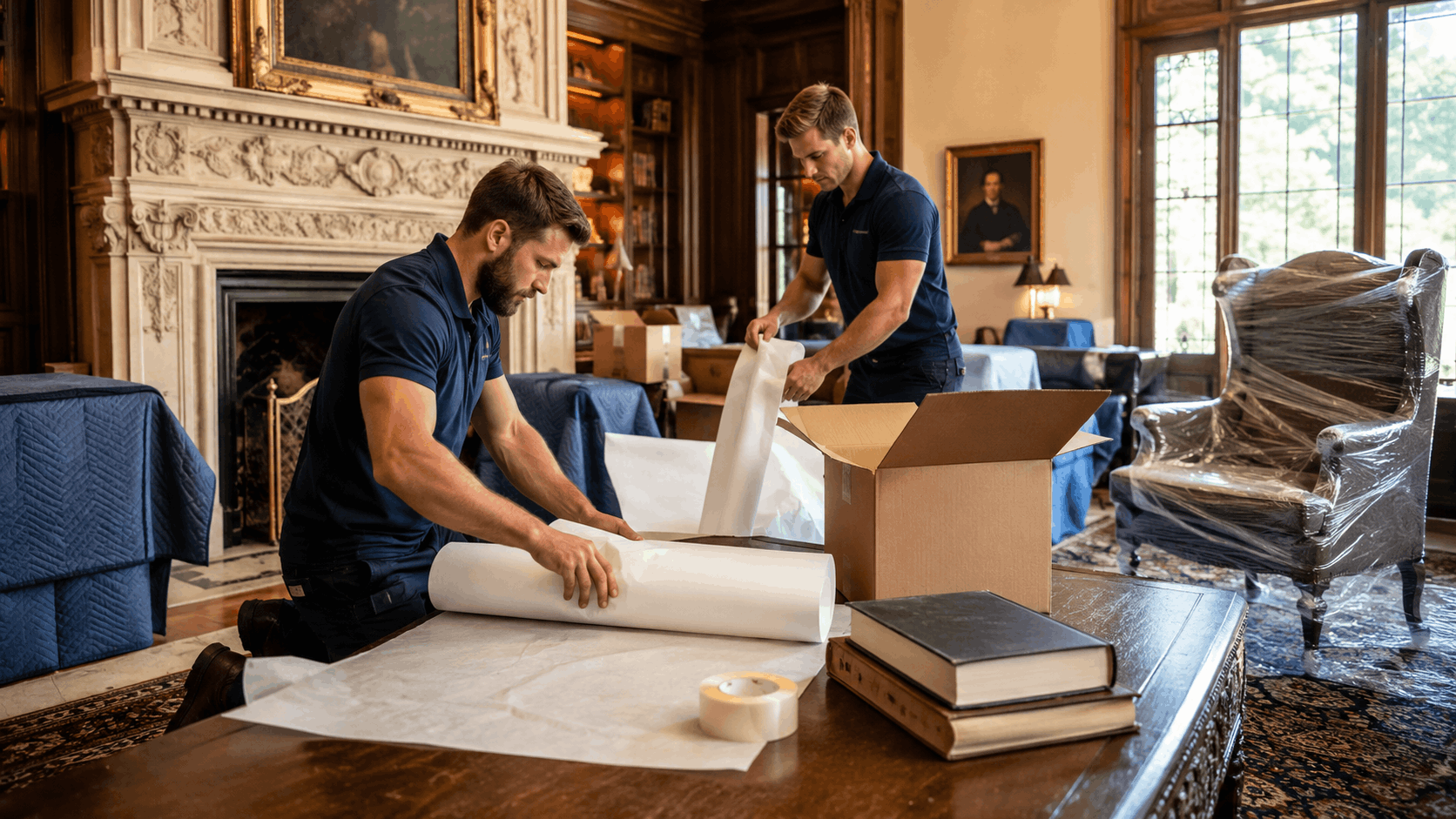
Standard boxes were never built for the contents of a San Marino estate. Custom crating is how we protect the fragile, valuable, and irreplaceable pieces that fill these homes.
Antique packing takes more thought than wrapping everyday items. Each piece gets a solution built for its size, shape, and material, whether that means a foam-lined crate or a carefully layered wrap. Here is how we handle the most demanding items.
Built-to-Fit Wooden Crates
For mirrors, sculptures, and framed art, we build wooden crates measured to the exact piece. A generic box leaves gaps that let an item shift and take impact, while a built-to-fit crate holds everything snug and secure. This is the core of proper fine art crating.
Inside each crate, we add foam padding shaped to cradle the item. Framed art rests against soft foam that spreads out pressure, so no single point bears the load. Corners and edges, which are the first things to chip, get the most cushioning.
Climate is part of the plan too. Wood, canvas, and antique finishes react to heat and moisture, so we account for temperature during transport and any storage. A crate protects against more than bumps, it buffers the piece from its surroundings.
These crates take time to build, and that is the point. Spending an hour on a proper crate for a valuable painting is far cheaper than repairing or replacing it. Our packing and crating services cover the full range of heritage items.
Grand Piano and Heavy Instrument Moving
Grand piano moving is one of the toughest jobs in a heritage home, and it is not something to hand to a general crew. These instruments are heavy, top-heavy, and full of delicate internal parts. We bring the right equipment and enough hands to do it safely.
The core tool is a piano board, a padded skid that supports the piano once the legs and pedals are removed. We secure the instrument to the board, then use straps and dollies to control its weight through the home. A grand piano usually takes a crew of three to five, depending on the route.
Stairs and thresholds are where pianos get damaged, and where people get hurt. On a narrow original staircase, we move slowly, one controlled step at a time, with crew members positioned above and below. Every threshold and turn is planned before the piano leaves its spot.
Other heavy instruments and oversized pieces get the same treatment. Whether it is an upright piano, a large safe, or a marble statue, we match the crew size and gear to the weight. Our dedicated piano moving service handles these jobs from start to finish.
Wrapping Heirloom and Vintage Furniture
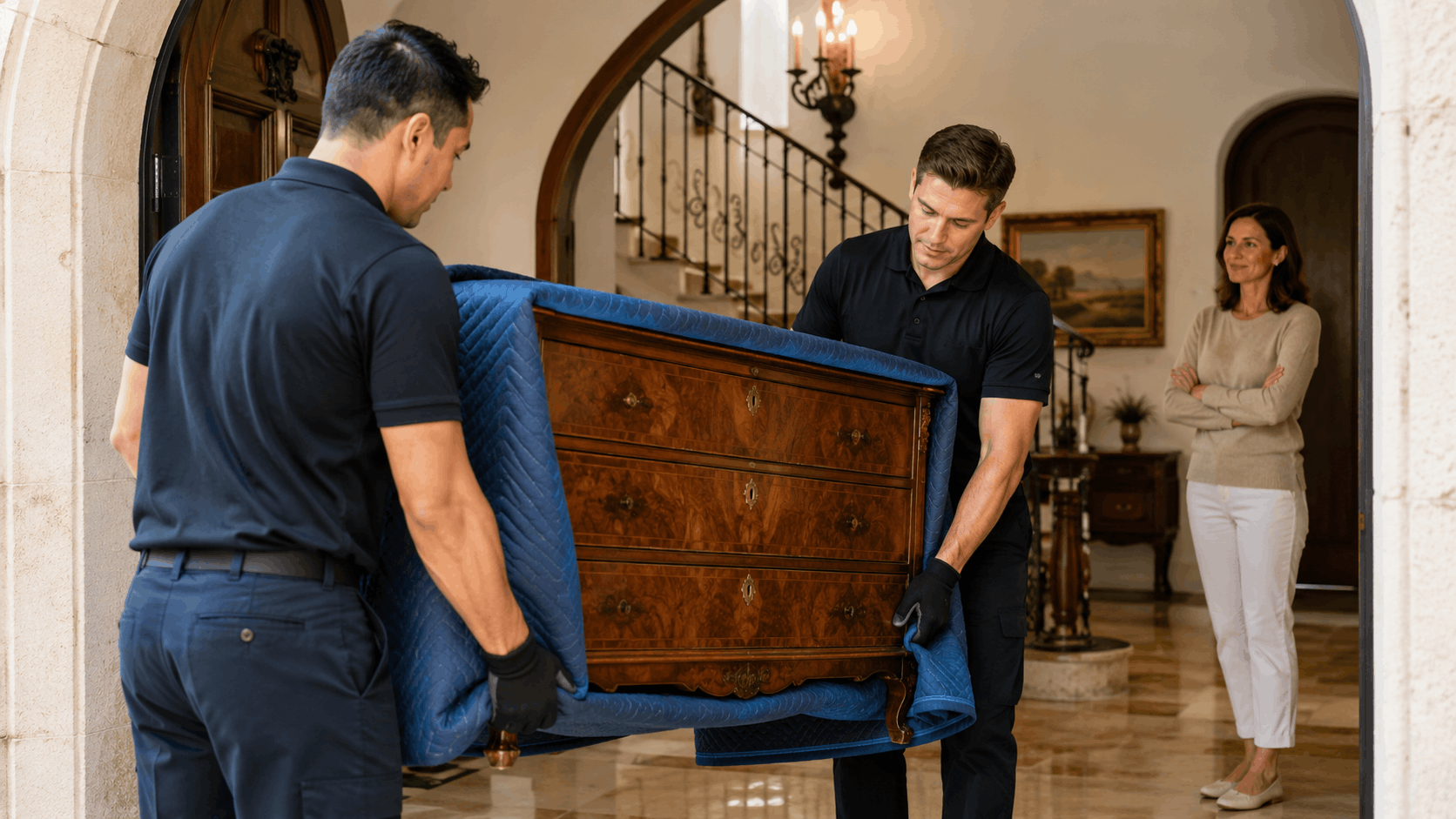
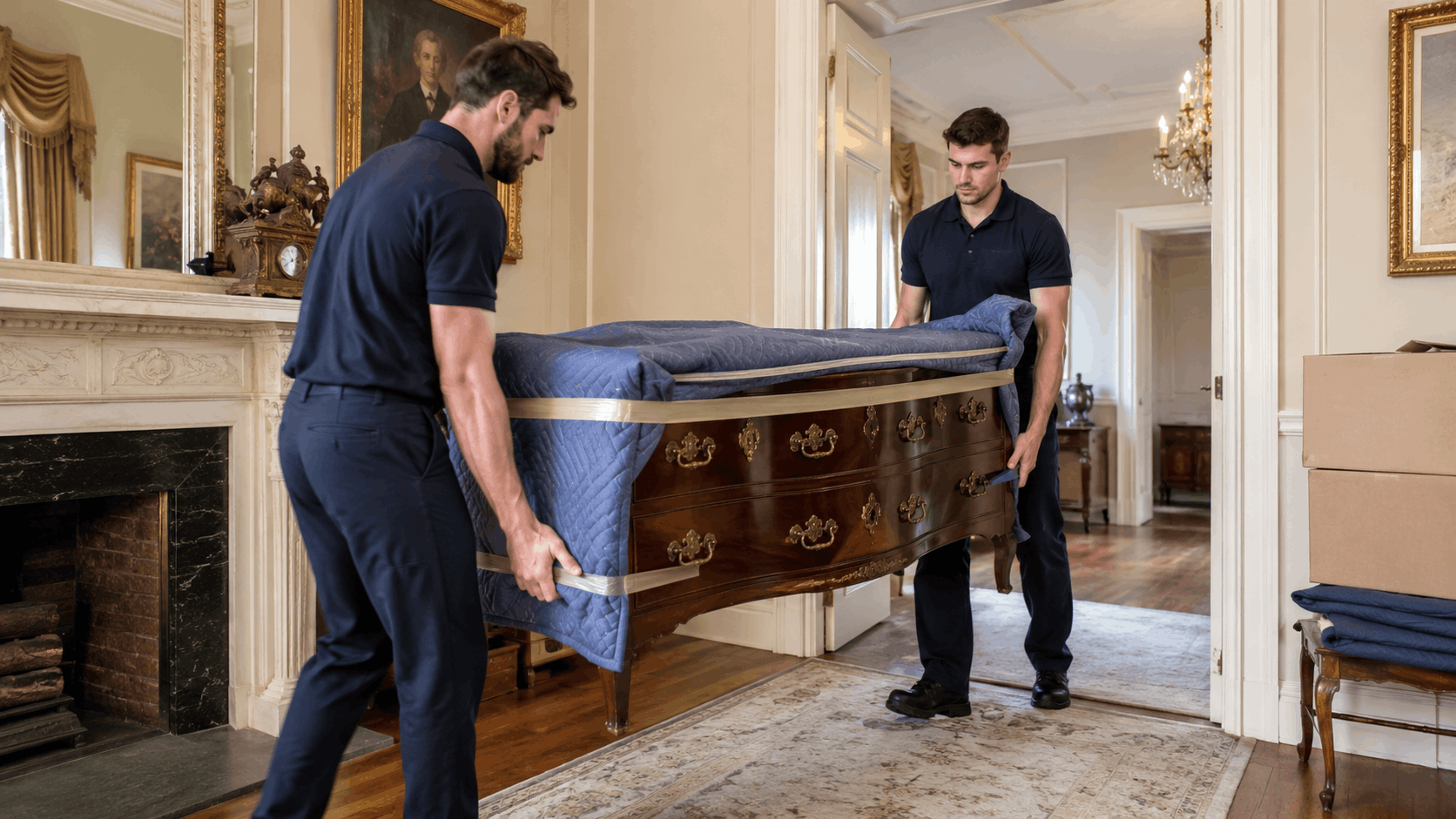
Delicate wood furniture needs more than a casual blanket toss. For heirloom furniture, we start with soft moving blankets to guard the finish, then add shrink wrap to hold everything in place. The blanket protects the wood, and the wrap keeps drawers and doors from swinging open.
Antique finishes can react badly to plastic if it touches the wood directly, so we always pad first and wrap second. This furniture wrapping method keeps moisture and pressure off the surface. For carved or inlaid pieces, we add extra padding around the fragile details.
Inventory tagging is part of every heritage move. Each piece gets a numbered tag, and we log its condition before it leaves the home. This record protects both the owner and our crew, since everyone knows exactly what left and what arrived.
Documenting each item also makes the new-home setup smoother. We know which piece goes where, and we can confirm nothing is missing during the final check. For a home full of valuable furniture, that paper trail is worth the effort.
Planning a Move Around San Marino Streets and Access Rules
Getting a truck to a San Marino estate is a job in itself. The city's charm comes from tree-lined streets and generous lots, and both create real access challenges. Good San Marino logistics start with knowing the neighborhood.
We plan street access and parking before moving day, not the morning of. That planning avoids blocked routes, unhappy neighbors, and last-minute scrambles.
Navigating Tree-Lined and Narrow Streets
Many residential streets near Lacy Park and off Huntington Drive are lined with mature trees that hang low over the road. A full-size moving truck does not always clear these branches or fit down the narrower blocks. We check truck access ahead of time and pick the right vehicle for each address.
Parking is the next hurdle. On some San Marino streets, there is little room to stage a large truck without blocking traffic or driveways. We scout the location in advance and plan exactly where the truck will sit during the move.
Timing helps too. Moving during quieter hours keeps the street clear and the job moving. Near busy spots like Huntington Drive, that timing can make a real difference in how smoothly the day runs.
Knowing these streets is something we have earned over many moves in the area. We serve heritage homes across the region, including nearby Pasadena, so we understand how these older neighborhoods are laid out.
Long Driveways and Gated Estates
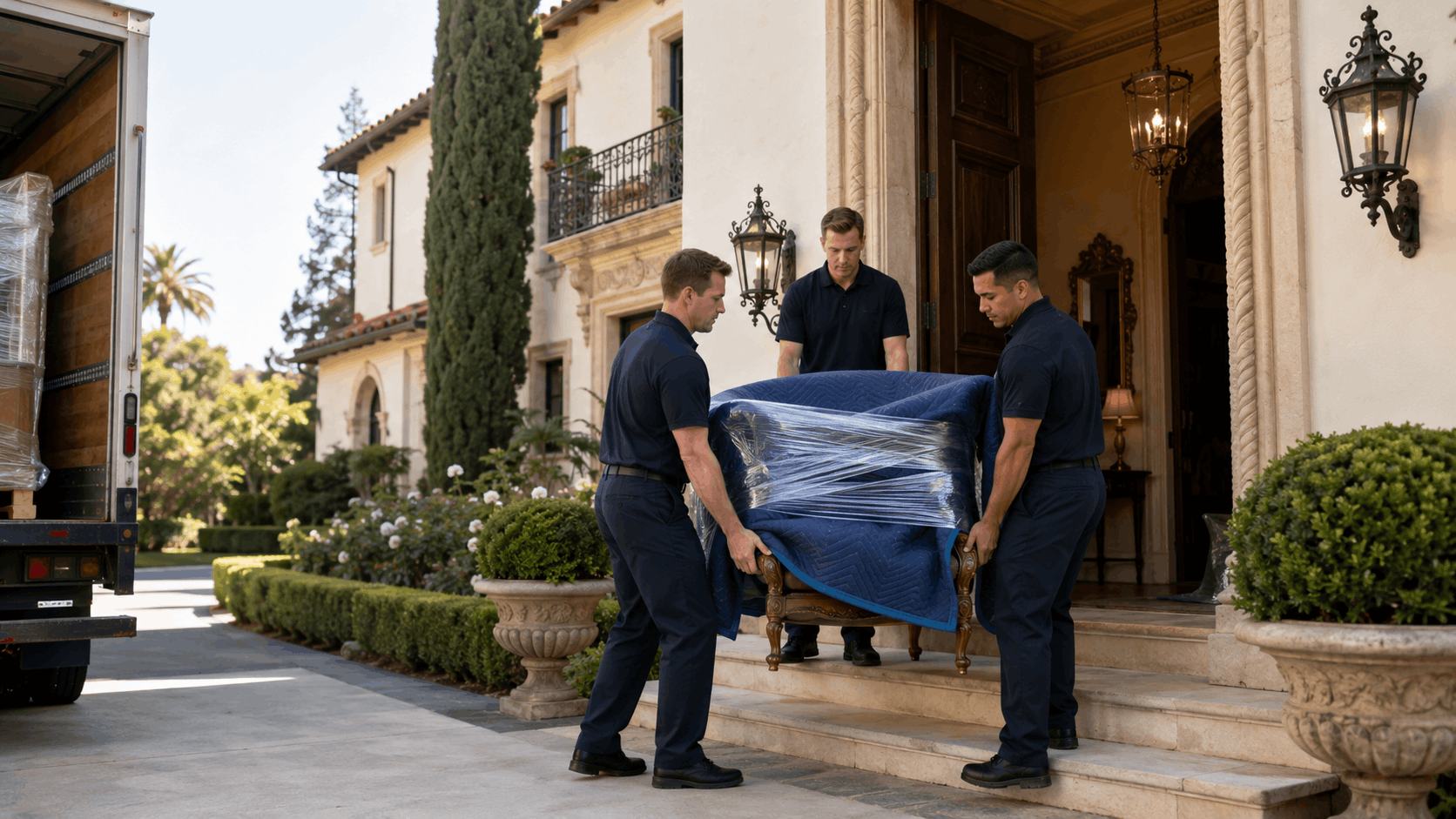
Plenty of San Marino homes sit back from the street behind long driveways and gates. These gated estates look private and beautiful, but they can make a direct truck approach impossible. We plan for the gate, the driveway length, and the turnaround space in advance.
When a large truck cannot reach the home, we use a shuttle vehicle. A smaller truck ferries items between the house and the main truck parked on the street. This shuttle service protects the driveway and keeps the move on schedule.
Limited turnaround space is common on these lots. A big rig that cannot turn around wastes time and risks damage to landscaping or paving. We map the approach and exit before the truck ever arrives.
Coordinating gate access with the owner is part of the plan too. We confirm codes, keys, and any staff we need to work with, so nothing stalls the crew at the entrance. Smooth access at both ends keeps the whole day on track.
City Permits and HOA Considerations
Some San Marino moves need parking notices or permits, depending on where the truck sits and how long it stays. We coordinate with the City of San Marino when a move calls for it, so the truck is parked legally and safely. Handling this ahead of time avoids fines and delays.
Moving permits usually take a few days to arrange, which is why we plan the details early. When we book a heritage move, we review the address and flag any permit needs right away. That lead time keeps everything smooth on moving day.
Some properties also fall under HOA rules or have their own access requirements. We check for these and follow whatever guidelines apply. Respecting the neighborhood keeps owners in good standing with their community.
You can review current parking and permit information through the City of San Marino website. We stay current on these rules so owners do not have to chase down the paperwork themselves.
Need Help in Los Angeles?
Popeye Moving & Storage serves Los Angeles and all of Los Angeles County.
Storage Options for Heritage Home Transitions
Not every move goes straight from one home to another. Owners often need storage between homes, during a renovation, or while a new estate is being prepared. The storage solutions for heritage items need to match the value of what is being stored.
We offer storage built for antiques, art, and fine furniture, not just general household goods. The right conditions protect these pieces while they wait.
Climate-Controlled Storage for Antiques
Wood, canvas, and heirloom pieces do not do well in heat or humidity swings. Climate-controlled storage holds temperature and humidity steady, which protects antique finishes from cracking, warping, or mold. For valuable items, this control is not a luxury, it is a requirement.
Humidity control matters most for older wood furniture and framed art. Too much moisture can swell joints and lift veneer, while too little can dry and crack the wood. A stable environment keeps these pieces in the condition they arrived in.
Our Los Angeles storage facilities are set up to hold these conditions year-round. We store heritage contents the same way we move them, with care and attention to what each item needs. Owners can trust that a piece put in storage will come out the same.
For long gaps between homes, this stable storage buys owners time without risk. You can explore our storage solutions to see what fits your timeline.
Short-Term Storage During Renovations
Restoring an older San Marino home often means clearing rooms while work is done. Short-term storage gives owners a safe place to keep furniture and art during a renovation. We keep the terms flexible, so the storage lasts exactly as long as the project does.
Renovation storage works best when items stay organized and reachable. Everything we store gets logged into an inventory, so owners know what is where. If a piece is needed back mid-project, we can find it easily.
Access is part of the plan too. Some renovations run long, and owners may want to retrieve certain items along the way. We arrange inventory access so getting to a piece does not mean digging through a full storage vault.
This flexibility keeps a restoration project moving. Owners can focus on the work on the home while their belongings stay protected and accounted for. When the home is ready, we move everything back in.
Secure Storage for High-Value Collections
Art collections and rare antiques call for more than a locked door. Secure storage for high-value items includes monitoring, controlled access, and clear records of what is inside. These measures protect against both theft and mishandling.
We limit who can reach stored collections and track every entry. For serious art collections, this controlled access is a real safeguard. Owners know their pieces are not sitting in an open warehouse.
Insurance and valuation options add another layer. We help owners set the right coverage for what is stored, so the value is protected on paper as well as in practice. Combined with monitoring, this gives full storage security.
For collectors between homes or downsizing, this kind of storage keeps a lifetime of pieces safe. Our vaulted storage option is built for exactly these high-value needs.
What to Expect on Moving Day With Our Crew
A heritage home move should feel organized, not chaotic. When our crew arrives, there is already a plan in place, and everyone knows their part. Here is how a moving day unfolds from start to finish.
Clear communication runs through the whole moving process. Owners always know what is happening and what comes next, so there are no surprises.
The Pre-Move Walkthrough and Plan
Every heritage move starts with a pre-move walkthrough, usually before the day itself. We tour the home, note the layout, and map the route for each large item. This home assessment is where the real planning happens.
During the walkthrough, we identify high-value pieces early. Antiques, art, and the grand piano get flagged for special handling and custom crating. Knowing these items ahead of time means we arrive with the right materials.
We also spot hazards during this visit. Low chandeliers, narrow doorways, and fragile fixtures all go into the plan. By the time the crew shows up, the moving plan already accounts for the home's quirks.
This upfront work is why our moves run smoothly. Instead of figuring things out on the fly, the crew follows a plan built for the specific home. That preparation protects both the property and the schedule.
Crew Roles and Careful Loading
On moving day, crew members are assigned by task. Some handle fragile items like art and antiques, while others manage general loading. Clear crew roles keep the delicate pieces in the most experienced hands.
The fragile team focuses only on high-value and breakable items. They pack, crate, and carry these pieces with full attention, without the pressure of also hauling boxes. That focus lowers the chance of a costly mistake.
Truck loading follows a plan too. We load heavy and stable items first to build a solid base, then secure everything against shifting. Proper load stability keeps furniture from sliding or tipping during transport.
Padding and straps hold everything in place inside the truck. A well-loaded truck is one of the biggest protections against damage on the road. We take the time to load it right, because a rushed load is a risky one.
Placement and Setup at the New Home
The job is not done when the truck arrives at the new home. Our crew places each piece where the owner wants it, so nothing has to be dragged around later. Furniture placement is part of the service, not an afterthought.
Anything we disassembled gets reassembled on site. Beds, tables, and large furniture go back together properly, and we unwrap each piece carefully to avoid last-minute scratches. The home is set up ready to live in.
We finish with a final inventory check alongside the owner. Using the tags we applied at the start, we confirm every item arrived and is in the expected condition. This final inventory gives everyone confidence the move is complete.
If anything needs adjusting, we handle it before we leave. Our goal is an owner who walks through the new home and finds everything in its place. For local moves like these, our local residential moving team handles the full process.
Need Help in Los Angeles?
Popeye Moving & Storage serves Los Angeles and all of Los Angeles County.
How to Choose the Right San Marino Historic Home Mover
Picking a mover for a heritage home is a bigger decision than picking one for a standard move. The wrong choice can cost you an irreplaceable piece or damage to the house itself. Choosing movers with the right experience and coverage is worth the extra research.
Here is what to look for and what to avoid when hiring for a San Marino estate.
Checking Experience With Older Estates
General moving history is not the same as heritage home experience. A company can move thousands of apartments and still struggle with a 1920s estate. Ask specifically about their work with older estates and historic properties.
Look for movers who can talk in detail about protecting original floors, moving pianos down narrow stairs, and crating fine art. Estate movers who have done this work will have real answers, not vague promises. Their experience shows in the specifics.
Ask for references from past San Marino jobs or similar heritage moves. Owners who have used a company for a historic home can tell you how careful the crew really was. Those references are some of the best information you can get.
Proven work in heritage homes matters more than a long general track record. You want a crew that has already faced the exact challenges your home presents. That experience is what protects your property.
Verifying License, Insurance, and Valuation
Before booking any mover, confirm they are licensed and insured. In California, movers should be registered with the state, and you can verify a company through the Bureau of Household Goods and Services. A licensed and insured mover protects you if something goes wrong.
Insurance coverage is not one size fits all. For high-value contents, ask about the moving valuation options available. Basic coverage often pays only a small amount per pound, which is far below the worth of an antique or a painting.
Full-value valuation covers the actual worth of your items, which matters for heritage homes. Discuss the value of your art and antiques and choose coverage that matches. This is a conversation to have before the move, not after a problem.
A reputable mover will walk you through these options clearly. If a company is vague about license or coverage, treat that as a warning sign. You can review our approach anytime through our contact page.
Understanding a Detailed Estimate
A good moving estimate spells out exactly what you are paying for. It should list labor, crating, materials, storage if needed, and any special handling. An itemized quote lets you compare offers fairly.
Watch out for vague pricing or a lowball number that seems too good. A quote that is much cheaper than the rest often skips the careful work a heritage home needs. Pricing transparency is a sign the company knows the real scope.
For a heritage move, the estimate should reflect custom crating, piano handling, and property protection. If those items are missing, the quote is probably incomplete. Ask questions until every line makes sense.
A clear estimate also sets expectations for the whole job. You know what the crew will do and what it will cost, with no surprises at the end. That transparency is part of a trustworthy move.
Final Thoughts
Moving a historic mansion or heritage home in San Marino is not a job for a general crew. The architecture, the antiques, and the tight streets all demand experience and care. From protecting original hardwood floors to crating a grand piano, every step calls for the right hands.
Our team knows these estates and the neighborhoods around Lacy Park, Oak Grove Avenue, and the Huntington. We treat each home and every piece inside it with the respect it deserves. If you are planning a move for a heritage property, call Popeye Moving & Storage Co. for a consultation and let our crew build a plan around your home.
Frequently Asked Questions
- How much does it cost to move a historic home's contents in San Marino?
- Costs vary widely based on home size, item value, and special crating needs. A smaller heritage move may start around a few thousand dollars, while a large estate with fine art, a grand piano, and custom crates can run much higher. The main factors are the number of high-value pieces, the amount of custom crating, staircase access, and any storage required. We provide an itemized estimate after a walkthrough.
- Do you provide custom crating for antiques and fine art?
- Yes. We build wooden crates measured to fit each piece, from framed paintings and mirrors to sculptures and delicate antiques. These crates include foam padding shaped to cradle the item and account for climate during transport. Custom crating is the safest option for one-of-a-kind and high-value pieces that standard boxes cannot protect. We recommend it for any item that is fragile, valuable, or irreplaceable.
- Can you move a grand piano down a narrow original staircase?
- Yes, this is a job our crew handles regularly in older San Marino homes. We use a padded piano board to support the instrument after removing the legs and pedals, then secure it with straps and dollies. A crew of three to five moves it slowly down the stairs, one controlled step at a time, with members positioned above and below. Every threshold and turn is planned before we start.
- How far in advance should I book a heritage home move?
- We recommend booking at least three to four weeks ahead for a heritage move, and more during the busy spring and summer season. Historic homes need a pre-move walkthrough, custom crating, and sometimes a parking permit, all of which take lead time. Booking early also gives you the best choice of dates. For large estates, six weeks of lead time is even better.
- Are you licensed and insured for high-value items?
- Yes. We are licensed and insured, and we offer valuation options that match the worth of high-value contents. Basic coverage pays only a small amount per pound, so for antiques and fine art we recommend full-value coverage that reflects the real value of your pieces. We walk you through these options before the move so your belongings are protected on paper as well as in practice.
- How do you protect original hardwood floors and staircases?
- We lay padded floor runners along every path the crew uses, so nothing drags across aged wood. Banisters and newel posts get wrapped, and stair treads are padded against scuffs and drops. Corner guards go on doorframes and wall corners where large pieces turn. All of this protection goes up during setup, before any furniture moves, so the home is shielded the entire time.
- Do I need a permit to park a moving truck in San Marino?
- Depending on where the truck sits and how long it stays, some San Marino moves require a parking notice or permit. We check the address ahead of time and coordinate with the City of San Marino when needed. Permits usually take a few days to arrange, which is why we plan them early. Our team handles the paperwork so you do not have to chase it down.
- Do you offer climate-controlled storage during a renovation?
- Yes. We provide climate-controlled storage that holds steady temperature and humidity, which protects wood furniture, art, and antiques during a renovation. Storage terms are flexible to match the length of your project, and everything is logged into an inventory so items stay organized. If you need a piece back mid-project, we arrange access so you can retrieve it without digging through a full vault.
- What happens if an item is damaged during the move?
- If an item is damaged, we handle it through a clear claims process backed by the valuation coverage you selected. This is why we document each piece with inventory tags and condition notes before the move. Full-value coverage applies the actual worth of the item rather than a small per-pound amount. We work with you directly to make the situation right.
- Do you serve areas near San Marino like Pasadena and Arcadia?
- Yes. We serve San Marino along with nearby cities including Pasadena, Arcadia, and the broader San Gabriel Valley, as well as the greater Los Angeles area. Many of these neighborhoods share the same older architecture and heritage homes, so our crews are familiar with the challenges. Whether your move is across town or between cities, we can build a plan that fits your property.
Popeye Moving & Storage Co. Team Team
Licensed moving and storage professionals serving Los Angeles and Los Angeles County.
Licensed in California · License #CAL T 189749 | USDOT 1472924 | MC 498816C
Why trust Popeye Moving & Storage?
Founded in 1994, Popeye Moving & Storage is a licensed and insured moving and storage service serving Los Angeles and Los Angeles County. All content is reviewed by our licensed technicians.

Need Help in Los Angeles?
Popeye Moving & Storage serves Los Angeles and all of Los Angeles County.
Related Articles
Bel Air Movers: Gated Community Logistics and Custom Estate Service
A local guide to moving in Bel Air, covering gated entry logistics, canyon road challenges, estate handling, storage, and how to choose the right movers.
Hancock Park Movers: Historic Home Crating and Heritage Property Service
A local guide to moving historic Hancock Park homes, covering custom crating, heritage property care, timing, costs, storage, and how to choose the right LA mover.

Los Feliz Movers: Hillside Home and Narrow Street Logistics
A local guide to moving into Los Feliz hillside homes, covering narrow streets, permits, equipment, storage, and how Popeye Moving handles tough hillside jobs.