Koreatown Movers: 1920s Building Service and Modern High-Rise Pricing

Key Takeaways
- Building type drives moving cost in Koreatown more than distance does, thanks to stairs, elevators, and carry distance.
- 1920s walk-ups cost more per move because narrow staircases and tight doorways add labor hours even for small apartments.
- Modern high-rises need service elevator reservations, certificates of insurance, and management sign-off booked in advance.
- Koreatown hourly rates run roughly $130 to $230 depending on crew size and building type.
- LADOT temporary no-parking permits reserve curb space and prevent long carries on busy blocks near Wilshire and Western.
- Early morning weekday moves beat the traffic on Western and Vermont and open up more curb space.
- Short-term storage bridges the common Koreatown lease gap when move-out and move-in dates do not match.
- Ask about add-on charges like packing materials, heavy item fees, and long-carry fees before booking to avoid surprises.
In This Article
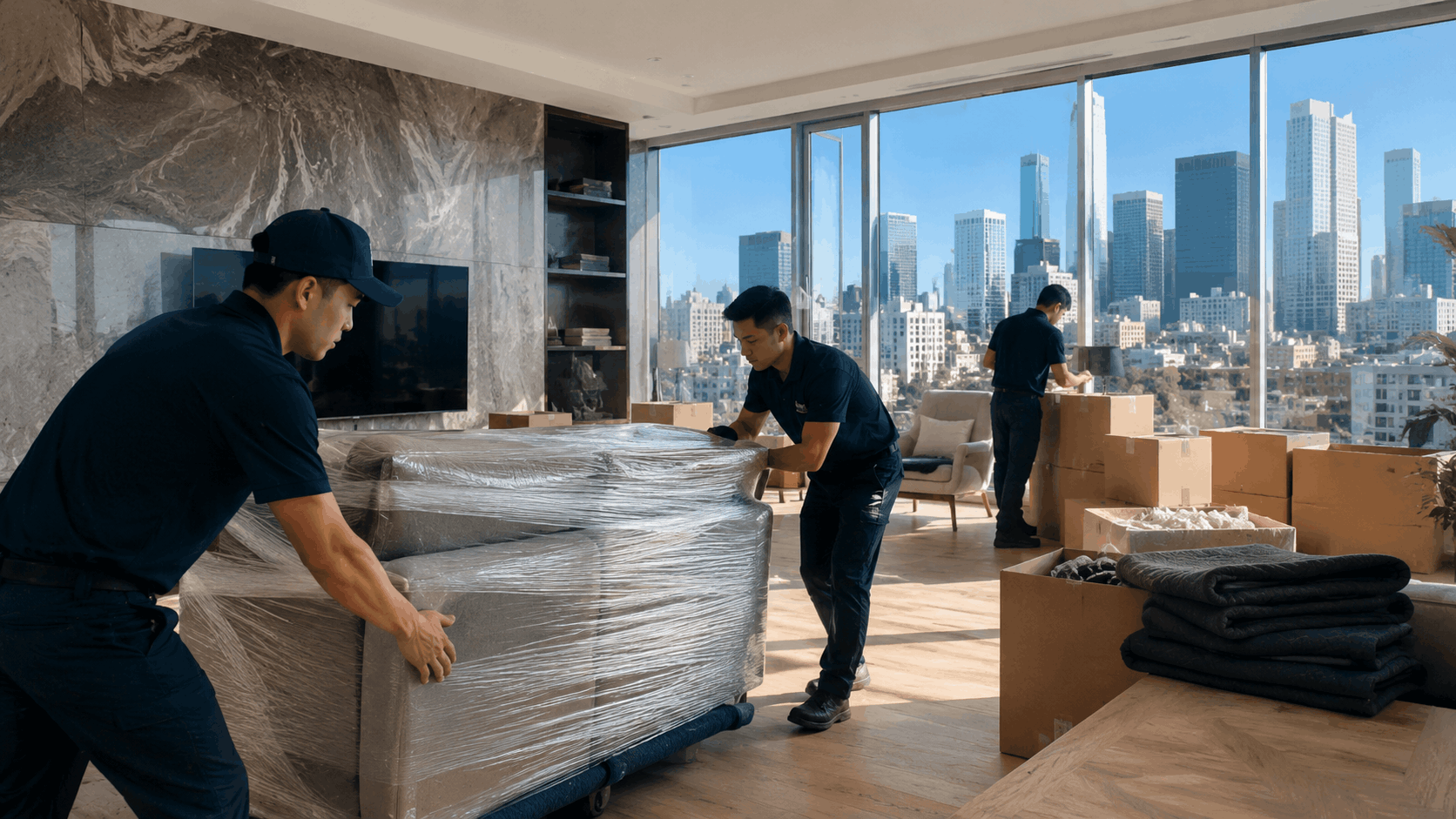
A Koreatown resident stands on the sidewalk with a lease in each hand. One is for a charming 1920s walk-up on Wilshire, all original hardwood and arched doorways. The other is a shiny new tower on Western with a rooftop pool and a service elevator. Both feel like home, but they move like two completely different animals.
That choice matters more than most people think. The building you pick changes how long your move takes, how many movers you need, and what your final bill looks like. A studio in a pre-war brick building can cost more to move than a one-bedroom in a modern high-rise, and the reason has nothing to do with distance.
Our team has moved families in and out of both types across this neighborhood for years. In this guide, we break down building types, elevator rules, parking headaches, and real pricing for both the old low-rise walk-ups and the new glass towers. By the end, you will know what to expect and how to plan.
Why Moving in Koreatown Is Different From the Rest of LA?
Koreatown packs more people into fewer square miles than almost anywhere else in Los Angeles. That density shapes every move here. The streets are tight, the buildings are old and new all at once, and parking is a daily fight.
Most neighborhoods have one main building style. Koreatown does not. On a single block you might find a 1926 stucco walk-up next to a 2021 luxury tower. That mix creates two very different pricing worlds, and knowing which one you are dealing with saves real money.
- Some buildings have no elevator at all, only narrow stairs.
- New towers require booked service elevators and insurance paperwork.
- Street parking near Wilshire Boulevard and Western Avenue is scarce and often metered.
- Traffic slows loading and unloading during most of the day.
These are the reasons any honest local residential moving crew will ask about your building before quoting a price.
The Density Problem Along Wilshire and Western
Wilshire Boulevard and Western Avenue carry some of the heaviest traffic in the city. A moving truck cannot just double-park on these roads without slowing everyone down and risking a ticket. That means crews often park a block or two away and carry items farther, which adds time.
Loading and unloading depend on curb access. On a busy stretch near the Wilshire and Western Metro station, open curb space disappears early, especially during rush hours. Our drivers scout the block first and pick the safest spot before the crew starts hauling.
Traffic near Koreatown Galleria and the shops along 6th Street can crawl by mid-afternoon. A move that starts at 8 a.m. often finishes hours sooner than the same job started at noon. Timing the loading window around this traffic is one of the biggest ways to keep costs down.
Because loading takes longer in a dense neighborhood, the labor clock runs longer too. That is why we plan routes and parking before the truck ever leaves the yard.
Old Buildings Meet New Towers
Koreatown grew in two big waves. The first came in the 1920s and 1930s, leaving behind rows of low-rise brick and stucco apartments. Many of these still stand proudly near Normandie and 8th Street with their original details intact.
The second wave is happening right now. New high-rise towers keep rising near 6th Street and Vermont Avenue, offering pools, gyms, and secure garages. These modern buildings look nothing like their older neighbors and they do not move like them either.
A 1920s building gives you character but often no elevator and tight corners. A new tower gives you amenities but strict rules and long carries from the garage. Each style has trade-offs that show up on move day.
Knowing which world you live in helps you plan the crew size, the truck spot, and the schedule. Our team treats these two building types as separate jobs with separate playbooks.
Why Building Type Drives Your Price
In most of Los Angeles, distance drives the price. In Koreatown, the building drives it. A move across three miles of the neighborhood can cost less than a move across the street if the second building has four flights of stairs.
The reason is labor time. Movers charge mostly by the hour here, so anything that slows the crew adds to the bill. Stairs, tight hallways, elevator waits, and long carries all eat minutes that add up.
A modern tower with a reserved service elevator can actually be quicker than a small walk-up, even with more furniture. The elevator does the heavy lifting that legs would otherwise do. That single feature can change the moving cost more than the size of your apartment.
So the first question is never how far. It is what kind of building type sits at each end of the move. That answer sets the whole plan.
Get Your Free Quote
Tell us about your move. We'll be in touch soon.
Moving Into and Out of 1920s Koreatown Buildings
The historic brick and stucco apartments near Wilshire and Normandie are beautiful, but they were built long before moving trucks and modern furniture. Crews have to work around features that were never meant for a queen box spring or a sectional couch.
These pre-war properties reward patience and planning. A rushed crew damages walls and floors. A careful one protects the building and the tenant deposit while still finishing on time.
Here is what our movers actually deal with inside these older Koreatown properties.
Narrow Staircases and No Elevators
Most pre-war walk-ups near Normandie Avenue have no elevator at all. Everything goes up and down by hand on a staircase that was built narrow to save space. Some of these stairs wind in tight turns that force movers to lift furniture over the railing.
Every flight adds time. A third-floor unit means the crew climbs the same stairs dozens of times with heavy loads. That repetition is why walk-up moves take longer than most people expect, even for a small studio.
Safety matters more than speed on these stairs. Our crews use two-person carries, straps, and clear communication to keep both the furniture and themselves safe. Rushing a winding pre-war staircase is how injuries and dents happen.
We plan the order of items carefully so the biggest pieces go first while the crew is fresh. Small boxes come later. This rhythm keeps a walk-up move steady instead of exhausting.
Doorways, Corners, and Furniture That Won't Fit
Older Koreatown units often have narrow doorways and short door frames. A modern sofa or a tall dresser may not clear the opening without a fight. Add a tight hallway with a sharp turn and the problem doubles.
The fix is usually furniture disassembly. Bed frames come apart, table legs unscrew, and sometimes doors get lifted off their hinges to gain an inch. Our crews carry the tools to take things apart and put them back together at the new place.
Some pieces simply will not fit through a 1920s door no matter what. In those cases we plan ahead, either hoisting through a window or advising the tenant before move day. Nobody likes finding out at the door that a couch cannot go inside.
Measuring in advance saves headaches. When we do a walkthrough or phone survey, we ask about doorway widths and hallway turns. That small step prevents big surprises when the truck arrives.
Floor and Wall Protection in Older Units
Many vintage Koreatown apartments still have their original hardwood floors and plaster walls. These features are part of the charm, and they scratch and crack easily. Damage can cost a tenant their deposit or leave a landlord unhappy.
Our team lays down floor protection before moving anything heavy. Runners, mats, and corner guards keep hardwood from getting gouged by furniture legs and dollies. On stairs, we protect the treads too.
Wall padding matters just as much in these tight spaces. Plaster corners chip if a dresser bumps them, so we pad the hallways and doorways along the carry path. Our packing and crating team also wraps furniture to stop scuffs before they start.
These older buildings deserve respect. A careful crew leaves the unit looking exactly as it did before the boxes showed up. That care is what keeps deposits intact.
Street Parking and Loading Near Older Blocks
The residential streets around 8th Street fill up with parked cars overnight. By morning, there may be no open curb space for a moving truck. That forces the crew to park farther away and carry items a longer distance.
A loading zone permit or good timing solves most of this. Reserving curb space in front of the building keeps the carry short and the clock low. Without it, a long carry can add an hour or more to the job.
Some blocks have permit-only parking that limits how long a truck can sit. Others have narrow one-way streets that make backing a truck in tricky. Our drivers know these blocks and plan the approach in advance.
Early morning is the sweet spot for street parking near these older blocks. More spots open up and traffic is lighter. Getting the truck settled early sets the whole move up for success.

Need Help in Los Angeles?
Popeye Moving & Storage serves Los Angeles and all of Los Angeles County.
Moving Into Modern Koreatown High-Rises
The new luxury towers near Wilshire and Vermont play by a completely different set of rules. They come with elevators, loading docks, and amenities, but also with paperwork and strict schedules. A high-rise moving job needs planning long before the truck arrives.
These buildings protect their common areas fiercely. Miss a rule and management can block your move or charge for damage. Knowing the process ahead of time keeps everything smooth.
Here is how a move into a modern Koreatown apartment tower actually works.
Service Elevators and Reservation Windows
Almost every luxury tower requires you to book a service elevator in advance. This is a padded freight elevator set aside for moves so tenants are not fighting for space with the regular passenger cars. Only one move happens at a time.
The elevator reservation comes with a time slot. Many buildings limit move-in hours to weekdays or certain windows, and weekends fill up early. If your slot is 9 a.m. to noon, the crew has to work within that window or reschedule.
Missing the reservation can mean losing the day entirely. That is why we confirm the booking with building management before move day and plan the crew size to finish inside the window. A larger crew often makes sense here to beat the clock.
We coordinate directly with the front desk or property manager to lock the elevator time. This one step prevents a frequent high-rise move disaster: showing up with a full truck and no elevator access.
Loading Docks and Building Management Rules
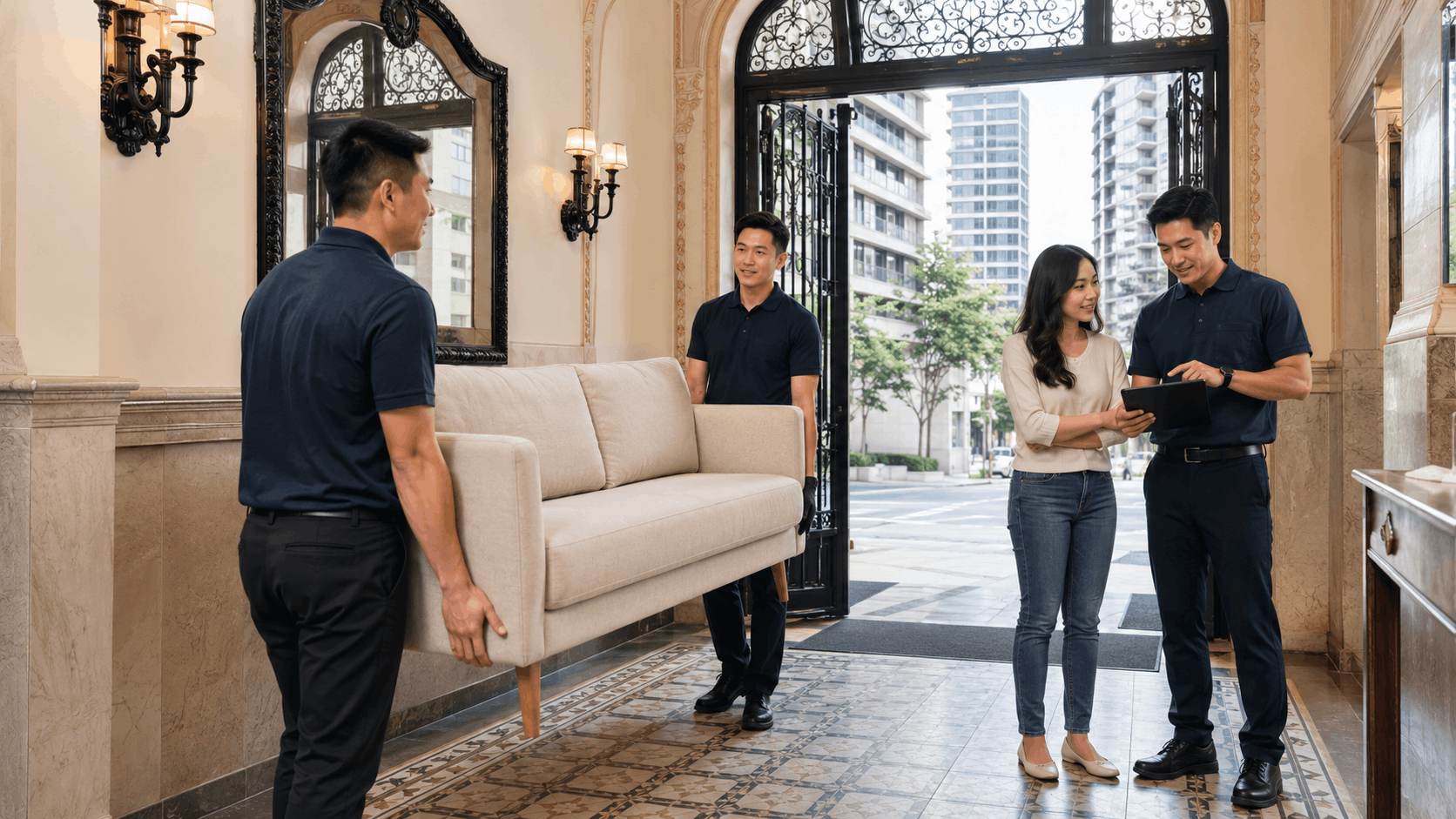
Modern towers near 6th Street usually have a dedicated loading dock. This gives the truck a safe, off-street spot to unload, which beats fighting Wilshire traffic. But the dock has its own rules about size and timing.
Most buildings require a certificate of insurance before they let any mover in. This document proves the moving company carries liability coverage that protects the building. Without it, building management will turn the crew away at the door.
Management often needs a sign-off sheet, an approved move date, and sometimes a refundable deposit. These steps feel like a lot, but they exist to protect everyone. Our team handles this paperwork so tenants do not have to chase it down.
We send the certificate of insurance ahead of time and confirm the dock reservation. When the truck rolls up, the building is already expecting us. That coordination keeps the move on schedule.
Long Carries From Garage to Unit
High-rise convenience comes with one hidden cost: distance. The parking garage or loading dock can sit far from the elevator, and the elevator can be far from the unit door. A long carry to a high floor adds real time.
Picture a truck at the dock, a hundred-foot walk to the freight elevator, a ride to the 20th floor, then a long interior hallway to the door. Each trip takes minutes, and a full apartment needs many trips. Those minutes stack into hours.
Crews use dollies and carts to move more per trip and cut down on walking. Planning the shortest path from dock to unit matters a lot. Our team maps this route during the first walkthrough or call.
Some buildings charge a long-carry situation is just part of high-rise life. Knowing about it in advance means the quote reflects reality instead of surprising the tenant on move day.
Protecting Common Areas and Deposits
High-rise lobbies have marble floors, glass doors, and expensive finishes. One scratch can trigger a damage charge against the tenant's move-in deposit. Building management inspects these areas closely.
Our crews handle common area protection before anything moves. We lay floor runners across the lobby and hallways so dollies never touch the finished surfaces. This keeps the polished floors safe.
Lobby padding and elevator pads go up next. Most buildings pad the freight elevator themselves, but we double-check and add more if needed. Corner guards protect walls along the carry path.
This care protects the tenant's deposit directly. When the building inspects after the move and finds no marks, the deposit stays where it belongs. That is money saved without lifting a finger.
How Pricing Works for Both Building Types
Now for the part everyone wants to know: the money. Moving pricing in Koreatown runs mostly on an hourly rate, so the clock decides the final bill. The building type is the biggest thing that speeds up or slows down that clock.
Below is a rough guide to how the numbers work for both worlds. Actual quotes depend on your specific building, furniture, and access.
| Building Type | Typical Crew | Hourly Range | Studio Move | One-Bedroom Move |
|---|---|---|---|---|
| 1920s Walk-Up | 2-3 movers | $130-$200/hr | 3-5 hours | 5-7 hours |
| Modern High-Rise | 3 movers | $160-$230/hr | 2.5-4 hours | 4-6 hours |
These ranges give a starting point. The cost factors below explain why two similar apartments can land at very different totals.
Hourly Rates and Crew Size
Most Koreatown moves run between $130 and $230 per hour depending on crew size. A two-mover team costs less per hour but works slower on big jobs. A three-mover team costs more per hour but often finishes sooner.
The math is not always obvious. For a small studio in an easy building, two movers may be the cheaper choice overall. For a walk-up or a high floor, adding a third mover usually lowers the total moving cost because the job wraps up sooner.
Our team recommends the crew size that fits your building, not the one that pads the bill. We would rather send three movers and finish early than send two and drag the day out. That honesty is how we quote.
Ask any mover how crew size changes your estimate. A good answer shows they thought about your specific access. A vague answer is a warning sign.
Why 1920s Walk-Ups Cost More Per Hour of Labor
A walk-up cost often surprises people because the apartment is small. The size is not the issue. The stairs are. Every item goes up and down by hand, and every flight adds trips.
A studio that would take three hours in an elevator building can take five in a third-floor walk-up. That is two extra labor hours at the hourly rate, which adds up. The narrow doorways and tight turns slow things further.
Winding staircases force two-person carries even for medium items. That means both movers are tied up on one piece instead of splitting the load. The result is more time on the clock for the same amount of stuff.
None of this is a hidden charge. It is just how physics works in a pre-war building. A crew that knows these buildings quotes the extra hours upfront so there is no shock at the end.
High-Rise Pricing and Elevator Time
High-rise pricing looks different because the elevator changes the game. A reserved service elevator moves heavy loads efficiently, which can make a tower move shorter than a walk-up. But other factors add time.
The elevator wait counts. If the freight elevator is shared or slow, the crew stands around, and that time is still on the clock. Long carries from the dock to the elevator and from the elevator to the unit add minutes too.
Reserved move windows also shape the plan. If the building only allows moves until noon, we bring a bigger crew to finish inside that window. That raises the hourly rate but keeps the total in check.
A good quote for a high-rise accounts for the elevator, the carry distance, and the reservation window. We ask about all three before giving a number. That is the only way to quote a tower move accurately.
Extra Charges to Watch For
Beyond the hourly rate, a few extra charges can show up. The usual one is packing materials like boxes, tape, and wrapping. If you want the crew to pack for you, that adds labor and supply costs.
A heavy item fee applies to things like pianos, safes, and large marble tables. These need special equipment and extra hands. Our piano moving pros handle these pieces so they arrive safe.
Long-carry fees come up when the truck cannot park close and the walk is long. This is common near busy stretches of Wilshire. A good mover explains this charge before the move, not after.
Always ask for the full list of possible add-ons before booking. A transparent company gives you every number upfront. If a quote seems too low, ask what is missing, because something usually is.
Need Help in Los Angeles?
Popeye Moving & Storage serves Los Angeles and all of Los Angeles County.
Parking and Permits Across Koreatown
Parking is the single biggest headache in this neighborhood. There are more cars than curb space, and the truck needs a spot close to the door. Getting this wrong turns a short move into a slow, expensive one.
Permits, meters, and residential street rules all come into play. Knowing them ahead of time keeps the truck legal and the carry short. Here is how it breaks down across Koreatown.
LADOT Temporary No-Parking Permits
The Los Angeles Department of Transportation issues temporary no-parking permit signs that reserve curb space for a moving truck. You post the signs a few days before the move, and the spot stays open for the truck.
This is the cleanest way to secure a good loading spot near a busy building. Without it, the crew gambles on finding open curb space that morning. On a packed Koreatown block, that gamble often loses.
The permit takes a little lead time to arrange through LADOT, usually a week or more. We help clients figure out whether a permit makes sense for their block. On some quiet streets it is not needed, but on Wilshire-adjacent blocks it often is.
The small permit fee is worth it when it saves an hour of long carrying. Reserved curb space keeps the crew moving and the bill lower. It is one of the smartest pre-move steps in this neighborhood.
Metered and Permit-Only Streets
Metered parking lines much of Wilshire and the commercial stretches nearby. A truck can sometimes use meters, but they limit how long it can stay and cost money by the hour. Meters are rarely a good long-term spot for a full move.
Many residential blocks around Oxford Avenue have permit parking that only allows residents to park during certain hours. A moving truck without a permit risks a ticket or a tow. These rules change block by block.
Our drivers know which streets allow truck parking and which do not. We scout the block before move day and pick the safest legal spot. That local knowledge prevents tickets that would otherwise land on the tenant.
When meters and permit blocks make parking impossible, an LADOT reservation is the answer. We weigh the options for each address. The goal is always the shortest, safest carry to the door.
Timing Your Move Around Traffic
Traffic on Western Avenue and Vermont builds through the day. An early morning start beats the worst of it and opens up more curb space too. We push clients toward 8 a.m. starts whenever the building allows.
Midday can also work if the morning is booked. The stretch between the morning and evening rush is calmer than most people expect. What you want to avoid is loading during the 4 to 7 p.m. crawl.
Good move timing saves money because the crew spends less time stuck in traffic and more time carrying boxes. A truck idling on Wilshire is still on the clock. Beating the rush keeps that clock efficient.
We factor traffic into every schedule we build. Our drivers pick routes that dodge the worst chokepoints around Koreatown. That planning is invisible to the client but shows up in a lower final bill.
Packing and Storage Options for Koreatown Residents
Small apartments and mismatched lease dates make packing and short-term storage common needs here. Many Koreatown units are tight, so there is little room to stack boxes for weeks. Planning both the packing and the storage side smooths the whole move.
Whether you need full help or just a hand with the fragile stuff, there are options. Here is how residents can plan for packing and storage in this neighborhood.
Full and Partial Packing Help
A packing service can handle the entire apartment or just the tricky parts. Full-service packing means the crew boxes everything, from books to dishes, with the right materials. This saves days of work for busy tenants.
A partial pack makes sense when you want to save money but still need help with the hard stuff. Many Koreatown clients ask us to pack just the kitchen and the fragile items while they handle the clothes and books themselves.
The kitchen is where partial packs pay off most. Glasses, plates, and stemware break easily without proper wrapping. Our full-service packing team knows how to box these so nothing shatters on the trip.
We match the packing level to the budget and the timeline. Some clients want everything done for them, others want a light touch. Either way, proper packing protects the contents through the bumpy neighborhood ride.
Short-Term Storage Between Leases
Koreatown lease dates rarely line up perfectly. Your move-out might be the first of the month while your new place opens up two weeks later. That lease gap leaves your belongings with nowhere to go.
Short-term storage fills that gap. The crew loads everything into a secure storage unit, holds it for the days or weeks needed, then delivers it to the new place. You never have to touch the boxes twice.
Our storage solutions cover exactly this kind of timing problem. Clean, secure space keeps furniture and boxes safe until the new unit is ready. It takes the pressure off matching two dates perfectly.
This service is common in Koreatown because turnover is high and timing is tricky. We build storage right into the move plan when the dates do not match. One crew handles both ends.
Protecting Valuables in Transit
Even a short move across the neighborhood is bumpy. Potholes and tight turns can jostle a truck. That is why we wrap valuables carefully before they ever go on the truck.
Electronics like TVs and computers get padded and boxed to survive the ride. Screens crack easily, so we treat them with extra care. Original boxes are best, but we bring padded alternatives when those are gone.
Art, mirrors, and antiques need custom wrapping too. Our crews use blankets, bubble wrap, and sometimes custom crates for the most delicate pieces. The specialty moving team handles items that need extra protection.
A short trip is still a real trip. Proper wrapping means your valuables arrive in the same shape they left. That care matters just as much on a two-mile move as a two-hundred-mile one.

Need Help in Los Angeles?
Popeye Moving & Storage serves Los Angeles and all of Los Angeles County.
How Popeye Moving & Storage Handles Koreatown Moves
We have moved families in and out of both the historic walk-ups and the new towers across this neighborhood for years. That experience with both building types is what sets a real Koreatown movers crew apart from a generic company. Neighborhood knowledge saves customers time and money.
Here is how our team approaches every Koreatown move, from the streets to the paperwork to the final quote.
Local Crews Who Know the Streets
Our local crew has driven every block from Wilshire to Vermont to Olympic Boulevard. They know which streets allow truck parking, which corners are too tight, and where the loading spots hide. That knowledge is not in any app.
The best driving routes around Koreatown change with the time of day. Our drivers know when to skip Wilshire and take a side street instead. Small choices like these shave time off every move.
We serve the wider Los Angeles area too, but Koreatown gets special attention because its buildings are so unique. The team treats each block like home turf. That familiarity keeps the truck out of trouble.
Knowing the streets means fewer surprises on move day. No wrong turns, no dead ends, no long detours around traffic. The crew shows up ready and gets right to work.
Handling Building Paperwork and COIs
High-rise moves live or die on paperwork. Our team provides the certificate of insurance that building management requires, and we send it well before move day. No last-minute scramble at the front desk.
We handle the rest of the building paperwork too, from move reservations to management sign-off sheets. Tenants often do not know what their building needs. We do, so we ask the right questions early.
This coordination with property managers is what keeps a tower move smooth. We confirm the elevator booking, the dock time, and the insurance all at once. When the truck arrives, the building is already expecting us.
Skipping this step is how moves get delayed or canceled. We treat the paperwork as part of the job, not an afterthought. That saves clients the stress of chasing forms themselves.
Clear Quotes With No Surprises
A good moving quote reflects your actual building. We ask about stairs, elevators, doorways, and parking before giving a number. That upfront estimate accounts for the real conditions in Koreatown, not a generic average.
Our transparent pricing lays out the hourly rate, the crew size, and any likely add-ons. If a walk-up needs an extra hour for stairs, we say so. If a high-rise has a long carry, that goes in the quote too.
Nobody likes a bill that grows on move day. We would rather quote honestly upfront and stick to it. That is why we walk through every cost factor before you book.
Ready to plan your move? Contact our team for a clear estimate built around your exact building. We will tell you what to expect before the truck ever rolls up.
Final Thoughts
Koreatown moves come in two flavors: the historic walk-up and the modern tower. Each has its own rules, its own challenges, and its own pricing. Knowing which one you are dealing with is the first step to a smooth move.
Walk-ups cost more in labor because of stairs and tight spaces. High-rises need reservations, insurance, and paperwork but move efficiently with a service elevator. Parking and timing shape the bill for both.
Our team knows these buildings and these streets. Whether you are moving into a 1926 stucco charmer or a glass tower on Western, we plan the job around your exact building. Call us today for an honest quote and a move done right.
Frequently Asked Questions
- How much does it cost to move within Koreatown?
- Most Koreatown moves run between $130 and $230 per hour depending on crew size and building type. A studio might take three to five hours, while a one-bedroom often runs five to seven in a walk-up. The apartment size and whether you have stairs or an elevator change the total more than the distance. We give an hourly range upfront based on your exact building.
- Why do 1920s walk-ups cost more to move than high-rises?
- Walk-ups have no elevator, so every item goes up and down narrow stairs by hand. That adds labor time, sometimes two extra hours compared to a building with a service elevator. Tight doorways and winding staircases force two-person carries that slow the crew further. The apartment may be small, but the stairs make the labor cost higher per move.
- Do I need a permit to park a moving truck in Koreatown?
- On many busy blocks, yes. LADOT issues temporary no-parking permits that reserve curb space for your truck. You post the signs a few days ahead, and the spot stays open. On quiet streets you may not need one, but near Wilshire and Western where parking is scarce, a permit prevents a long carry. We help figure out if your block needs one.
- How far in advance should I book a high-rise elevator?
- Most modern Koreatown towers ask for a service elevator reservation at least a few days to a week ahead. Weekend slots fill up fastest, so book early if you need a Saturday. The building also limits move-in hours, so you get a set time window. We confirm the elevator booking with management before your move day so there are no surprises.
- What is a certificate of insurance and why does my building want one?
- A certificate of insurance, or COI, proves the moving company carries liability coverage that protects the building. Most high-rises require one before they let any mover in the door. It covers damage to lobbies, elevators, and common areas during the move. Our team provides the COI and sends it to building management ahead of time, so the paperwork is done before we arrive.
- How long does a typical Koreatown apartment move take?
- A studio usually takes two and a half to five hours depending on the building. A one-bedroom runs four to seven hours, and a two-bedroom often takes six to nine. Walk-ups land on the higher end because of stairs, while high-rises with a reserved elevator finish sooner. The building type shapes the duration more than the number of rooms.
- Can movers handle stairs in older buildings without an elevator?
- Yes. Our crews move furniture up narrow pre-war staircases every week in Koreatown. We use two-person carries, straps, and careful communication to keep both the furniture and the movers safe. Large pieces get disassembled when they will not clear the turns. It takes more time than an elevator building, but the crew is trained for exactly these winding walk-up stairs.
- Do you offer storage if my move-in date is delayed?
- Yes. Short-term storage handles the common Koreatown lease gap where your move-out and move-in dates do not line up. The crew loads everything into a secure storage unit, holds it for the days or weeks you need, then delivers it to the new place. You never handle the boxes twice, and your belongings stay safe until your new unit is ready.
- What is the best day and time to move in Koreatown?
- Early morning on a weekday is ideal. Traffic on Western and Vermont is lighter, more curb space is open, and the crew avoids the afternoon crawl. Weekends fill up high-rise elevator schedules early, so book those slots early. Avoid loading during the 4 to 7 p.m. rush when the streets clog up. Good timing keeps the move efficient and the bill lower.
- Are there hidden fees I should ask about before booking?
- Always ask about add-on charges before you book. Common ones include packing materials, heavy item fees for pianos or safes, and long-carry fees when the truck cannot park close. A transparent mover lists these upfront. If a quote seems unusually low, ask what is missing, because something often is. We walk through every possible cost factor before you commit.
Popeye Moving & Storage Co. Team Team
Licensed moving and storage professionals serving Los Angeles and Los Angeles County.
Licensed in California · License #CAL T 189749 | USDOT 1472924 | MC 498816C
Why trust Popeye Moving & Storage?
Founded in 1994, Popeye Moving & Storage is a licensed and insured moving and storage service serving Los Angeles and Los Angeles County. All content is reviewed by our licensed technicians.

Need Help in Los Angeles?
Popeye Moving & Storage serves Los Angeles and all of Los Angeles County.
Related Articles

DTLA High-Rise Move Cost: Studio vs 1BR vs 2BR Pricing
A full breakdown of DTLA high-rise move costs by unit type, with real studio, 1BR, and 2BR price ranges plus the Downtown factors that shift your final bill.
Family-Owned LA Movers vs Corporate Chains: Service Quality and Pricing
Compare family-owned LA movers and corporate chains on service quality, pricing, hidden fees, insurance, and local knowledge to choose the right mover for your move.
Manhattan Beach Movers: Beach Cities Premium Service Pricing
A clear breakdown of Manhattan Beach premium moving pricing, what drives cost in the Beach Cities, seasonal timing, add-ons, and how to plan a smooth, fairly priced move.