Disassembly and Reassembly on Moving Day: Beds, Wardrobes, Cribs, and What's Included vs Extra
Key Takeaways
- Basic disassembly of beds, tables, and simple frames is usually included in standard hourly local moves.
- Older LA homes near Echo Park, Highland Park, and Silver Lake often have narrow doors and tight stairs that force furniture to come apart.
- Adjustable beds, bunk beds, complex wardrobes, and gym equipment take extra time and may add labor charges.
- Every bolt and bracket goes into a labeled hardware bag taped to the largest piece so nothing gets lost in the truck.
- Cribs are rebuilt with careful bolt tightening and stability checks, and parents should verify safety afterward.
- IKEA PAX and flat-pack wardrobes almost always need breakdown since moving them whole risks cracked frames.
- Prepping simple items, emptying drawers, and reserving parking or elevators ahead of time lowers labor time.
- A free walkthrough before moving day gives an upfront estimate of what's included versus extra.
In This Article
A family in Silver Lake called our team one Saturday morning in a panic. Their king bed frame made it up the stairs of their bungalow just fine years ago, but the new tenants had swapped out the wide front door for a narrow modern one. The frame would not budge through the opening, and the movers they had booked did not carry tools to take it apart.
This is a story we hear all the time across Los Angeles. Older homes near Echo Park, tight apartment stairwells in Koreatown, and hillside houses in Los Feliz all create the same problem: big furniture that will not fit unless it comes apart. That is where furniture disassembly and reassembly on moving day earns its place.
What Furniture Disassembly and Reassembly Actually Means on Moving Day?
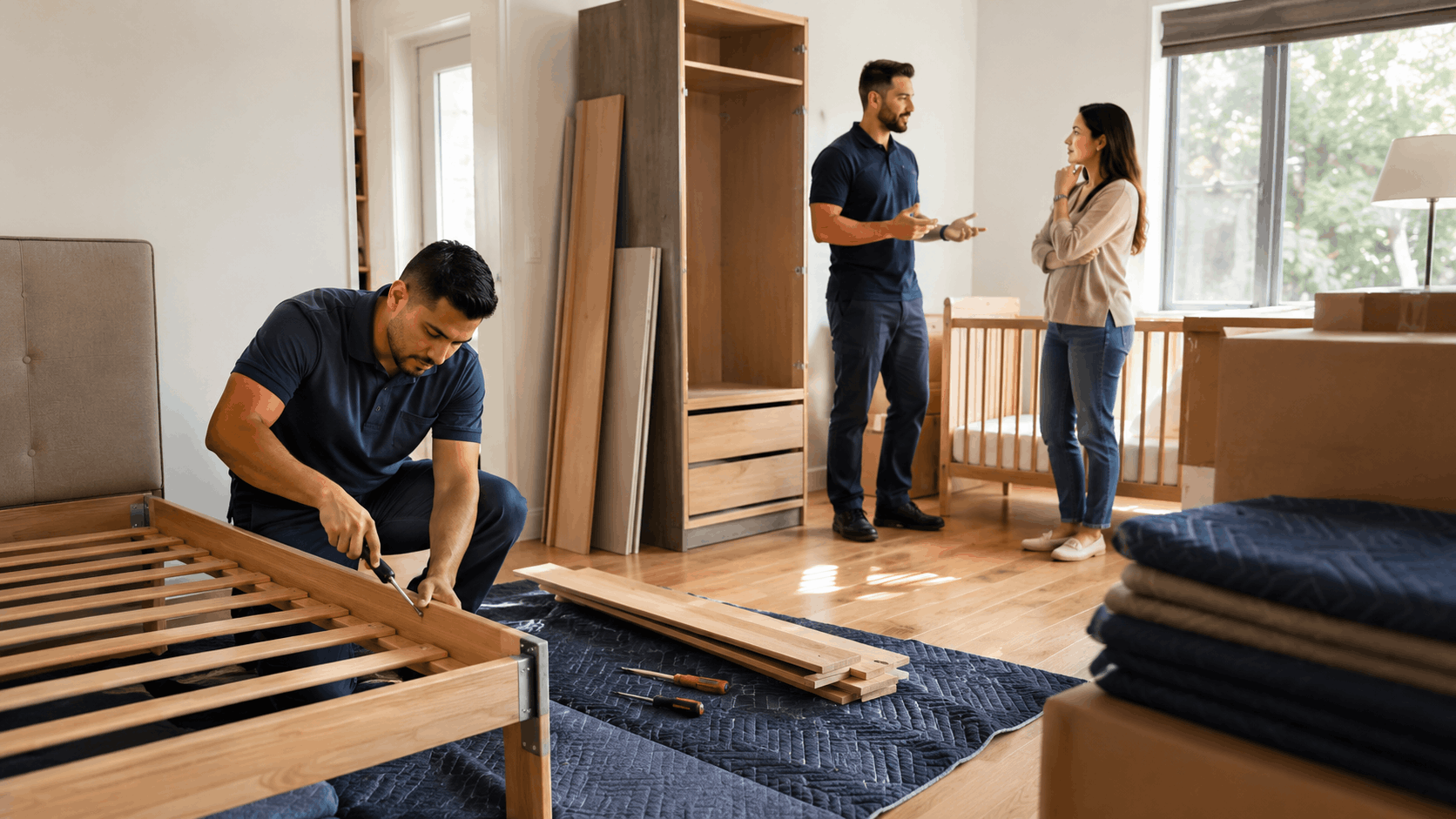
Furniture disassembly is the process of separating large pieces into smaller parts so they can move safely through doors, halls, and stairs. Reassembly is putting those pieces back together in the right room at the new home. On moving day, our team handles both as part of getting your belongings from point A to point B without damage.
Most large items in Los Angeles homes need at least some breakdown. A sectional sofa, a six-foot bookshelf, or a solid oak dining table rarely clears a doorway in one piece. Our crew assesses each item during the load, decides what needs to come apart, and keeps track of every part along the way.
The reassembly service matters just as much as the teardown. A bed that arrives in five pieces does no good until it is standing again. Our team rebuilds items so you can sleep, cook, and settle in the same day you move.
Why Some Pieces Have to Come Apart
Los Angeles has some of the oldest housing stock on the west side, and that shows up in doorway widths. Craftsman bungalows near Highland Park and Echo Park were built when furniture was smaller and doors were narrower. A standard interior door runs about 30 inches, and many older homes come in even tighter.
Doorway clearance is the first thing our crew checks. A king mattress is 76 inches wide, so it will never pass through a 30-inch door flat. Frames, headboards, and bulky dressers face the same math.
Tight stairwells make things harder still. Second-floor apartments in Silver Lake and hillside homes in Los Feliz often have switchback stairs with low ceilings and sharp turns. Breaking a piece down into parts is the only way to get it up or down without gouging a wall or dropping the load.
When our team spots a narrow hallway or a tight landing, we plan the disassembly before we lift anything. That prevents the scenario where a piece gets stuck halfway and has to be forced back out.
The Difference Between Disassembly and Full Demolition
Disassembly means our crew unscrews bolts, removes brackets, and separates a piece along the joints the manufacturer built into it. We take out the parts that were meant to come apart. Furniture separation follows the item's own design, not brute force.
What our team does not do is cut, drill, or permanently alter your furniture. If a piece was glued together at the factory and has no removable fasteners, we will not saw it in half to make it fit. That would destroy the item and void any protection you have on it.
Mover responsibility ends where damage begins. We tell customers upfront when a piece cannot come apart safely, so there are no surprises. If something truly will not fit and cannot separate, we look at other paths like balconies or windows before anything drastic.
This honest line protects both sides. You keep your furniture intact, and our crew avoids taking on a job that would harm your belongings. Clear expectations from the start keep the day running smoothly.
How Reassembly Works at the New Address
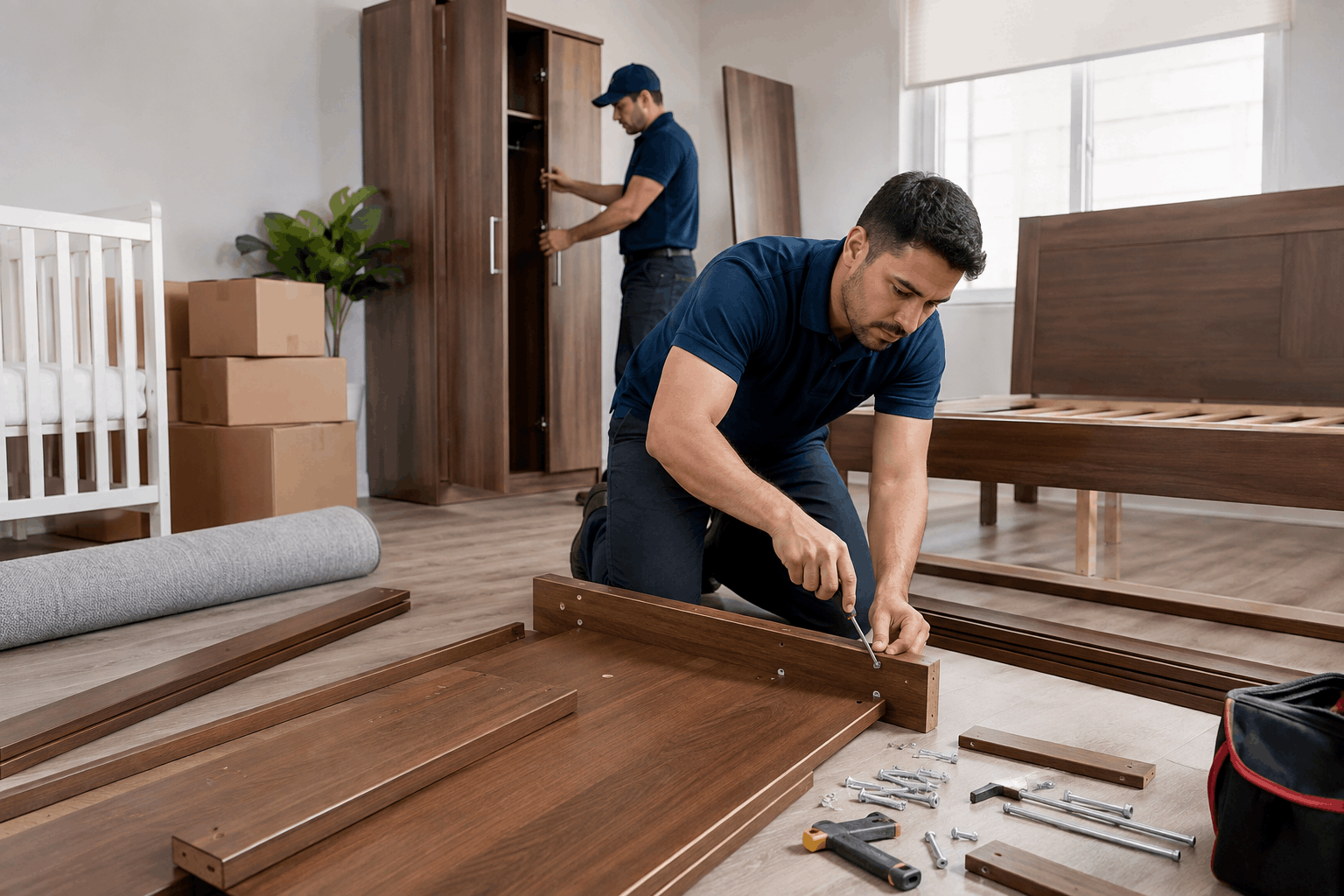
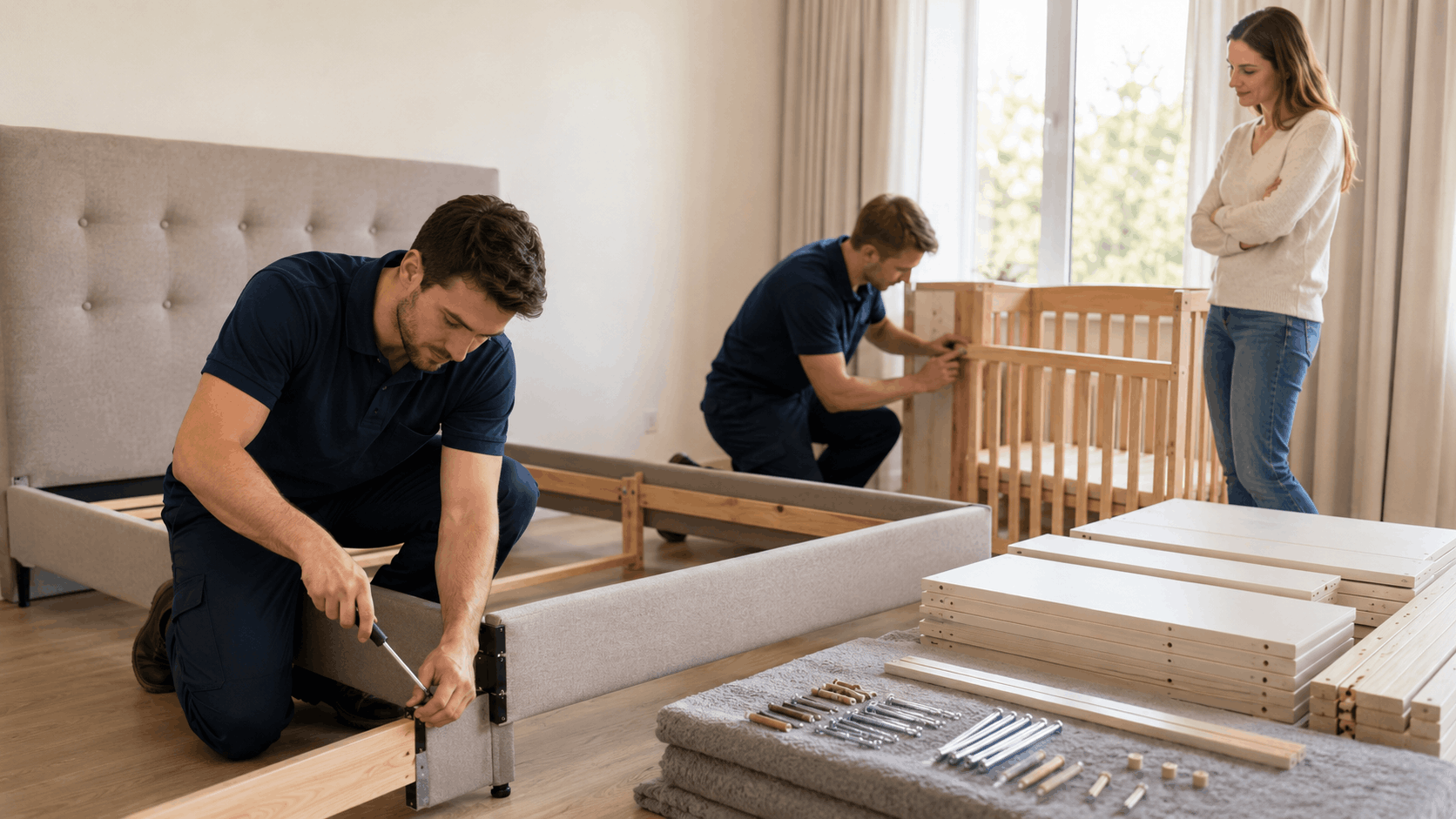
The reassembly process starts before the truck even leaves the old home. As our crew takes a piece apart, every bolt, bracket, and small part goes into a labeled hardware bag taped to the largest piece. That way, nothing wanders off in the truck.
At the new address, we ask where each item goes first. A bed gets rebuilt in the bedroom, not the living room, so we are not moving a heavy frame twice. Our team carries the parts to the correct room and rebuilds from there.
Hardware bags are the difference between a smooth rebuild and a frustrating search for a missing screw. Each bag is marked with the item it belongs to, so the crew grabs the right one without guessing. This system has saved countless customers from a wobbly bed on their first night.
Once a piece is standing, our crew checks that it is stable and level before moving on. A bed frame or bookshelf that rocks is not finished work, so we tighten and adjust until it is solid.
When Homeowners Should Handle It Themselves
Some customers prefer to prep smaller items ahead of time to trim their bill. Since most local moves run on hourly labor, every minute the crew spends taking apart a small nightstand adds up. DIY prep on simple pieces can save real money.
Good candidates for self-prep include flat-pack shelves, small desks, and lightweight frames you feel comfortable rebuilding. If you have the manual and the right tools, taking these apart the night before frees the crew to focus on heavy items.
That said, we recommend leaving complex or heavy pieces to our team. A bunk bed, a solid armoire, or an adjustable bed base carries risk if handled wrong. The savings on hourly labor are not worth a cracked panel or a pinched hand.
If you plan to prep some items yourself, keep the hardware organized and labeled. When our crew arrives to a home where the customer has bagged and marked their screws, the whole day moves more smoothly. You can always ask our team during the estimate which items are worth prepping.
Get Your Free Quote
Tell us about your move. We'll be in touch soon.
Beds and Bed Frames: What to Expect
Beds are the item that most often needs disassembly on moving day. Almost every bed frame has to come apart to clear a doorway and fit in the truck. Bed disassembly is a standard part of nearly every residential move our team handles.
Not all beds are equal, though. A basic metal frame comes apart in a few steps, while a motorized adjustable base takes real care. Knowing your bed type helps you plan how much time the job will take.
Mattress moving comes with its own steps too. Protecting the mattress and box spring from dirt and tears matters, especially in dense areas where pieces travel through tight spaces. Our residential moving crew handles all of it as part of the move.
Standard Frames, Platform Beds, and Metal Rails
Basic bed frames come apart easily. A standard frame or platform bed usually breaks down into a headboard, footboard, and side rails held by bolts or hook brackets. Our crew brings hex keys, socket sets, and screwdrivers to handle the common fastener systems.
Metal bed rails often use a hook-and-slot design that lifts apart without tools once the mattress is off. Wooden platform beds may have bolts hidden under slats or behind panels. Either way, the teardown rarely takes more than 15 minutes for a standard piece.
The trick is keeping all the parts together. Slats, center support legs, and bolts each go into the hardware bag so the rebuild is simple. A missing center leg can leave a platform bed sagging, so our team counts parts carefully.
At the new home, these frames go back together just as easily. Our crew rebuilds the frame, checks that every bolt is snug, and sets the mattress back in place ready for the night.
Adjustable Bases and Motorized Beds
An adjustable base is a different animal. These motorized beds raise the head and feet with an electric motor, and they carry cords, control units, and sometimes battery packs. They take longer than a standard frame and need extra care.
Our crew unplugs and secures the power cord and remote before moving anything. The motor housing is heavy and delicate, so it gets wrapped and handled separately from the frame. Loose cords get coiled and taped so nothing snags during the carry.
Some adjustable bases split into two halves for a king setup, which helps them clear doors. Others are one solid unit that requires careful maneuvering through the home. Our team assesses the model and plans the path accordingly.
At the new address, reconnecting the base matters as much as moving it. We reattach the legs, plug the motor back in, and confirm the up and down functions work before we call the job done. A base that does not power on is not finished work.
Bunk Beds, Loft Beds, and Kids' Rooms
Bunk beds and loft beds always get a full breakdown. These pieces are tall, heavy, and impossible to move assembled through most homes. For safety, our crew takes them apart down to the individual rails and posts.
A bunk bed has more hardware than most people expect. There are guardrail bolts, ladder brackets, and connector pins that hold the upper bunk to the lower one. Every one of these goes into a labeled bag so the rebuild is safe and complete.
Loft beds sit even higher and carry more risk if a bolt is missing. Our team tracks all the ladder and guardrail hardware because a child sleeps up top. We will not leave a loft bed standing unless every connection is tight.
Rebuilding a kids' room bed is where careful part tracking pays off. Our crew rebuilds the frame, reattaches the guardrails, and checks the ladder before the room is ready. Parents can rest easier knowing the structure is solid.
Handling Mattresses and Box Springs
Mattresses need protection during any move. Our crew slides each one into a mattress bag to keep out dirt, moisture, and scuffs. A clean plastic cover is cheap protection against a stain that ruins an expensive mattress.
Box springs get the same care. They are bulky and awkward, and a torn corner is easy to cause without a cover. We wrap and carry them so the fabric and frame stay intact.
Oversized king sets create a real challenge in dense areas. A king box spring often will not bend, so in tight buildings around Koreatown it sometimes has to go through a balcony or over a stair rail. Our team looks at every possible path before deciding.
Split king box springs make life easier since they come in two halves. If your set is a single piece, mention it during the estimate so our crew can plan the route. For tricky pieces, our specialty moving team brings extra options.
Need Help in Los Angeles?
Popeye Moving & Storage serves Los Angeles and all of Los Angeles County.
Wardrobes, Armoires, and Large Cabinets
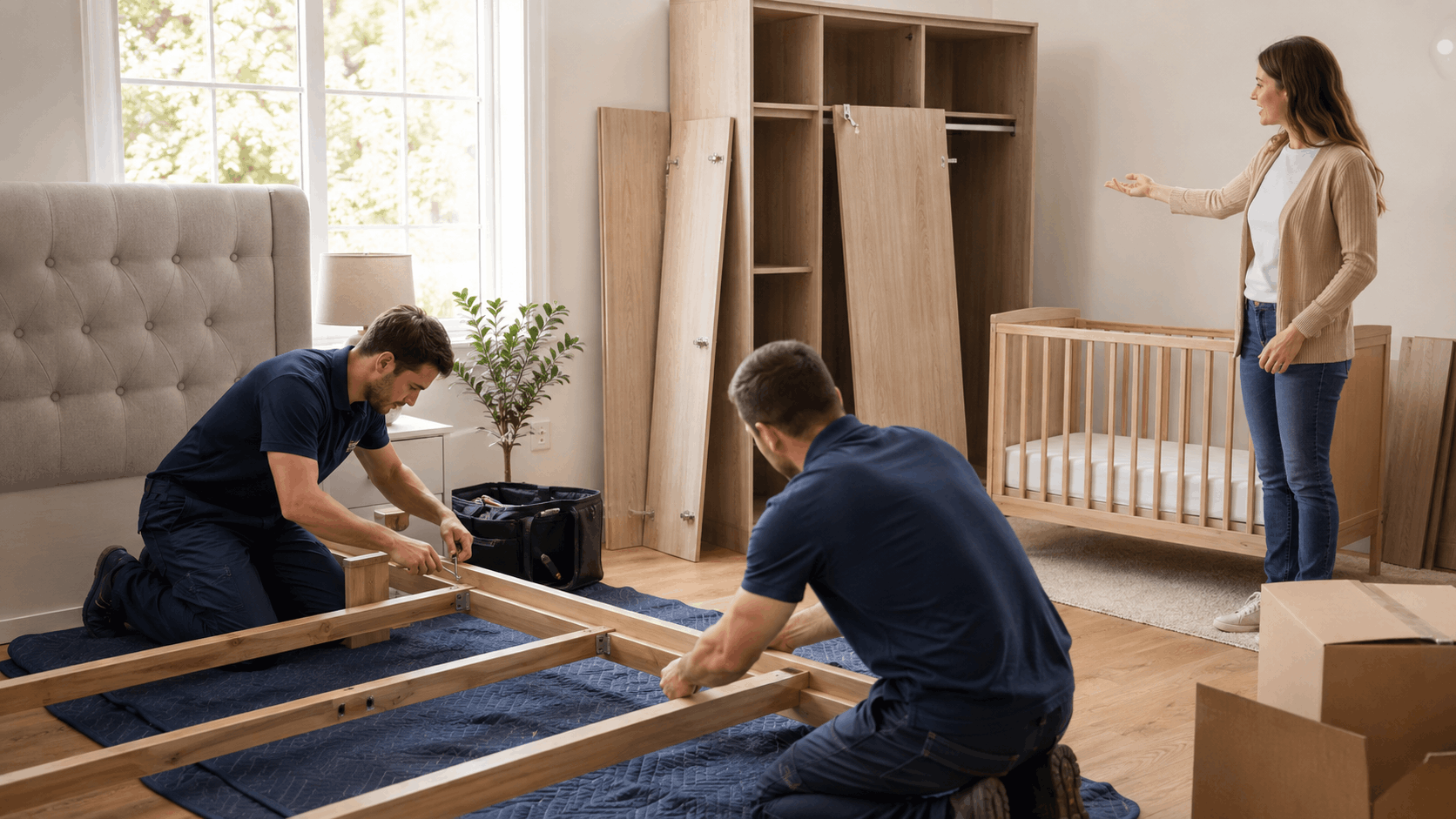
Tall storage furniture causes more trouble in Los Angeles apartments than almost anything else. Wardrobes, armoires, and large cabinets are heavy, top-heavy, and rarely fit through a door standing up. Wardrobe disassembly is often the longest part of a move.
These pieces range from cheap flat-pack units to solid wood heirlooms. Each type needs a different approach. Armoire moving a 300-pound antique is not the same job as breaking down a particle-board wardrobe.
Cabinet moving also means dealing with doors, shelves, mirrors, and drawers. Every removable part comes off and gets wrapped separately. Our packing and crating team helps protect the fragile parts.
IKEA PAX and Flat-Pack Wardrobes
Flat-pack wardrobes rarely survive a move fully assembled. An IKEA PAX unit is held together with cam locks and dowels that loosen every time the piece is jostled. Moving one whole often ends with a cracked frame or a leaning box.
Our crew almost always recommends breaking these down. The particle-board panels are heavy but not strong, and the joints were built for one assembly, not repeated stress. Once apart, the panels stack flat and travel safely in the truck.
The catch with flat-pack furniture is that it does not always go back together as tight as it was. Cam locks can strip after being opened and closed. Our team handles reassembly with care, but we tell customers upfront that older PAX units may feel looser after the move.
If your PAX is only a year or two old and lightly built, we assess whether it can move a short distance intact. For most moves across Los Angeles, though, breaking it down is the safer call.
Solid Wood Armoires and Antiques
Solid wood armoires are the opposite problem: they are strong but incredibly heavy. A single oak or mahogany armoire can weigh several hundred pounds. Moving one takes a coordinated lift and often a partial breakdown.
Antique furniture in historic homes around Hancock Park needs the gentlest touch. Older heirloom pieces may have delicate veneers, hand-cut joints, or original hardware that cannot be replaced. Our crew wraps these in moving blankets and pads before touching a doorway.
Some solid armoires have removable doors and a separate crown or base that lightens the load. Our team removes what comes off cleanly and leaves the rest intact. We never force apart a joint that was built to stay together.
For truly valuable antiques, we sometimes build a custom crate. This gives fragile heirloom pieces a rigid shell for the trip. Homes near the older streets of Hancock Park and Los Feliz often hold furniture worth this extra step.
Removing Doors, Shelves, and Mirrors
Doors and mirrors are the first things to come off a wardrobe. A mirrored door is the most fragile part of any piece, and mirror removal before the move prevents cracks. Our crew lifts each door off its hinges and wraps it in padding.
Glass and mirror panels travel flat or upright inside protective sleeves. A loose mirror bouncing in a truck is a shattered mirror. We wrap and secure each one separately from the frame.
Interior shelves also come out. Loose shelves slide and bang around during transport, so shelf protection means removing and wrapping them. This also lightens the main cabinet for the carry.
Every door, shelf, and mirror gets labeled so it returns to the right cabinet. When several wardrobes move at once, mixing up parts is easy without a system. Our team marks each piece to keep the rebuild straight.
Protecting Contents and Drawers
Drawers should be emptied before moving day whenever possible. Full drawers add weight and can slide open during the carry. Emptying them protects both the furniture and your belongings.
For lightweight dressers with soft items like clothes, our crew can sometimes move the piece with the drawers in place. This depends on the weight and how sturdy the dresser is. We decide case by case during the load.
Heavy items in drawers are a different matter. Books, tools, or dishes make a dresser far too heavy and put stress on the joints. Those drawer contents need to come out and pack into boxes.
Our team removes drawers from tall or fragile dressers to carry them safely, then reinserts them at the new home. Dresser moving goes easier and safer when the piece is lighter. Ask our crew what to empty during the walkthrough.
Cribs and Nursery Furniture
Parents want special attention when a nursery moves, and rightly so. A crib is where an infant sleeps, so safety comes first. Crib disassembly and reassembly is a job our team treats with extra care.
Nursery furniture also includes changing tables, gliders, and dressers. Each piece has its own needs, and some travel intact while others need breakdown. Knowing the difference helps parents plan the room.
Crib reassembly is the part that matters most. A crib rebuilt with a loose bolt or a missing part is a safety risk. Our crew rebuilds cribs carefully and asks parents to confirm the result.
Convertible Cribs and Toddler Beds
Convertible cribs are built to change as a child grows. They come apart into panels, rails, and a mattress support. Keeping the original hardware matters because these pieces rely on specific bolts and brackets.
A convertible crib often converts to a toddler bed, then a daybed, and sometimes a full frame. That means the same hardware may be needed again later. Our crew bags and labels every bolt so nothing is lost between conversions.
The panels themselves are usually solid and travel well when wrapped. It is the small hardware that causes trouble if it goes missing. A crib is useless without the right connector bolts.
For toddler bed conversion, the guardrail and support pieces need to stay with the set. Our team keeps the full kit together so parents can reconfigure the bed whenever they need. This care pays off long after moving day.
Safety Checks During Reassembly
Crib safety comes down to a solid, stable structure. When our crew rebuilds a crib, every bolt gets tightened fully. A loose connection can let a rail shift, which is dangerous for an infant.
Bolt tightening is not a hasty pass with a screwdriver. Our team snugs each fastener and then checks the frame by shaking it gently. A crib that wobbles is not finished until it stands firm.
We also check rail stability and the mattress support height. The support should sit at the correct level for the child's age. If parents want a specific setting, we set it during the rebuild.
After the crib is standing, we recommend parents do their own safety check too. Two sets of eyes catch more than one. The Consumer Product Safety Commission publishes crib safety guidance worth reviewing after any move.
Changing Tables, Gliders, and Dressers
Not every nursery piece needs breakdown. A glider chair usually moves intact since it fits through most doors. Our crew wraps it in padding and carries it whole.
Changing tables vary. Some are attached to a dresser and stay in one piece, while freestanding models with removable tops may need partial disassembly. Our team looks at each one and decides the safest way to move it.
A nursery dresser follows the same rules as any dresser. Drawers come out if the piece is heavy, and contents get packed. Baby clothes are light, so sometimes the drawers can stay put.
The goal is to get the whole nursery set up and ready at the new home. Parents moving with an infant do not have time for a half-built room. Our crew prioritizes the nursery so it is ready first.
When Manufacturer Instructions Are Missing
Cribs are one item where the assembly manual really helps. If you still have the original manual, keep it with the crib parts. Our crew uses it to rebuild the frame exactly as the maker intended.
When the manual is gone, our team relies on experience and careful part tracking. Most cribs follow similar patterns, so we can usually rebuild without the paperwork. Still, the original guide removes any guesswork.
We strongly recommend parents take crib photos before breakdown. A few pictures of the assembled crib from several angles show exactly how it goes back together. This trick has saved many rebuilds when a manual was long lost.
You can often download a replacement manual from the maker's website using the model number. If you have time before moving day, print one out. Between photos and the manual, our crew rebuilds the crib with confidence.
Need Help in Los Angeles?
Popeye Moving & Storage serves Los Angeles and all of Los Angeles County.
What's Included in a Standard Move vs What Costs Extra
Customers always want to know what disassembly work is included and what adds to the bill. The honest answer is that most basic teardown comes standard, while complex or specialty items may add labor. Clear pricing keeps moving costs predictable.
Included services on a standard move cover the common pieces almost every home has. Beds, tables, and simple frames fall under the hourly rate. You are not charged a separate fee for a job most movers do on every move.
Extra charges come into play with unusual or high-effort items. Wall-mounted units, gym equipment, and complex wardrobes take more time and sometimes special tools. Knowing this ahead of time helps you budget.
Basic Disassembly That Usually Comes Standard
Standard disassembly covers the pieces our crew takes apart on nearly every move. Bed frames, dining tables with removable legs, and simple bookshelves all fall here. These are part of the hourly rate, not an add-on fee.
Since local moves in Los Angeles run on hourly labor, this work is folded into the time the crew is on site. Taking apart a bed adds a few minutes, not a separate line item. You pay for the total time, and the teardown is part of it.
Most residential customers never see a separate disassembly charge for these common items. The crew simply does the work as they load. It is expected on a full-service move.
If you want to know exactly what falls under standard service for your home, ask during the estimate. Our team walks through your furniture and tells you what is included. All fees for basic work are listed in writing up front.
Specialty Items That Add Time and Cost
Some items take far more effort than a bed frame. Wall-mounted TV units, treadmills, and complex modular wardrobes may add extra labor. These pieces have more parts, more hardware, and more risk.
Specialty items sometimes need special handling. A treadmill has a folding deck and electronics, while a wall-mounted shelf system requires careful removal from studs. This work takes time, and time is what an hourly move charges for.
Extra labor also applies to very heavy pieces like pianos, safes, and oversized armoires. These often need more crew members or special equipment. Our piano moving service handles the heaviest and most delicate items.
The good news is our team tells you upfront if an item counts as specialty. You will know before moving day whether a piece adds cost. No surprises when the final bill arrives.
Materials and Hardware Fees
Some supplies carry a small charge. Mattress bags, shrink wrap, and moving blankets protect your belongings, and a few of these may show up on the bill. The cost is modest compared to the damage they prevent.
Packing materials are usually itemized so you see exactly what you used. A mattress bag runs a few dollars, and shrink wrap for a dresser is inexpensive. Most customers gladly pay for protection.
Hardware fees are rare but possible. If a bolt strips or goes missing and our crew supplies a replacement, that may carry a tiny charge. We always ask before adding hardware you did not request.
You can supply your own materials if you prefer. Our moving supplies delivery makes it easy to have boxes and wrap on hand before the crew arrives. Either way, the choice is yours.
How Popeye Moving & Storage Co. Quotes These Jobs
Our team gives upfront estimates so you know what to expect. For most Los Angeles moves, we review your furniture during a walkthrough before moving day. This lets us spot the pieces that need special attention.
A moving estimate accounts for the number of large items, the disassembly they require, and the access at both homes. A third-floor walkup in Koreatown quotes differently than a ground-floor condo in Culver City. We factor all of it in.
The walkthrough can happen in person or over video, whichever works for you. Our crew looks at your beds, wardrobes, and any specialty items and tells you what falls under standard service. You get a clear picture before you commit.
You can request an estimate through our contact page any time. The sooner we assess your home, the better we plan the day. Early quotes lead to smoother moves.
Preparing Your Home and Furniture Before the Crew Arrives
A little prep before moving day saves time and money. Since local moves run hourly, anything you do ahead lowers the labor clock. Simple steps make a real difference.
Moving prep covers your home and your furniture. Clearing paths, emptying drawers, and organizing hardware all speed the crew along. A moving day checklist keeps you on track.
Furniture prep is where customers save the most. The more ready your pieces are, the smoother the load goes. Our local residential moving team is happy to guide you on what to prep.
Clearing Pathways and Measuring Doorways
Clear pathways let the crew move freely and safely. Before moving day, clear the halls, entryways, and stairs of clutter, rugs, and small furniture. A clean path prevents trips and lets big pieces move without stopping.
Doorway measurement matters most in tight buildings. Condos near Downtown LA and Marina del Rey often have narrow entries and shared halls. Measuring your doors and largest furniture ahead tells our team what needs breakdown.
Measure the width of each doorway and the diagonal of your biggest pieces. If a sofa is wider than the door, it will need to come apart or angle through. Sharing these numbers during the estimate helps us plan.
Elevators and stairwells need measuring too. A piece that fits the door but not the elevator creates a bottleneck. Our crew appreciates the heads-up so we bring the right approach for your Marina del Rey move.
Emptying Drawers and Detaching Electronics
Empty drawers make furniture lighter and safer to carry. Remove heavy items from dressers, desks, and cabinets before the crew arrives. This lets our team move pieces more easily and lowers the risk of a strained joint.
Electronics need detaching ahead of time. Unplug TVs from wall units, coil the cords, and set the components aside. This saves the crew from untangling a media center on the clock.
Label your cords if you have a complex setup. A photo of the back of your TV stand shows which cable goes where. This makes reconnecting at the new home simple and painless.
Loose items on shelves and tables should be boxed too. A crew moving a bookshelf cannot carry it with books still on it. Clearing surfaces ahead keeps the load moving.
Keeping Hardware Organized
If you disassemble items yourself, keep the hardware organized. Bag the screws, bolts, and brackets for each piece separately. Labeled hardware means a smooth rebuild instead of a frustrating hunt.
Use a zip bag for each item and write the piece name on it. "Guest bed bolts" or "desk screws" tells everyone exactly what is inside. Tape the bag to the largest part of the piece.
Screw storage matters more than people think. A single missing bolt can leave a bed wobbly or a shelf leaning. Keeping every part accounted for prevents that headache.
Our crew brings hardware bags for the items we take apart, so you only need to manage the pieces you prep yourself. When customer and crew both stay organized, the rebuild goes smoothly. Everyone wins.
Parking and Building Access in Los Angeles
Parking is often the biggest hurdle in a Los Angeles move. Buildings around West LA and the Arts District have limited loading zones and strict rules. Reserving a spot ahead of time prevents delays.
A parking permit may be needed for the moving truck on many city streets. Some neighborhoods require you to reserve curb space in advance. Check with your building or the city so the truck has a legal spot.
Elevator reservation is a must in apartment and condo buildings. Many require you to book the freight elevator and lay down protective pads. Without a reservation, your crew may wait, and that costs time.
Loading zones in dense areas like the Arts District fill up early. The closer the truck parks, the shorter the carry. Our team helps you plan access when you book, and our West Los Angeles moving crew knows these buildings well.
Need Help in Los Angeles?
Popeye Moving & Storage serves Los Angeles and all of Los Angeles County.
Common Problems and How the Team Solves Them
Every experienced mover has seen furniture fight back. Stripped screws, glued joints, and missing parts come up on real moves. Knowing how our team handles these keeps small problems from derailing your day.
Moving problems are rarely dead ends. Our crew carries tools and spare hardware to solve most issues on the spot. Experience is what turns a stuck bolt into a two-minute fix.
Protecting your home during all this matters too. Furniture damage and wall scuffs are avoidable with the right pads and guards. Our team protects both the furniture and the house.
Stripped or Rusted Bolts on Older Furniture
Older furniture often hides stripped or rusted bolts. Vintage pieces in homes near Pasadena and Los Feliz have sat assembled for decades. The hardware seizes up and fights every turn of the wrench.
Stripped bolts need special tools. Our crew carries extraction bits and grips that bite into a rounded head. A bolt that spins freely can usually still come out with the right approach.
Rusted hardware responds to patience and penetrating oil. A stuck bolt loosens after a soak and a few careful turns. Forcing it risks cracking the wood, so our team works slow on aged pieces.
When a bolt truly will not budge, we look for another way to separate the piece. Sometimes a different joint comes apart instead. Our crew finds a path without damaging your furniture, especially on cherished pieces from a Pasadena home.
Furniture That Was Never Meant to Be Moved Again
Some furniture was built to be assembled once and never moved. Cheap glued furniture and low-end flat-pack pieces fall apart under stress. We tell customers honestly when a piece may not survive.
Glued furniture has no removable fasteners. If a bookshelf was assembled with glue and staples, taking it apart destroys it. Moving it whole risks the joints cracking during the carry.
Fragile pieces get an honest assessment before we lift them. Our crew tells you the risk so you can decide. Sometimes the smart move is to replace a $60 shelf rather than pay to move a piece that may not make it.
When you want a fragile item moved anyway, we take every precaution. Extra padding, careful handling, and a slow carry give it the best chance. We just make sure you know the odds first.
Missing Parts and On-the-Spot Fixes
Sometimes a part goes missing despite everyone's best effort. A bolt rolls under a truck or a bracket gets left behind. Our crew carries spare hardware to cover these gaps.
Missing parts do not have to stop a rebuild. Our team stocks common bolts, screws, and brackets in a range of sizes. Nine times out of ten, we have a match that works.
On-the-spot fixes are where experience shows. If a factory part is truly gone, our crew improvises a safe substitute. A bed or shelf gets standing again even when the original hardware disappeared.
For anything we cannot fix on site, we tell you what part to order and how. You are never left with a half-built piece and no guidance. Our goal is a functional home the same day you move.
Protecting Floors and Walls During the Process
Heavy furniture moving through a home can damage floors and walls. Our crew lays down floor runners along the main path. These protect hardwood and tile from scuffs and drag marks.
Floor protection is standard on our moves. We roll out runners in high-traffic paths and pad any spot where a heavy piece sets down. Your floors look the same after the move as before.
Wall guards protect corners and doorways. A tight turn with a heavy dresser can gouge drywall without protection. Our team pads the corners and doorframes on the route.
These steps protect your deposit and your home. Renters especially benefit since scuffs can cost a security deposit. Our crew treats your walls and floors like our own on every move across the city.
Final Thoughts
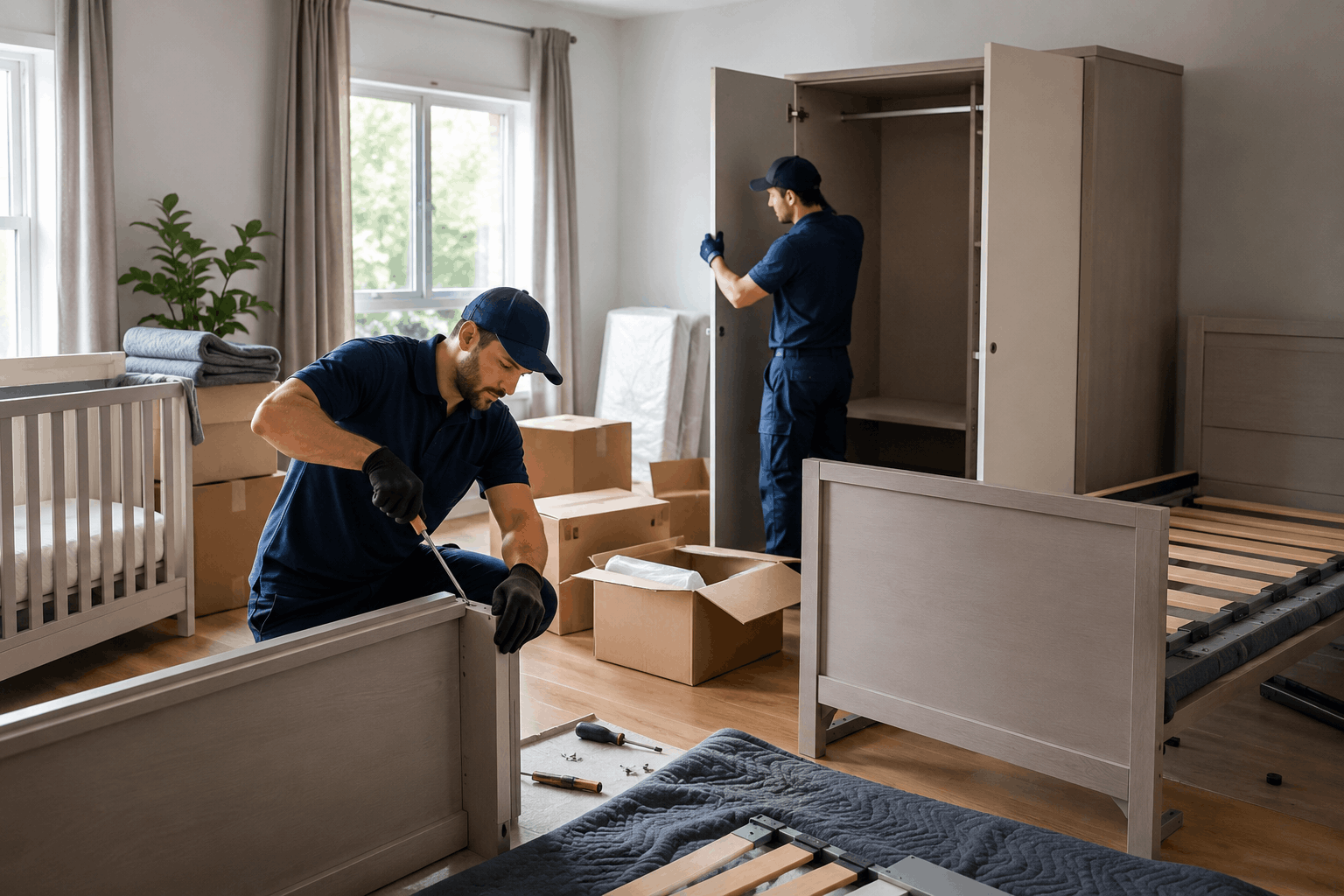
Furniture disassembly and reassembly turns an impossible move into a smooth one. From a king frame stuck in a Silver Lake doorway to a crib rebuilt safe in a new nursery, the right approach makes all the difference. Our team handles the teardown, the transport, and the rebuild so your home is ready to use.
Most basic disassembly comes standard on a local move, while specialty items and materials may add a small amount. Knowing the line ahead of time keeps your budget clear. A walkthrough before moving day removes the guesswork entirely.
Popeye Moving & Storage Co. works homes across Los Angeles, from Echo Park bungalows to Koreatown high-rises. Our crew knows the tight doors, narrow stairs, and building rules that make each neighborhood its own puzzle. Reach out to our team or call today for a free estimate and let us handle the heavy lifting.
Frequently Asked Questions
- Do movers take apart beds and furniture as part of the service?
- Yes, basic disassembly is included on most local moves. Our crew takes apart bed frames, dining tables, and simple bookshelves as part of the standard hourly service. This work is folded into the time we spend on site, not charged separately. More complex or specialty items may add labor, but common pieces come standard. Ask during the estimate what falls under standard service for your home.
- How much extra does furniture reassembly usually cost?
- For most items, reassembly is part of the standard hourly move with no separate fee. Specialty pieces like adjustable beds, gym equipment, or complex wardrobes may add labor time. Since local moves charge by the hour, the cost depends on how long the rebuild takes and how many crew members are needed. A simple bed adds minutes, while a bunk bed or motorized base takes longer. We quote this upfront during your walkthrough.
- Will the crew reassemble a crib safely at the new home?
- Yes, our team rebuilds cribs and checks them carefully. We tighten every bolt, confirm the rails are stable, and set the mattress support at the right height. After the crib is standing, we shake it gently to make sure nothing wobbles. We also recommend parents do their own safety check afterward, since two sets of eyes catch more. Keeping the original hardware and manual makes the rebuild smoother and safer.
- What happens if my furniture breaks during disassembly?
- Our crew works carefully and tells you upfront when a piece is fragile or risky. If something breaks despite proper handling, we communicate immediately and explain your coverage options. Basic valuation is included on moves, and additional protection may be available. For glued or cheaply built furniture, we warn you of the risk before we start so you can decide how to proceed. Honest communication prevents surprises.
- Should I empty my dresser and wardrobe before moving day?
- Yes, emptying drawers is a good idea for most furniture. Heavy items like books or tools make a dresser too heavy and strain the joints, so those should come out. Lightweight items like clothes can sometimes stay in place for sturdy dressers, and our crew decides case by case. Emptying drawers speeds the load and lowers your labor time. When in doubt, ask our team what to empty during the walkthrough.
- Can you move an IKEA PAX wardrobe without taking it apart?
- Usually not. Flat-pack wardrobes like the IKEA PAX are held together with cam locks and dowels that loosen with any movement. Moving one whole often cracks the frame or leaves it leaning. Our crew almost always recommends breaking them down for a safe move. We reassemble at the new home, though we note that older PAX units may feel looser after being taken apart and rebuilt.
- How long does disassembly and reassembly add to a move?
- Times vary by item. A standard bed frame takes about 15 minutes each way. An adjustable base or complex wardrobe can take 30 to 45 minutes. Bunk beds and loft beds run longer because of all the hardware tracking. Across a full home, disassembly and reassembly might add one to three hours total. Prepping simple items yourself trims this time. We give a clear estimate during your walkthrough so you can plan the day.
- Do you provide the tools and hardware bags?
- Yes, our crew brings hex keys, socket sets, screwdrivers, and labeled hardware bags for every item we take apart. Each bag is marked and taped to the largest piece so nothing gets lost in the truck. If you disassemble items yourself before moving day, we recommend bagging and labeling your own screws to keep them organized. We handle the tools and tracking for everything our team takes apart.
- What if my new apartment has a narrow doorway or tight stairwell?
- Older LA buildings often have tight access, and our crew is used to it. We assess the doorways, halls, and stairwells at both homes and plan the disassembly around them. If a piece will not fit through a door, we break it down further or look at alternate paths like balconies. Measuring your doorways ahead of time and sharing the numbers during the estimate helps us bring the right approach.
- Does Popeye Moving & Storage Co. offer estimates before moving day?
- Yes, we provide free estimates for moves across the Los Angeles area. You can request an in-person or video walkthrough where our team reviews your furniture and building access. This lets us tell you what disassembly is included, what may add cost, and how long the job will take. Reach out through our contact page or call to schedule. Early estimates lead to smoother, better-planned moving days.
Popeye Moving & Storage Co. Team Team
Licensed moving and storage professionals serving Los Angeles and Los Angeles County.
Licensed in California · License #CAL T 189749 | USDOT 1472924 | MC 498816C
Why trust Popeye Moving & Storage?
Founded in 1994, Popeye Moving & Storage is a licensed and insured moving and storage service serving Los Angeles and Los Angeles County. All content is reviewed by our licensed technicians.

Need Help in Los Angeles?
Popeye Moving & Storage serves Los Angeles and all of Los Angeles County.
Related Articles

What Burbank Renters Need to Know Before Moving in Los Angeles
A local guide for Burbank renters covering parking permits, LA traffic timing, moving costs, packing, storage, utilities, and how to hire the right movers.

Storage Near the 405 in West LA: What's Actually Available and Why a Mover-Run Warehouse Beats the Roll-Up Units
A clear guide to storage near the 405 in West LA, comparing roll-up self-storage units with a mover-run warehouse on cost, safety, and hassle for local movers.

West Hollywood Moving Rules: Building and Street Access Restrictions
A local mover's guide to West Hollywood moving rules, covering building access, elevator reservations, street parking permits, allowed hours, and neighborhood planning tips.