Business Inventory Storage Near LAX and the 405: E-Commerce Overflow and Seasonal Stock
Key Takeaways
- Warehouse space near Westchester and El Segundo runs $1.50 to $2.50 per square foot with long leases, making flexible storage a smarter fit for seasonal overflow.
- Overflow storage covers bulk buys, Amazon FBA prep, and returned stock - use it before the garage jams, not after.
- Book Q4 storage by early to mid August, then right-size down in January to keep costs low across the year.
- Coastal humidity near Playa del Rey and Marina del Rey can damage electronics, apparel, and cosmetics, so climate-controlled units protect sensitive products.
- A 5x10 fits about 4-6 pallets or 100 boxes; size up one step from your pallet count to keep a picking aisle open.
- Schedule inventory moves before 7 a.m. or between 10 a.m. and 2 p.m. to dodge the worst 405, Sepulveda, and Lincoln Boulevard traffic.
- Storage near the 405 shortens reship time to carriers and FBA centers, keeping fulfillment on track during peak season.
- Watch hidden costs like admin fees, required insurance, and access surcharges, and favor month-to-month terms for slow seasons.
In This Article
A Westchester seller emailed us in late September last year with a photo of her living room. Boxes of holiday candles stacked to the ceiling, a pathway barely wide enough to walk through, and a note that said her garage had been full since August. She sells on Amazon and her own site, and every year the same thing happens - Q4 stock arrives before she can ship it, and her home turns into a warehouse.
She is not alone. All over Westchester and El Segundo, home-based online sellers hit the same wall right before the holidays. The garage fills up, the spare bedroom becomes a shipping station, and there is nowhere left to put the next pallet of inventory.

Why Businesses Near LAX and the 405 Struggle With Inventory Space?
The stretch of Los Angeles wrapped around LAX and the 405 is one of the busiest commercial corridors in the country. It is close to the airport, close to the ports, and packed with small businesses that live and die by prompt shipping. That same demand makes inventory storage hard to find and expensive to hold.
Home-based sellers, retail shops, and small warehouses all compete for the same limited square footage. When you add tight streets, constant airport traffic, and year-round e-commerce growth, the space crunch gets worse every season. Businesses that plan ahead for storage near LAX and the 405 avoid the scramble that hits everyone else in the fourth quarter.
The Cost of Retail and Warehouse Space in Westchester and El Segundo
Warehouse space near Westchester and El Segundo carries some of the higher price tags in the South Bay because of its airport access. Industrial space in this pocket often runs between $1.50 and $2.50 per square foot per month, and clean, move-in-ready units at the low end go early. A modest 2,000 square foot unit can cost a small seller $3,000 to $5,000 a month before utilities and insurance.
The other problem is the lease term. Landlords near El Segundo and along Aviation Boulevard usually want three to five year commitments, which is a heavy bet for a business that only needs extra room three months out of the year. Signing a long lease to cover a Q4 spike means paying for empty space in February and March.
El Segundo also has a strong base of aerospace and tech tenants who snap up quality industrial buildings early. That competition pushes rents up and keeps vacancy low. For a small online store, leasing a full warehouse rarely pencils out, which is exactly why flexible storage has become the go-to answer for overflow.
How E-Commerce Growth Fills Up Garages and Spare Rooms
Most sellers we meet in Playa del Rey and Culver City started small. A few hundred SKUs in the garage, a folding table for packing, and a corner of the closet for supplies. Then sales grew, and the inventory outgrew what the house could hold.
The tipping point usually comes when a bulk order arrives. A home-based business orders 40 cases of a hot product to get a better unit price, and suddenly the car lives in the driveway and the kids cannot get to their bikes. We have seen Culver City sellers rent a second parking spot from a neighbor just to store overflow boxes under a tarp.
E-commerce overflow is not a sign of failure - it is a sign of growth. But growth without a plan turns a home into a cramped depot. Once packing supplies, returns, and new stock start colliding, it is time to move the excess out and keep the house livable. Many sellers in the area lean on our Culver City moving and storage support to make that jump without losing a beat.
Traffic and Access Challenges Along Sepulveda and Century Boulevards
Anyone who drives near the airport knows Sepulveda Boulevard and Century Boulevard can turn into parking lots at the wrong hour. Getting a truck full of inventory in or out during the afternoon rush can add 30 to 45 minutes to a simple run. That lost time cuts into shipping cutoffs and payroll.
The traffic access issue is worse during travel-heavy weeks around Thanksgiving and Christmas, when airport volume peaks at the same moment sellers are moving the most stock. Century Boulevard near the terminals backs up early and stays slow into the evening. Sepulveda under the runway tunnel is another chokepoint that stalls delivery vans daily.
The fix is timing. We schedule inventory runs before 7 a.m. or during the mid-morning lull between 10 a.m. and noon, when the corridor breathes. Knowing these windows is the difference between a smooth transfer and a wasted afternoon stuck near the terminals.
Get Your Free Quote
Tell us about your move. We'll be in touch soon.
E-Commerce Overflow Storage
Overflow storage is simply extra space for the inventory that does not fit where you work. For online sellers, it is the pressure valve that keeps orders shipping when stock outpaces the room at home or in the shop. It bridges the gap between what you can hold and what you need to sell.
The right time to use overflow storage is before the crunch, not during it. Sellers who wait until the garage is jammed end up paying rush fees and driving in circles. Below we break down what overflow actually looks like and how to tell when a business has grown past its current setup.
What Overflow Inventory Actually Looks Like
Overflow inventory shows up in a few predictable ways. A frequent one is a bulk buy - a seller lands a good price on 50 cases and needs somewhere to park them until they sell through. That single order can double the space a home-based store needs overnight.
Amazon FBA prep is another big one. Sellers stage product at home before sending shipments into the fulfillment centers, but FBA has receiving limits and restock caps. When those caps hit, the extra units have to sit somewhere, and that somewhere is often a storage unit near LAX so the reship is simple.
Returned stock is the overflow nobody plans for. During January, returns flood back in, and sellers need room to inspect, repackage, and relist. A dedicated space keeps returned units separate from fresh inventory so you never ship a damaged item by mistake.
Signs a Business Has Outgrown Its Current Space
The clearest sign is blocked walkways. When you are stepping over boxes to reach your packing station, the space has outgrown its job. We have walked into home offices in Playa del Rey where the seller literally could not open a closet door.
Missed or delayed orders are a louder alarm. If you cannot find a SKU because everything is stacked three deep, picking slows down and shipping cutoffs get missed. That costs reviews and repeat customers, which is a far bigger hit than a monthly storage bill.
Other tells include renting extra parking to store product, keeping inventory in a friend's garage, or tripping over returns. When a small business starts borrowing space from every corner of its life, a proper storage plan pays for itself in sanity and saved orders.
How Popeye Moving & Storage Handles Overflow for Local Sellers
Our team helps local sellers move excess stock out without stopping daily orders. We schedule pickups around your shipping hours so the truck comes when it will not tie up your packing flow. Many sellers keep their best sellers at home and send the slow, bulky, or seasonal items to storage.
Flexible unit sizes are what make this work for a growing store. A seller might start with a 5x10 for a few pallets, then bump up to a 10x15 as Q4 stock lands, then shrink back in January. There is no reason to pay for a full warehouse when your needs change month to month.
We also handle the heavy part - the loading, transport, and placement inside the unit. You can see how we structure commercial business storage for online sellers and small operations. The goal is simple: keep your workspace clear and your orders moving.

Need Help in Los Angeles?
Popeye Moving & Storage serves Los Angeles and all of Los Angeles County.
Seasonal Stock Storage Throughout the Year
Most e-commerce businesses do not sell the same volume every month. Inventory rotates with the seasons, and the space you need in November is nothing like what you need in March. Seasonal storage lets you match your footprint to your sales instead of paying for peak space all year.
Timing is where sellers win or lose. Book seasonal stock storage too late and prices climb while good units fill up. Plan it out and you glide through the holiday rush while your neighbors panic. Here is a simple view of how the year tends to break down for local sellers.
| Season | What Sellers Store | Best Time to Book |
|---|---|---|
| Late Summer (Aug-Sep) | Incoming Q4 holiday stock | Book by early August |
| Q4 (Oct-Dec) | Peak holiday inventory, gift bundles | Book by mid-September |
| Winter (Jan-Feb) | Returned stock, leftover holiday goods | Book by December |
| Spring/Summer (Mar-Jul) | Off-season goods, slow movers | Book as demand slows |
Holiday Ramp-Up: Storing Q4 Stock Early
Sellers near Marina del Rey start stacking Q4 stock in late summer, and for good reason. Overseas shipments and domestic suppliers both slow down as everyone races to beat the holiday cutoff. Ordering in August and storing it locally means you are not gambling on a September container that might arrive late.
A good timeline looks like this: place holiday orders by early August, take delivery through August and September, and have your storage unit ready before the first pallet lands. That way your home or shop stays clear for daily fulfillment while the holiday reserve sits safe nearby.
Storing Q4 inventory near the 405 also shortens your reship time to FBA. When Amazon opens restock capacity in October and November, you can pull product from a local unit and get it into the fulfillment center in a day instead of waiting on a fresh supplier order. Sellers around Marina del Rey rely on that local buffer every holiday season.
Off-Season Storage to Free Up Working Space
The flip side of the holiday rush is the off-season pile. Summer sellers have winter goods to stash, winter sellers have summer goods, and both need that clutter out of the way. Off-season storage keeps your active workspace open for the products that are actually selling right now.
Say you sell beach gear and patio items. Come November, that inventory just sits there taking up prime shelf space while your holiday movers need room. Shifting the summer goods to a storage unit until spring means your packing area works for the season you are in, not the one that passed.
This rotation also protects slow-moving seasonal goods from damage. Product that sits in a busy workspace gets bumped, dusty, and dinged. Tucked into a clean unit, it comes back out in sellable shape when its season returns, which protects your margins on items you already paid for.
Planning a Storage Calendar Around Sales Cycles
The smartest sellers we work with build a storage calendar tied to their sales cycles. They map their busy months, their slow months, and the reorder points in between. Then they scale storage up and down to match, instead of holding one fixed unit all year.
A month-by-month plan might look like this: right-size down in Q1 after the holidays clear, hold steady through spring, start scaling up in July and August for Q4, and peak from October through December. Writing it out on a calendar turns storage from a reaction into a routine.
Planning ahead also locks in better rates and unit availability. Units near LAX get tight before the holidays, so a seller who calls in July gets the size and location they want. The one who calls in November takes whatever is left. A little forward planning keeps costs down and options open.
Choosing the Right Storage Setup Near the Airport
Not every storage setup fits every business. A seller shipping 20 small orders a day has different needs than one holding pallets of seasonal decor. Picking the right unit type comes down to what you store, how often you touch it, and how often you need to get in and out.
Near the airport, access and location matter as much as size. A cheaper unit 30 minutes away can cost you more in drive time and traffic than a slightly pricier one close to the 405. Here is how the common options compare for online sellers.
| Unit Type | Best For | Access |
|---|---|---|
| Drive-up unit | Frequent pickups, palletized stock | Load straight from vehicle |
| Ground-floor indoor | Boxed inventory, regular access | Cart or dolly, no stairs |
| Climate-controlled | Electronics, apparel, cosmetics | Indoor, temperature managed |
| Vaulted storage | Long-term, low-touch stock | Staff-assisted access |
Climate Considerations for Sensitive Products
The coastal air near Playa del Rey carries real humidity, especially in the marine layer months of May and June. That moisture is fine for hardware and plastics but hard on sensitive products. Electronics, apparel, and cosmetics all react poorly to damp, swinging conditions.
Humidity warps cardboard, spots leather goods, and can cloud or separate cosmetic formulas. Apparel picks up mildew smells that no customer wants to unbox. If you sell any of these, a climate-controlled unit holds a steady temperature and humidity level that protects your margins.
Not everything needs climate control. Bulk kitchenware, tools, and sealed non-perishables usually do fine in a standard unit. The trick is to split your inventory - sensitive items go climate-controlled, everything else goes standard - so you are not overpaying to protect a pallet of stainless steel water bottles.
Unit Sizes That Match Pallet and Box Counts
Sizing a unit is easier when you think in pallets and boxes. A standard pallet is about 40 by 48 inches. A 5x10 unit holds roughly 4 to 6 pallets or around 100 medium boxes stacked with a walk path. That covers a small online store's overflow comfortably.
A 10x10 unit fits about 8 to 10 pallets or 200-plus boxes, which suits a growing seller carrying a few hundred SKUs. A 10x15 or 10x20 handles 12 to 20 pallets and works for a business staging serious Q4 volume or FBA prep in bulk.
Always leave room to move. A unit packed wall to wall looks efficient but makes picking miserable. We tell sellers to size up one step from their raw pallet count so there is an aisle to reach the back. That small buffer saves hours during peak season picking.
Access Hours and Loading Access for Frequent Pickups
A seller who pulls stock every single day needs different access than one who touches inventory once a month. If you are fulfilling orders from storage daily, drive-up units and extended access hours are worth paying a little more for. Every trip where you can back the van right to the door saves real time.
Ground-floor units and loading docks matter for palletized stock. Trying to move a full pallet up an elevator or across a long indoor hallway eats your morning. Look for a facility with wide drive lanes, a dock or ramp, and enough turning room for a box truck near LAX's tight lots.
Extended or 24-hour access also helps sellers who ship after their day jobs or need to catch late carrier cutoffs. Confirm the real access hours before you sign, and check whether after-hours entry carries a surcharge. The wrong hours can quietly throttle your fulfillment speed.
Need Help in Los Angeles?
Popeye Moving & Storage serves Los Angeles and all of Los Angeles County.
Moving Inventory In and Out Without Losing Sales
Moving inventory to and from storage sounds simple until you try to do it while orders keep coming. The whole point is to shift stock without a single day of dropped shipping. That takes planning around traffic, the right equipment, and enough hands to do it efficiently.
Inventory logistics near LAX live and die by timing. A move that starts at the wrong hour gets swallowed by the 405 and Lincoln Boulevard. Get the schedule right and you can transfer pallets, restock storage, and still hit your afternoon carrier pickup.
Scheduling Moves Around LAX-Area Traffic
The 405 through the airport stretch is brutal from about 7 a.m. to 9:30 a.m. and again from 3 p.m. to 7 p.m. Lincoln Boulevard clogs on the same schedule and gets worse when beach traffic joins in on warm weekends. Moving inventory in those windows burns time and fuel.
The off-peak sweet spots are early morning before 7 a.m. and the mid-day gap from about 10 a.m. to 2 p.m. We run most seller transfers in that mid-day window so trucks are not fighting commuters. It keeps a two-hour job from stretching into four.
Weekends can work too, but only early. By late morning the beach-bound traffic on Lincoln and the 405 near Marina del Rey makes runs unpredictable. Planning moves around these patterns is one of the quiet advantages of working with a crew that drives this area daily.
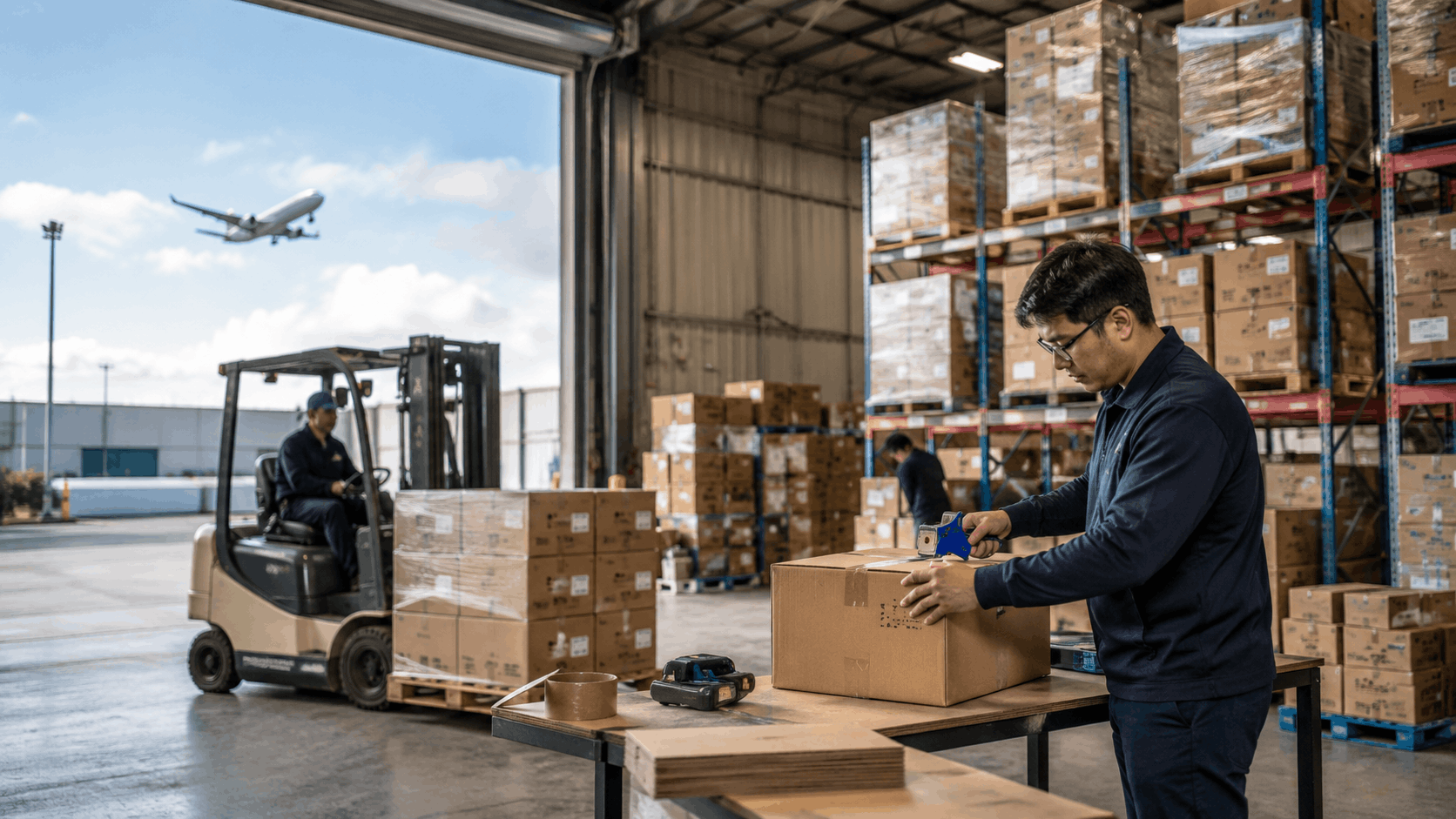
Labor and Equipment for Palletized Stock
Palletized stock needs the right gear or it becomes a slow, risky job. At minimum you want a pallet jack, sturdy hand trucks, and moving straps to keep loads stable. Trying to break down a pallet by hand and carry boxes one by one wastes an entire crew's morning.
For heavier or stacked pallets, a liftgate truck matters. It lets movers lower a full pallet to the ground without a dock, which is common at smaller storage lots near El Segundo. Without a liftgate, a 1,200 pound pallet is stuck on the truck bed.
Trained movers make the biggest difference. They know how to balance a load, protect fragile SKUs, and place pallets so the unit stays organized. Our crews handle warehouse and industrial moves regularly, so palletized inventory is routine work for the team.
How Popeye Moving & Storage Coordinates Transfers
We treat an inventory transfer as one connected job - pickup, transport, and placement - so the business owner can keep working. Our team confirms your shipping cutoffs first, then builds the move around them. You keep packing orders while we handle the heavy lifting.
Local route knowledge is where we save clients real time. We know which surface streets bypass the worst of Sepulveda, when Century Boulevard opens up, and how to reach storage lots without circling the airport. Those small route choices add up across a busy season.
Once at the unit, we place pallets and boxes with a picking path in mind so you are not digging later. If you are relocating a whole operation, our commercial moving services cover the full transition alongside your storage. The aim is always the same - move the stock, keep the sales.
Protecting and Organizing Stored Inventory
Getting inventory into storage is only half the job. Keeping it safe, findable, and in sellable condition is what protects your money. A messy unit is a slow unit, and damaged stock is lost profit, so inventory protection and organization deserve real attention.
The good news is that a little setup goes a long way. Solid shelving, clear labels, moisture control, and basic security cover most of what an online seller needs. Here is how to keep stored stock in shape from the coast's damp air to sticky-fingered risk.
Shelving and Labeling Systems That Save Time
Shelving turns a pile into a pickable inventory system. Freestanding steel shelving units let you store boxes vertically, which nearly doubles usable space in a 10x10 unit. Keep heavy items low and light, high-turnover SKUs at waist height where you grab them most.
Labeling is what saves time during the holiday scramble. Label every shelf and box with the SKU and quantity, facing out toward the aisle. Some sellers add a simple bin-location code so a packer can find any product in seconds without opening three boxes first.
A basic map taped inside the door helps too. Sketch which zone holds which product category, and update it when seasons rotate. When a unit is organized this way, even a helper who has never been inside can pull the right items on a busy shipping day.
Pest and Moisture Prevention Near the Coast
The marine layer that rolls over Playa del Rey and Marina del Rey brings steady coastal moisture. That damp air is the biggest threat to stored inventory in this part of LA. Cardboard softens, metal spots, and mildew creeps into fabric if you ignore it.
Moisture prevention is cheap and effective. Set pallets or boards under your boxes so nothing sits on a bare floor, and drop desiccant packs into cases of sensitive product. For apparel and paper goods, a climate-controlled unit is the surest defense against humidity swings.
Pests are the other coastal concern. Keep food-based or scented products sealed, never store loose snacks, and avoid leaving open cardboard that rodents love. A clean, sealed unit with off-floor storage gives pests nothing to chew on and keeps your stock sellable.
Security Features Worth Checking Before Renting
Before renting any unit, check the security setup with your own eyes. Look for gated access with a personal code, visible surveillance cameras covering the drive lanes, and good lighting after dark. A facility that hides its security answers is a red flag.
Individual unit locks matter as much as the front gate. A disc-style lock resists bolt cutters far better than a cheap padlock, and many facilities require one. Ask whether units have individual door alarms, which add another layer for higher-value inventory.
Also ask how access is logged. Facilities that record entry by code create a trail if anything goes missing. For a business storing thousands of dollars in stock, these details are worth confirming before you sign anything. You can review our approach through our storage solutions.

Need Help in Los Angeles?
Popeye Moving & Storage serves Los Angeles and all of Los Angeles County.
What Inventory Storage Costs in the LAX and 405 Area
Storage pricing near LAX runs higher than inland LA because of the location and demand. Still, it is a fraction of what a warehouse lease costs, which is why sellers choose it. Knowing the real ranges helps a business owner budget instead of guess.
Cost comes down to size, features, and how flexible your term is. Climate control, drive-up access, and prime location all add to the monthly rate. Here is a rough breakdown of what local sellers can expect to pay.
| Unit Size | Typical Monthly Range | Fits Roughly |
|---|---|---|
| 5x10 (standard) | $120 - $200 | 4-6 pallets / 100 boxes |
| 10x10 (standard) | $200 - $320 | 8-10 pallets / 200 boxes |
| 10x15 (standard) | $300 - $450 | 12-15 pallets |
| 10x20 (standard) | $400 - $600 | 16-20 pallets |
| Climate-controlled add-on | +25% to +50% | Any size |
Price Ranges by Unit Size and Features
A small online store's overflow usually fits a 5x10, which lands around $120 to $200 a month near the airport. Step up to a 10x10 for a growing catalog and expect $200 to $320. Larger 10x15 and 10x20 units for Q4 volume run from $300 up past $600.
Climate-controlled units add roughly 25 to 50 percent to those numbers. For a seller with apparel or cosmetics, that premium beats losing a pallet to mildew. For bulk hardware, it is money you do not need to spend.
Drive-up units near the 405 with easy loading access often price slightly above interior units of the same size. You are paying for time saved on every pickup, which for a daily-fulfillment seller usually earns its keep. Match the feature to how you actually work.
Hidden Costs to Watch For
The sticker rate is rarely the full story. Many facilities charge a one-time admin fee of $20 to $30 at move-in, and some require you to buy their branded disc lock. These are small but easy to overlook when you compare quotes.
Insurance is the bigger line item. Most facilities require coverage on stored goods, and while your business policy might already cover it, some push their own plan at $10 to $30 a month. Check your existing coverage before agreeing to add-on insurance you do not need.
Watch for access surcharges too. After-hours or 24-hour access sometimes carries a monthly fee, and a few facilities raise rates after an introductory period. Ask directly whether the quoted price is promotional and when it changes, so month four does not surprise you.
How to Save on Seasonal and Short-Term Rentals
Month-to-month terms are a seller's best friend. They let you scale a unit up for Q4 and drop it after January without a penalty. Avoid any facility pushing a long contract for what should be flexible seasonal space.
Right-sizing is the biggest saver. Do not hold a 10x20 all year when you only need it October through December. Downsize to a 5x10 in the slow months and you can cut your storage bill by more than half across the calendar.
Booking early also helps. Rates and availability near LAX tighten before the holidays, so reserving in July or August often locks a better price than a November rush. Ask about promotions for new move-ins and whether prepaying a few months earns a discount.
Final Thoughts
Running an online business near LAX and the 405 means fighting for space in one of the tightest corridors in the city. Overflow and seasonal stock do not have to take over the garage or eat a warehouse lease. With the right unit, smart timing, and a plan built around your sales cycles, storage becomes a tool that keeps orders shipping.
Our team at Popeye Moving & Storage Co. moves and stores inventory for sellers across Westchester, El Segundo, Playa del Rey, Culver City, and Marina del Rey every week. We handle the pallets, the traffic, and the placement so you can keep packing orders. Call us for a consultation and let us help you plan storage around your busiest season. Reach out through our contact page to get started.

Frequently Asked Questions
- What is e-commerce overflow storage?
- Overflow storage is extra space for the inventory that no longer fits where you work. When an online seller's garage, spare room, or shop fills up with product, overflow storage holds the excess so orders keep shipping. It commonly covers bulk buys, Amazon FBA prep, and returned stock. Sellers use it to keep their workspace clear while still having stock nearby for prompt fulfillment.
- How much does business inventory storage near LAX cost per month?
- Near LAX, a small 5x10 unit runs roughly $120 to $200 a month, a 10x10 around $200 to $320, and a 10x20 from $400 to $600. Climate-controlled units add about 25 to 50 percent. Price depends on size, features like drive-up access, term flexibility, and how close the facility sits to the 405. Booking early usually locks a better rate.
- Can a business access its inventory every day?
- Yes. Many facilities offer daily or extended access, and some provide 24-hour entry. For sellers who pull stock every day, drive-up units let you back a van right to the door and load with ease. Confirm the exact access hours before signing, and check whether after-hours entry carries a surcharge, since the wrong hours can slow your daily fulfillment.
- Do stored products near the coast need climate control?
- Some do. The coastal humidity around Playa del Rey and Marina del Rey can damage electronics, apparel, and cosmetics through moisture, mildew, and temperature swings. Those items benefit from a climate-controlled unit. Bulk hardware, tools, and sealed non-perishables usually hold up fine in a standard unit. Many sellers split inventory, storing sensitive goods in climate control and everything else standard.
- How much notice is needed to store seasonal stock before the holidays?
- Reserve your unit by early to mid August for Q4. Holiday inventory arrives through August and September, and units near LAX fill up early before the rush. Booking in July or August locks the size and location you want at a better rate. Sellers who wait until November often take whatever is left and pay more for it.
- Can Popeye Moving & Storage move pallets and bulk boxes?
- Yes. Our crews handle palletized and bulk inventory regularly using pallet jacks, hand trucks, moving straps, and liftgate trucks. Trained movers balance loads, protect fragile SKUs, and place pallets with a picking path in mind. We coordinate pickup, transport, and unit placement around your shipping cutoffs so daily orders keep moving while we do the heavy lifting.
- What unit size fits a small online store's inventory?
- A 5x10 unit suits most small online stores, holding about 4 to 6 pallets or roughly 100 medium boxes with a walk path. A growing catalog with a few hundred SKUs usually fits a 10x10, which holds 8 to 10 pallets or 200-plus boxes. Size up one step from your raw pallet count so you have an aisle to reach the back.
- Is month-to-month storage available for slow seasons?
- Yes. Month-to-month terms let a business scale up for the holidays and shrink back afterward without a long contract. This flexibility fits sellers who only need extra room three or four months a year. Downsizing to a smaller unit during slow months can cut storage costs by more than half across the calendar, so ask about flexible terms before signing.
- How does storage near the 405 help with shipping speed?
- A central location near the 405 shortens transport time to carriers and Amazon fulfillment centers. When FBA opens restock capacity, you can pull product from a local unit and get it into the center in a day instead of waiting on a fresh supplier order. Being minutes from the airport and major freeways keeps your reship and pickup runs short.
- What should a business check before renting a storage unit?
- Check security first - gated access, surveillance cameras, good lighting, and a strong disc lock on the door. Confirm real access hours and any after-hours surcharge. Review the full cost, including admin fees, insurance requirements, and whether the rate is promotional. Finally, match the unit size, climate needs, and loading access to how you actually pull and ship stock.
Popeye Moving & Storage Co. Team Team
Licensed moving and storage professionals serving Los Angeles and Los Angeles County.
Licensed in California · License #CAL T 189749 | USDOT 1472924 | MC 498816C
Why trust Popeye Moving & Storage?
Founded in 1994, Popeye Moving & Storage is a licensed and insured moving and storage service serving Los Angeles and Los Angeles County. All content is reviewed by our licensed technicians.

Need Help in Los Angeles?
Popeye Moving & Storage serves Los Angeles and all of Los Angeles County.
Related Articles
Storage Near the 405 in West LA: What's Actually Available and Why a Mover-Run Warehouse Beats the Roll-Up Units
A clear guide to storage near the 405 in West LA, comparing roll-up self-storage units with a mover-run warehouse on cost, safety, and hassle for local movers.
Storage Near LMU and UCLA - Student Summer Storage With Pickup From the Curb
Curbside summer storage near LMU and UCLA lets students skip shipping fees and truck rentals. Learn how pickup, storage, pricing, and fall delivery work.
What Vaulted Storage Billing Includes - Wrapping, Inventory, and the Line Items Self-Storage Never Shows
A clear breakdown of what vaulted storage billing includes - wrapping, inventory, handling, and coverage - and why self-storage quotes never show these line items upfront.