Piano Storage in Los Angeles: Climate, Board Care, and Why Garages Destroy Soundboards
Key Takeaways
- LA's coastal damp, valley heat, and Santa Ana winds all stress piano wood, and rapid humidity swings are what crack soundboards.
- Garages are the worst place for a piano because of extreme heat, moisture rising from concrete, and pests that chew felt and hammers.
- Keep a piano near 68 to 72 degrees and 42 to 50 percent humidity, held steady, to protect the soundboard crown and action.
- True climate-controlled storage manages both temperature and humidity; temperature-only units leave the moisture problem unsolved.
- Never wrap a piano in plastic; use breathable moving blankets and covers, and store the piano off bare concrete floors.
- Tune a piano after it settles in its new environment for two to four weeks, not before or right after a move.
- Watch for buzzing notes, sticking keys, and string rust as early signs of storage damage, and call a technician for structural issues.
- Popeye Moving & Storage moves and stores pianos across LA with controlled storage, trained movers, and proper equipment.
In This Article
A family in Silver Lake called us last spring after moving a grand piano into their garage. The instrument came from a grandparent's home in Ohio, and it sounded beautiful the day it arrived. Six months later, they lifted the lid and found a long crack running down the soundboard, plus a musty smell coming from the case.
They did nothing wrong that felt obvious. They wrapped it, closed the garage door, and figured a covered space was safe. But an LA garage is one of the harshest places a wooden instrument can sit, and the damage was already done by the time they noticed.
How the Los Angeles Climate Affects a Piano
Pianos are made mostly of wood, felt, and steel. Wood breathes with the air around it, swelling when the air is damp and shrinking when it dries out. The Los Angeles climate makes that constant, and the swings from one neighborhood to the next are wider than most people expect.
A piano near the beach lives in different air than one in the valley. Humidity that feels fine to a person can slowly pull a soundboard out of shape. Over months, that movement causes cracks, tuning trouble, and piano damage that costs thousands to fix.
Coastal Moisture vs. Inland Heat
Homes in Santa Monica, Venice, and Marina del Rey sit in damp, salty air most of the year. That coastal humidity keeps wood swollen and can rust strings and pins over time. We have opened pianos a few blocks from the beach and found green corrosion on the tuning pins after just one winter of neglect.
The San Fernando Valley plays the opposite game. San Fernando Valley heat bakes the air dry, especially from June through October. A piano that spent years near the coast and then moves to Woodland Hills or Encino often develops cracks as the wood suddenly loses moisture.
Neither extreme is friendly to a piano. Coastal air adds moisture the wood does not want, and valley heat rips moisture back out. The instrument gets caught in the middle, expanding and contracting far more than it was built to handle.
Owners who move across these zones should think about the change in air, not just the change in address. A piano that was stable in Redondo Beach may need weeks to settle after a move to Burbank, and it will likely need a tuning once it does.
Santa Ana Winds and Sudden Dryness
Santa Ana winds are the sneakiest threat to pianos in Southern California. These dry, warm winds push in from the desert, often in fall and early winter, and drop indoor humidity sharply. A room that sat at 50 percent can fall below 20 percent in a day or two.
Wood hates that speed. The soundboard and pinblock shrink rapidly, and rapid shrinking is what cracks them. Slow seasonal change gives wood time to adjust, but a Santa Ana event does not offer that mercy.
We see the aftermath every year, usually in homes across Pasadena, Glendale, and the hillside neighborhoods that catch the wind first. Owners report their piano went sharp, then flat, then developed a buzz that was not there the week before.
Low humidity during these events is the enemy. A humidity control system or a well-sealed, climate-controlled space is the only reliable defense during Santa Ana season. Leaving a piano in a garage during one of these events is asking for a cracked board.
Daily Temperature Swings in the Basin
Even without wind, the LA basin swings a lot from day to night. Areas like Pasadena and Glendale can hit the 90s in the afternoon and drop into the 50s overnight. That daily temperature swing works the glue joints and metal parts of a piano over and over.
Steel strings expand in heat and contract in cold, which is one reason tuning stability suffers in a space that is not temperature controlled. A piano tuned on a warm afternoon may sound off by the cool morning. Repeat that cycle for months and the piano stops holding any tune at all.
Glue joints feel the strain too. Older pianos were assembled with hide glue that softens with heat and moisture. Constant swings loosen those joints, and loose joints lead to buzzes, rattles, and structural problems inside the case.
A stable environment is worth more than a perfect one. A piano kept at a steady 70 degrees will outlast one that bounces between 55 and 95, even if the average temperature is the same.
The Ideal Range for Piano Storage
Most piano makers and technicians agree on a target. The Piano Technicians Guild recommends keeping a piano near 68 to 72 degrees Fahrenheit with the ideal humidity between 42 and 50 percent. That range keeps wood at a stable moisture content.
The temperature range matters because it limits how much strings and glue move. Holding the piano near 70 degrees keeps the tuning far more settled and protects the joints from working loose.
Humidity is the bigger battle in LA. Below 40 percent, soundboards start to shrink and crack. Above 55 percent, wood swells, keys stick, and rust begins on the strings and pins.
The goal is steadiness inside that band. A piano that lives at a constant 48 percent humidity year round will stay healthy for decades, while one that swings from 25 to 65 percent will show damage within a year or two.
Get Your Free Quote
Tell us about your move. We'll be in touch soon.
Why Garages Destroy Soundboards
We get asked about garage storage more than almost anything else. It seems logical - the space is covered, out of the rain, and free. But a garage in Los Angeles fails a piano on every measure that matters.
Garage piano storage exposes the instrument to heat spikes, moisture from concrete, pests, and wild swings in temperature. Each of those alone can cause soundboard damage. Together, they make a garage close to the worst room you could pick.
Heat Buildup in Uninsulated Garages
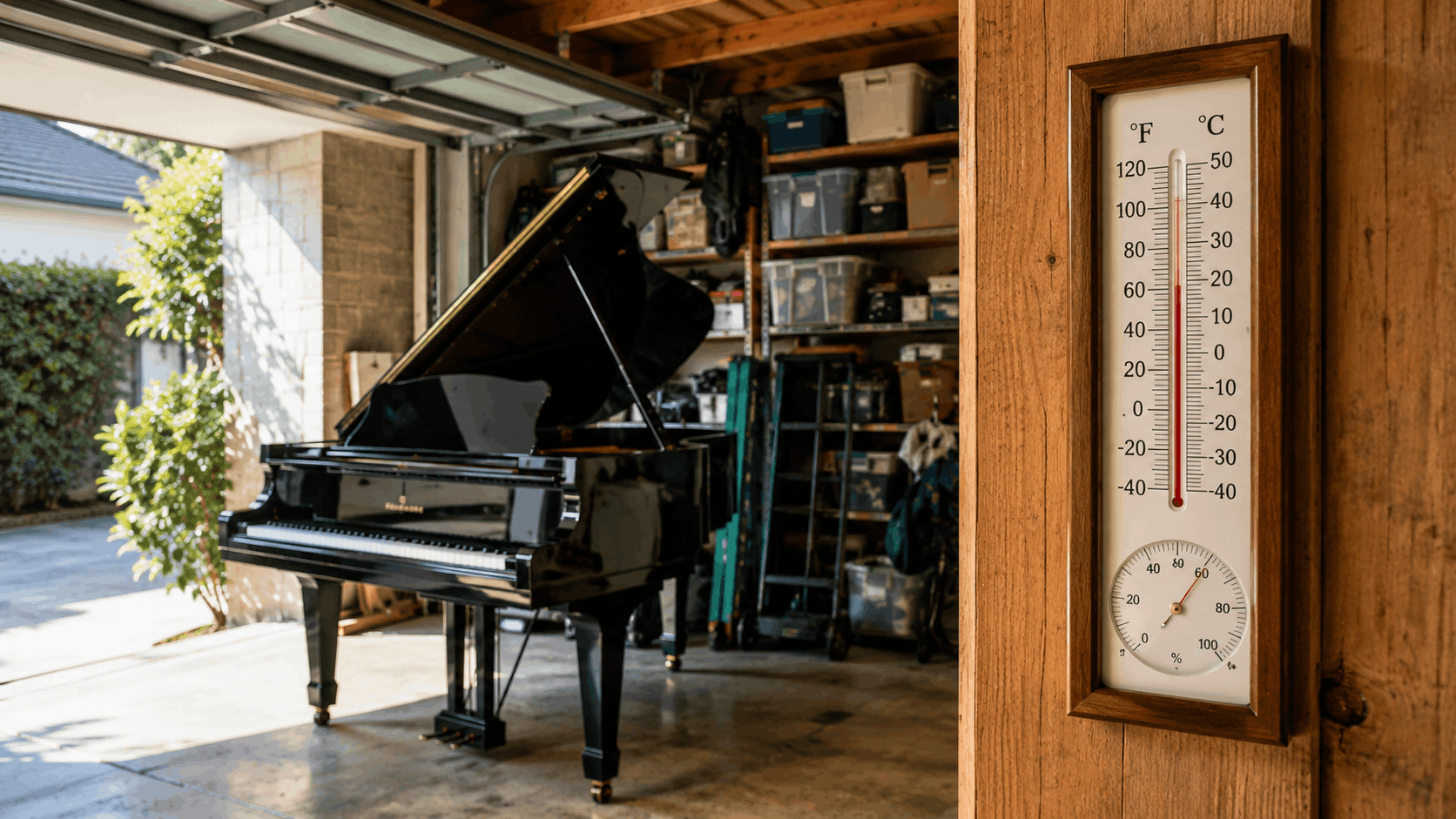
Most LA garages have no insulation and no ventilation. On a summer afternoon in the valley or the flats, the inside of a closed garage easily passes 100 degrees, sometimes reaching 120. A piano sitting in that oven takes real damage.
Garage heat softens the glue that holds the piano together. The soundboard crown - the gentle upward curve built into the board - depends on tight construction to keep its shape. When heat weakens the glue, that crown flattens, and a flat soundboard loses tone and projection.
Heat also dries the wood far more than a living space would. The combination of high heat and low humidity in an August garage pulls moisture out of the board rapidly, which is exactly the condition that produces cracks.
People assume a wrapped piano is protected from heat, but blankets do nothing against ambient air temperature. If the room is 110 degrees, the piano inside the blanket is also 110 degrees. Wrapping keeps off dust, not heat.
Moisture, Concrete Floors, and Rust
Concrete slabs are a hidden problem. Concrete wicks moisture from the ground and releases it into the air right above the floor. A piano parked on a garage slab sits in a zone of higher humidity than the rest of the room.
That concrete moisture rusts the strings and tuning pins. Rusted pins lose their grip, which means the piano will not hold a tune no matter how often a technician works on it. Rust on the strings dulls the tone and can eventually cause strings to break.
The same moisture swells the wooden parts. The action, the keys, and the case all take on water, and swollen wood makes keys stick and the touch feel heavy. Combine morning moisture from concrete with afternoon garage heat, and the piano cycles through swelling and shrinking every single day.
Even garages that seem dry have this problem near the floor. Raising a piano off the slab helps a little, but it does not fix the temperature swings or the pests, so it is only a partial answer at best.
Pests and Rodents That Chew Felt and Wiring
Garages are where mice, rats, and moths live in most LA homes. A piano gives them a warm, dark, protected space full of soft materials. We have opened stored pianos to find nests built right inside the action.
Rodents chew hammer felt, dampers, and the cloth bushings that keep keys quiet and even. They also gnaw on the wiring of player systems and any electronics. Once felt is chewed, notes buzz, stick, or go silent, and replacing action felt is slow, costly work.
Moths are quieter but just as damaging. Moth larvae feed on wool felt, and piano hammers are made of dense wool. A moth infestation can ruin an entire set of hammers, which is one of the more expensive parts to replace.
No amount of wrapping keeps pests out over months. Rodents chew through blankets and cardboard without trouble. A sealed, pest-controlled storage space is the only real protection for the felt and action parts.
Cracked Soundboards and the Cost of Repair
A cracked soundboard often announces itself with a buzz or a rattle on certain notes. Sometimes the tone just goes thin and lifeless, as if the piano lost its voice. Owners describe it as the piano sounding hollow or dead compared to how it used to sing.
Repairing a cracked soundboard is not cheap. Shimming a crack and refinishing the board commonly runs from $1,500 to over $4,000 depending on the piano and the extent of the damage. A full soundboard replacement on a grand can climb well past $10,000.
Those numbers are why we push prevention so hard. The cost of proper storage for a year is a small fraction of a single soundboard repair. A garage that felt free ends up being the most expensive choice an owner can make.
Prevention is simple by comparison. Keep the piano in a stable, controlled environment, and the soundboard stays healthy for decades. Skip that step, and the repair bill often exceeds what the piano is even worth.
Need Help in Los Angeles?
Popeye Moving & Storage serves Los Angeles and all of Los Angeles County.
Soundboard and Action Care Basics
A piano has thousands of parts, but a few are far more fragile than the rest. Knowing which ones to protect helps owners make smart choices about storage and daily care. Soundboard care and action health cover most of what keeps a piano alive.
The good news is that most of this care comes down to controlling the air and handling the instrument gently. Owners do not need to be technicians to protect the parts that matter most.
What the Soundboard Does and Why It Matters
The soundboard is the large wooden panel under the strings, and it is the heart of the piano's tone. When a string vibrates, that vibration passes through the bridge into the soundboard, which amplifies the sound. Without it, the strings would barely be heard.
The board is built with a slight curve called the crown. That crown puts the board under tension against the strings, and that tension is what gives a piano its power and richness. A healthy crown means a full, resonant sound.
The crown is fragile because it depends on the wood holding a specific moisture level. When the wood dries out and shrinks, the crown flattens and can crack. When it swells, the board can distort and buzz against the ribs.
This is the whole reason humidity control matters so much. Protecting the soundboard is really about protecting its curve, and the curve survives only in a steady environment. Everything else in soundboard care flows from keeping that board stable.
Protecting the Action and Felt Parts
The piano action is the mechanism that turns a key press into a hammer strike. It contains wood, felt, leather, and cloth, all of which react to moisture. This is where sticking keys and sluggish response usually begin.
When humidity rises, the wooden parts of the action swell and the felt bushings tighten. Keys that used to drop cleanly start to hang or return slowly. Players describe it as the keys feeling gummy or slow, and it gets worse the more humid the room becomes.
Very dry air causes the opposite trouble. Parts shrink, joints loosen, and the action can start to rattle or feel loose and clacky. Neither extreme lets the action play the way it should.
Keeping the room in the 42 to 50 percent humidity range keeps the action feeling even and reliable. If keys begin sticking after a move or a storage period, the cause is almost always the air, not a mechanical fault, and it often eases once the piano settles.
Caring for the Finish and Case
The finish protects the wood and holds the piano's value. Direct sun is its worst enemy, fading the color and cracking older lacquer over time. A piano parked in front of a sunny window in Brentwood or along a bright wall can develop uneven fading within a season.
Temperature swings also harm the finish and veneer. Wood expanding and contracting under a rigid lacquer coat causes the finish to check, which shows up as a web of tiny cracks. Veneer, the thin decorative wood layer on the case, can lift or bubble when the wood beneath it moves.
During storage, the piano should sit away from direct light and vents. Dust is a smaller concern but still worth managing, since dust holds moisture against the surface. A breathable cover keeps dust off without trapping air against the finish.
Gentle cleaning helps between uses. A soft, dry cloth handles most dust, and owners should avoid household sprays that can cloud or strip the finish. For veneer care, keeping the room stable does more than any polish ever could.
Using a Humidity Control System
For pianos that cannot live in a perfect room, a humidity control system bridges the gap. The Dampp-Chaser system installs inside the piano and combines a humidifier, a dehumidifier, and a controller. It adds moisture when the air dries out and removes it when the air gets damp.
In LA, a Dampp-Chaser makes strong sense for homes that see big swings, such as valley properties during Santa Ana season or coastal homes fighting steady dampness. It keeps the wood around the soundboard at a stable moisture level even when the room is not.
Room humidifiers and dehumidifiers help too, especially in a dedicated music room. A whole-room approach protects the finish and case as well as the internal parts, which an in-piano system cannot reach. Many owners use both together.
For long-term storage, though, the cleanest solution is a controlled storage space where the whole environment stays in range. That removes the need to monitor and refill an in-piano system for months at a time, and it protects the entire instrument at once.
Climate-Controlled Storage vs. Regular Units in LA
Not all storage labeled climate controlled is the same. The difference matters enormously for a piano, and it changes both the protection and the price. Piano storage LA shoppers should know exactly what they are paying for.
A standard unit does nothing for temperature or humidity, and a temperature-only unit still leaves the moisture problem unsolved. True climate-controlled storage handles both, and that is what a piano needs.
What Climate Control Actually Means
Temperature control means the space is heated and cooled to hold a set temperature. That helps, but it ignores humidity, which is the larger threat to a piano in Los Angeles. A temperature-controlled unit at 72 degrees can still swing wildly in moisture.
True climate control manages both temperature and humidity. The space stays near 70 degrees and holds humidity in a stable band, usually somewhere in the 45 to 55 percent range. That combination is what protects the soundboard, action, and strings all at once.
Some facilities blur the line in their marketing. A unit that only advertises air conditioning is not the same as one with active humidity control. For a piano, only the full climate-controlled option is worth considering.
The distinction shows up during extreme weather. During a summer heat wave or a dry Santa Ana event, a temperature-only unit lets the humidity crash or spike, while a true climate-controlled unit holds steady. That steadiness is exactly what saves the wood.
Questions to Ask a Storage Facility
Before renting a unit, owners should ask direct questions. Start with humidity monitoring - ask whether the facility actively controls and tracks humidity, or only temperature. If the staff cannot give a specific humidity range, the space is probably not built for a piano.
Ask about backup power. A climate system that shuts off during an outage lets the environment drift within hours. Facilities with generators or backup systems keep the space stable through the power failures that hit parts of LA every summer.
Pest control is the next question. Ask how often the facility treats for rodents and insects and whether units are sealed. A clean, sealed, professionally managed building protects felt and action parts from the chewing damage a garage invites.
Finally, ask about access, ground-floor placement, and how the facility handles large items. A piano should not be dragged up freight elevators repeatedly or parked near a loading dock that opens to outside air all day.
Cost Ranges for Piano Storage in Los Angeles
Storage cost depends on the piano size, the type of space, and the level of control. The table below gives realistic monthly ranges for the LA market. Grands cost more because they take more space and often need padded, vaulted storage.
| Storage Type | Upright Piano | Grand Piano |
|---|---|---|
| Standard unit (not recommended) | $50 - $90/mo | $90 - $150/mo |
| Temperature-only unit | $90 - $150/mo | $150 - $250/mo |
| Full climate-controlled | $150 - $250/mo | $250 - $450/mo |
| Padded vaulted storage | $175 - $300/mo | $300 - $500+/mo |
The piano storage price rises with the level of protection, but that added cost is small next to a soundboard repair. A year of proper climate-controlled storage usually costs less than a single major repair.
What drives the cost is space, control, and handling. A grand that needs its legs removed, careful padding, and a large controlled footprint sits at the top of the range, while a compact upright in a shared climate room sits near the bottom.
How Popeye Moving & Storage Handles Piano Units
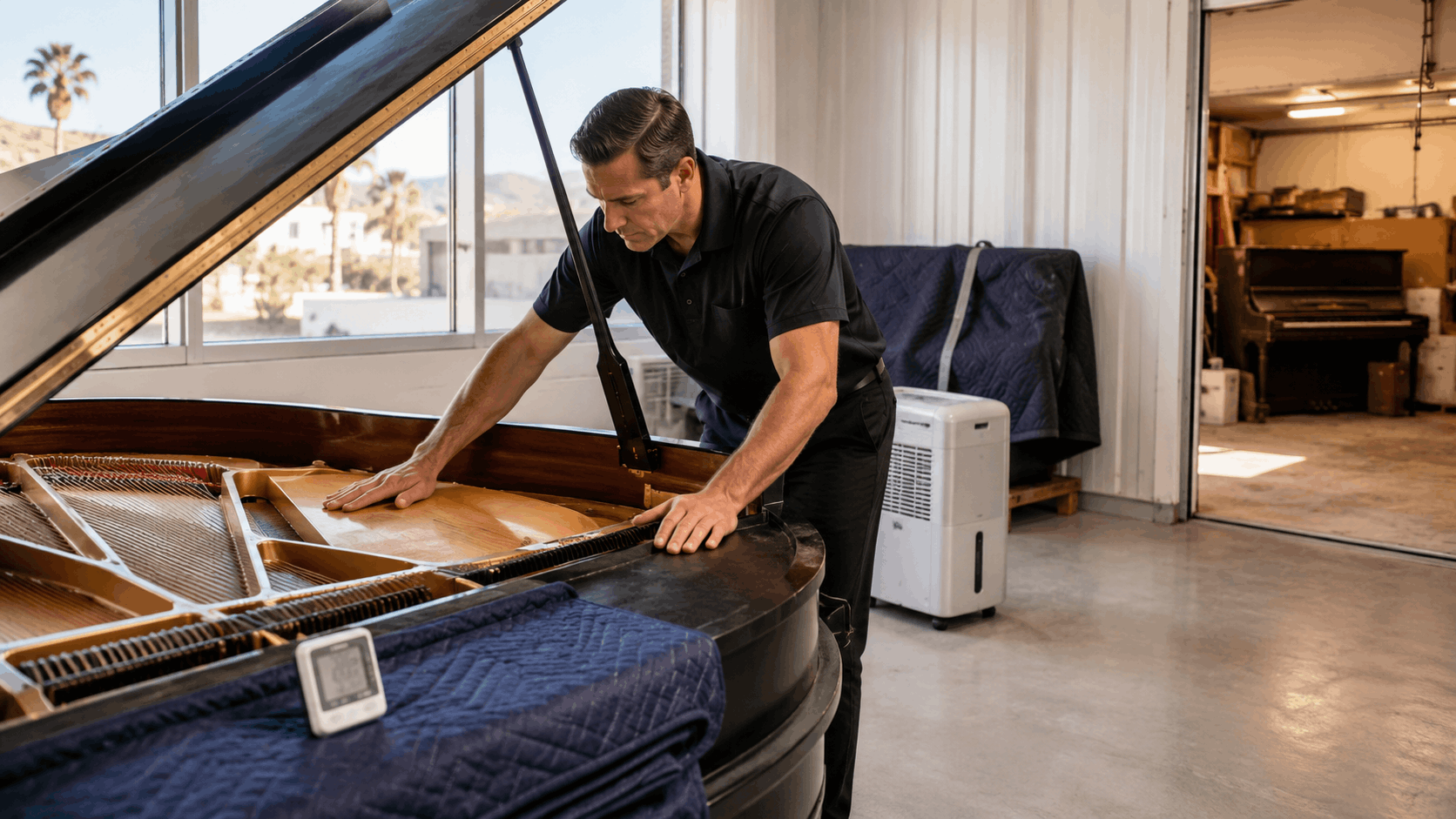
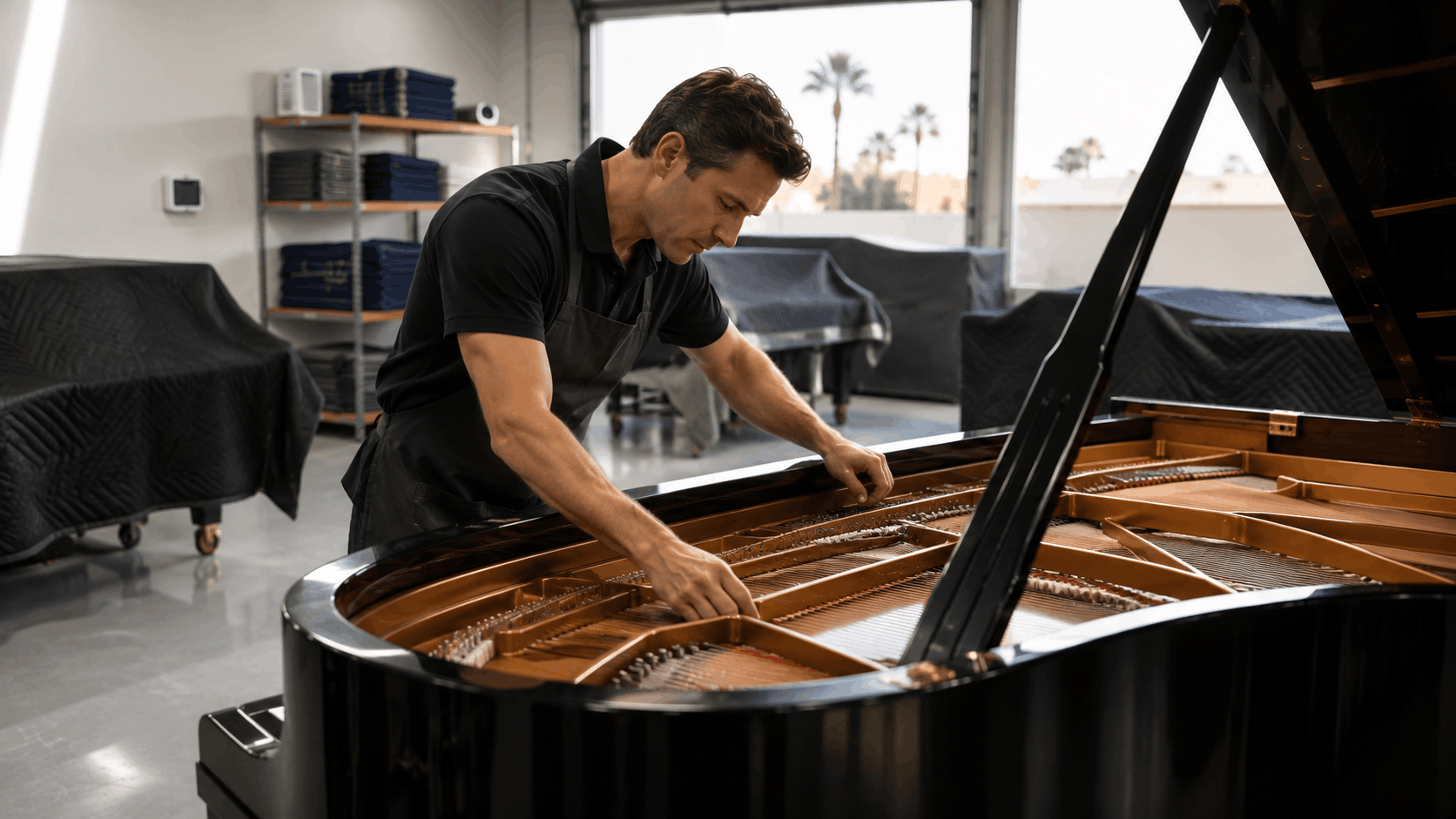
At Popeye Moving, we treat pianos as the fragile, valuable instruments they are. Our storage solutions include controlled storage that holds temperature and humidity in the range a piano needs, so the soundboard and action stay protected month after month.
Our team monitors conditions and keeps the space sealed and pest managed. For long stays, our long-term storage and vaulted storage options give grands the padded, protected environment they deserve rather than an open concrete floor.
We serve the full LA area, from the coast in Santa Monica and Marina del Rey to the valley and out to Pasadena and Glendale. Owners can hand off the whole process to us, since we also handle the move into and out of storage with trained piano movers.
Anyone unsure whether their piano needs full climate control can contact our team for a straight answer based on the instrument and where it will live. We would rather help someone avoid a cracked board than fix one later.
Need Help in Los Angeles?
Popeye Moving & Storage serves Los Angeles and all of Los Angeles County.
Preparing a Piano for Storage
Good storage starts before the piano ever reaches the unit. A little prep protects the instrument and gives owners a record of its condition. Piano storage prep comes down to cleaning, documenting, wrapping, and placement.
Rushing these steps is how finishes get scratched and problems go unnoticed until it is too late. A careful hour of prep saves a lot of grief months down the road.
Cleaning and Inspecting Before You Store
Start by wiping down the keys and case with a soft, dry cloth. Clean keys stored dirty can develop stains and hold moisture against the surface. Avoid liquids and sprays, which can seep between keys and cause trouble.
Inspect the piano closely before it goes in. Look at the soundboard for any existing cracks, check the strings and pins for rust, and note any loose parts or buzzes. Writing down what you find creates a condition report you can compare against later.
Photograph the piano from several angles, including close-ups of the soundboard, the finish, and any existing marks. These photos protect the owner if a dispute ever comes up and give a clear baseline of the piano's health.
If the inspection turns up rust or a crack already forming, that is worth addressing before storage. Storing a piano that is already struggling only lets the problem grow in the dark.
Wrapping and Padding the Right Way
Moving blankets are the standard for protecting a piano in transit and in storage. Thick, clean pads cushion the case against bumps and scratches and add a small buffer against dust. Our crews use professional moving blankets secured so they do not shift.
The one thing owners should never do is shrink-wrap a piano in plastic for storage. Plastic traps moisture against the finish, and trapped moisture is exactly what damages lacquer and swells wood. A piano sealed in plastic in an LA garage can grow mold and haze the finish.
A breathable piano cover is the better choice for long storage. It keeps dust off while letting the wood exchange air with the room. In a climate-controlled space, that airflow keeps the piano at the same steady humidity as the room around it.
Padding should protect corners and legs, which take the most abuse during handling. Our packing and crating team knows how to wrap the delicate edges and finish points that get damaged when a piano is padded carelessly.
Should You Tune Before or After Storage
Tuning a piano right before it goes into storage is usually a waste. The piano will move as it adjusts to the storage environment, and the tuning will drift out anyway. The strings and board settle to the new air over several weeks.
The better approach is to tune after storage, once the piano reaches its permanent home and settles in. Give the instrument two to four weeks in its new room before calling a technician. That waiting period lets the wood reach a stable moisture content.
Tuning a piano that has not settled means the technician chases a moving target, and the tuning falls apart within days. Patience saves money and gives a tuning that actually holds.
If the piano must sound its best right away for an event, a technician can do a rough tuning and a follow-up once it settles. For most owners, though, one good tuning after the piano has settled is the smart play.
Positioning a Piano in the Unit
How a piano sits in storage affects its health. Uprights should stand upright against padding, never on their back or side, which stresses the frame and action. Keep the piano a few inches off exterior walls so air can move around it.
Grand piano storage often means removing the legs and lyre and standing the piano on its straight side on a padded piano board. This is the safest position for a grand in transit and in storage, and it protects the legs from breaking under the instrument's weight.
Keep any piano off a bare concrete floor. Pallets, boards, or risers lift it out of the moisture zone near the slab. Even in a controlled space, a small gap under the piano helps air circulate and keeps it away from any floor dampness.
Leave breathing room around the instrument rather than boxing it in tight. Crowding a piano with other stored items blocks airflow and raises the risk of something falling against the finish. Our crews position pianos with clearance and protection on every side.
Moving a Piano Safely Across Los Angeles
Getting a piano to storage or a new home is where a lot of damage happens. LA geography makes piano moving harder than in most cities. Piano transport here means dealing with hills, old homes, tight parking, and heavy traffic.
This is not a job for a couple of friends and a rented truck. A piano weighs between 300 and 1,200 pounds and shifts its weight as it moves, and one slip can crack the case or injure someone.
Narrow Streets and Steep Driveways in the Hills
The Hollywood Hills, Echo Park, and Silver Lake are full of narrow streets and steep, winding driveways. Trucks often cannot park close to the door, so the piano has to travel farther by hand or dolly. Every extra foot on a slope adds risk.
Steep driveways are the real challenge. Rolling a heavy grand down a steep drive requires proper braking straps and enough trained hands to control the descent. Gravity does not forgive a mistake on a Silver Lake hillside.
Some homes in these areas are reached only by long staircases or footpaths from the street. That means carrying the piano rather than rolling it, which calls for skid boards, straps, and a crew that knows how to distribute the load safely.
We plan hillside moves before the truck ever leaves. Our team scouts the access, the slope, and the turning space so there are no surprises on move day. That planning is why our piano moving service handles hill neighborhoods that stop other movers cold.
Older Homes and Tight Staircases
Older homes near Highland Park and Pasadena come with their own puzzles. Craftsman houses and 1920s bungalows in areas like Bungalow Heaven often have narrow doorways, tight entry halls, and staircases that were never built with a grand piano in mind.
Narrow doors sometimes mean removing a door from its hinges or angling the piano precisely to clear the frame. Measuring every doorway and turn ahead of time tells us whether the piano fits and how it must be angled to make it through.
Staircase moving multiplies the difficulty. Carrying a piano up or down a tight, turning staircase requires enough crew to hold the weight and a clear plan for each step. Old railings and plaster walls add damage risk if the move is rushed.
Our crews come prepared for these older Pasadena and Highland Park homes. We protect doorframes, floors, and walls, and we bring the equipment to handle a staircase that a lesser mover would refuse.
Parking, Permits, and Traffic Timing
Parking is a real hurdle in dense LA neighborhoods. Many streets have permit-only parking or tight time limits, and a moving truck needs space right near the door. In some areas a temporary parking permit from the city keeps the truck legal and close.
We check the local parking rules before the move and arrange a permit where needed. Blocking a driveway or parking illegally can end with a ticket or a towed truck in the middle of a move, so we handle it in advance.
Traffic timing matters too. Moving a piano across town during rush hour on the 405 or the 101 adds hours and stress to the day. We schedule long crosstown moves outside peak traffic windows whenever possible.
Good timing protects the piano as well as the schedule. Less time bouncing in a truck through stop-and-go traffic means less vibration and less risk. Planning the route and the hour is part of a careful move.
The Right Equipment for a Safe Move
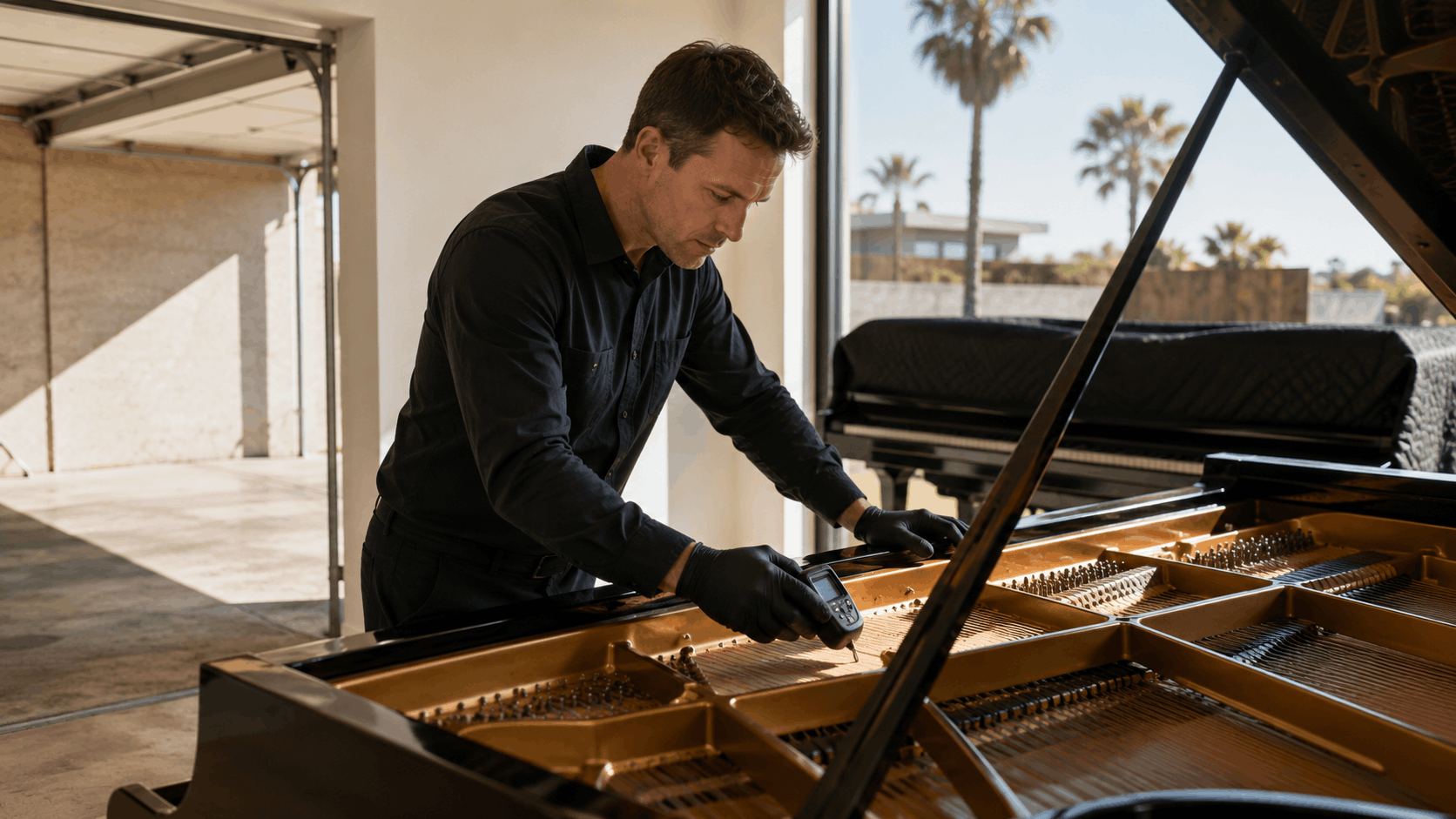
The right gear separates a safe move from a disaster. A piano board, also called a skid board, holds a grand on its side and gives the crew a stable surface to strap and lift. Uprights ride on heavy-duty dollies rated for the weight.
Straps and padding do the rest. Wide moving straps let the crew lift and control the piano without crushing the case, and thick blankets protect the finish through every doorway and corner. Ramps and stair-climbing equipment handle elevation changes.
Just as important as the equipment are the trained movers who know how to use it. A piano shifts its balance as it tilts, and only experience teaches a crew how to read that and respond. Our specialty moving team trains specifically on piano handling.
Cutting corners on equipment is how pianos get dropped and people get hurt. The gear and the training together are what keep a 900-pound grand safe from the truck to the third-floor apartment.
Need Help in Los Angeles?
Popeye Moving & Storage serves Los Angeles and all of Los Angeles County.
Signs Your Stored Piano Is in Trouble
Even with care, owners should know the piano damage signs that point to storage trouble. Catching a problem early can mean a small fix instead of a major repair. The clues show up in sound, touch, and appearance.
A piano tells you when something is wrong if you know what to listen and look for. Here are the warning signs we tell every owner to watch after storage.
Buzzing, Dead Notes, and Lost Tone
A buzzing note is one of the first signs of a soundboard crack. When the board splits or a rib comes loose, notes in that area can rattle or buzz as the wood vibrates against itself. The buzz often shows up on specific notes rather than across the whole keyboard.
Dead notes are another red flag. If a note that used to ring now sounds thin, dull, or short, the soundboard may have lost its crown and its ability to amplify. Owners describe it as the piano sounding flat or lifeless in that range.
Lost tone across the whole instrument points to broader trouble. A piano that once filled a room and now sounds weak has likely suffered a flattened crown or widespread cracking, usually from heat and dry air during storage.
These sound clues are worth acting on promptly. A single crack caught early is far cheaper to address than one left to spread across the board over another season of bad storage.
Sticking Keys and Sluggish Action
Sticking keys are the classic sign of too much humidity. When the wooden action parts and felt bushings swell, keys hang instead of returning cleanly. A key that stays down or comes back slowly is telling you the wood absorbed moisture.
A sluggish action feels heavy and slow across many keys. Players notice the piano no longer responds crisply and that rapid passages feel like work. Swollen wood throughout the action causes that dragging feel.
Not every case is permanent. If the piano moves to a drier, stable room, the wood may release the extra moisture and the action may free up on its own. That is why fixing the environment comes before any mechanical repair.
If keys stay stuck after weeks in a good environment, the action may need a technician to ease the bushings. But the first step is always to check the humidity, since that solves most sticking-key complaints on its own.
Rust, Corrosion, and Tuning That Won't Hold
Open the lid and look at the strings and tuning pins. Orange or brown rust on the strings and green corrosion on the pins signal that the piano sat in too much moisture. Coastal storage and garage concrete are common culprits.
String rust dulls the tone and weakens the wire, raising the chance a string will snap. Corroded tuning pins lose their grip in the pinblock, which directly hurts tuning stability. A piano with loose pins simply cannot hold a tune.
Owners often notice the tuning problem before they see the rust. If a freshly tuned piano goes out of tune within days or a week, the pins are likely not holding. That sudden drift is a warning worth investigating.
Light surface rust can sometimes be cleaned, but corroded pins may need to be replaced or the pinblock repaired. Either way, rust is a sign the storage environment failed and needs to change before more damage sets in.
When to Call a Piano Technician
Some problems are environmental and fix themselves once the air improves. Sticking keys and minor tuning drift often ease when the piano moves into a stable, controlled room. Give a relocated piano a few weeks before assuming the worst.
Other problems need a registered piano technician. Buzzing that points to a cracked soundboard, loose tuning pins, rusted strings, or an action that stays sluggish after the environment is corrected all call for professional eyes.
A technician can assess whether damage is cosmetic or structural and give a repair estimate. Catching a crack or a loose pinblock early usually costs far less than waiting until the whole board or block needs replacement.
When in doubt, a service call is cheap insurance. The Piano Technicians Guild lists qualified technicians by area, and a short visit can tell an owner whether they are facing a simple tuning or a real repair.
Final Thoughts
A piano is a living wooden instrument, and the Los Angeles climate is hard on it. Coastal damp, valley heat, Santa Ana winds, and big daily swings all push the wood in ways it was not built to handle. A garage stacks every one of those threats into one bad space.
The fix is steady, controlled air, careful prep, and trained hands during the move. Keep a piano near 70 degrees and 45 to 50 percent humidity, wrap it in breathable covers, store it off the floor, and tune it after it settles. Do that, and a piano stays healthy for generations.
Our team at Popeye Moving & Storage moves and stores pianos across Los Angeles, from Santa Monica and the coast to Pasadena, Glendale, and the valley. If you are storing or moving a piano, reach out for a consultation and let us protect your instrument the right way.
Frequently Asked Questions
- Can a piano be stored in a garage in Los Angeles?
- A garage is one of the worst places for a piano in LA. Uninsulated garages pass 100 degrees in summer, concrete floors raise moisture that rusts strings, and rodents and moths chew felt and hammers. Those conditions crack soundboards and ruin the action. Instead, use a true climate-controlled storage space that holds steady temperature and humidity, and keep the piano off the concrete floor.
- How much does climate-controlled piano storage cost in LA?
- Full climate-controlled storage for an upright typically runs $150 to $250 per month, while a grand runs $250 to $450 or more. Padded vaulted storage for a grand can reach $500 monthly. Cost depends on piano size, the level of humidity control, and handling needs like removing legs. That price is small compared to a soundboard repair that can top several thousand dollars.
- What humidity level is safe for a piano?
- Aim for 42 to 50 percent relative humidity, held as steady as possible. Below 40 percent, the soundboard dries out, shrinks, and can crack. Above 55 percent, wood swells, keys stick, and strings and pins begin to rust. The swings do the real damage, so a constant 48 percent is far better for a piano than an average that bounces between dry and damp extremes.
- How long can a piano stay in storage?
- A piano can stay in storage for years if the environment stays controlled. Steady temperature near 70 degrees and humidity in the 42 to 50 percent range protect the wood indefinitely. For long stays, periodic checks are worth doing to confirm the climate system is working and no pests or moisture have crept in. A stable, monitored, climate-controlled unit is the safe choice for long-term storage.
- Should I tune my piano before or after storage?
- Tune after storage, not before. A piano moves as it adjusts to a new environment, so a tuning done beforehand drifts out anyway. Once the piano reaches its permanent room, give it two to four weeks to settle to the new humidity, then call a technician. Tuning a piano that has not settled means chasing a moving target and a tuning that will not hold.
- Can a cracked soundboard be repaired?
- Yes, a cracked soundboard can often be repaired. Technicians shim the crack, refinish the board, and reseat any loose ribs, which commonly costs $1,500 to over $4,000 depending on severity. A full soundboard replacement on a grand can exceed $10,000. Because repair is expensive, prevention through proper climate-controlled storage almost always costs far less than fixing a board that dried out and split.
- Do movers disassemble a grand piano for storage?
- Yes. For a grand, movers remove the legs and lyre, then stand the piano on its straight side on a padded piano board. This position is the safest for transport and storage because it protects the legs from breaking under the instrument's weight. The piano is then wrapped in moving blankets and secured. Our crews handle this disassembly and reassembly as part of piano moving and storage.
- Is it safe to wrap a piano in plastic during storage?
- No. Plastic wrap traps moisture against the finish and wood, which hazes lacquer, swells the case, and can grow mold in a humid LA space. Use breathable moving blankets and a breathable piano cover instead. Those keep dust off while letting the wood exchange air with the room, so the piano stays at the same steady humidity as its surroundings.
- How do I move a piano up steep hills in LA neighborhoods?
- Steep hillside moves in areas like the Hollywood Hills, Echo Park, and Silver Lake need planning, the right equipment, and trained movers. Crews scout the slope and access first, use braking straps and skid boards to control the descent or climb, and bring enough hands to manage the shifting weight. This is not a job for amateurs. Professional piano movers handle the access and gravity safely.
- Does Popeye Moving & Storage Co. move and store pianos?
- Yes. Popeye Moving & Storage moves and stores pianos across the Los Angeles area, including Santa Monica, Marina del Rey, Pasadena, Glendale, Burbank, and the valley. We offer controlled storage that holds steady temperature and humidity, trained piano movers with proper equipment, and careful prep and wrapping. Contact our team for a consultation on storing or moving your piano the right way.
Popeye Moving & Storage Co. Team Team
Licensed moving and storage professionals serving Los Angeles and Los Angeles County.
Licensed in California · License #CAL T 189749 | USDOT 1472924 | MC 498816C
Why trust Popeye Moving & Storage?
Founded in 1994, Popeye Moving & Storage is a licensed and insured moving and storage service serving Los Angeles and Los Angeles County. All content is reviewed by our licensed technicians.

Need Help in Los Angeles?
Popeye Moving & Storage serves Los Angeles and all of Los Angeles County.
Related Articles
How to Safely Move a Piano in Los Angeles: What Every Homeowner Needs to Know
Moving a piano in LA? Hillside driveways in Hollywood and Pasadena, narrow stairs, and humidity matter. Here's what every homeowner should know before scheduling piano movers in Los Angeles.

Storage Near the 405 in West LA: What's Actually Available and Why a Mover-Run Warehouse Beats the Roll-Up Units
A clear guide to storage near the 405 in West LA, comparing roll-up self-storage units with a mover-run warehouse on cost, safety, and hassle for local movers.
Storage for Playa Vista Apartment Dwellers: Seasonal Gear, Bikes, and the Second-Bedroom Problem
A local guide for Playa Vista renters on storing seasonal gear, bikes, and clearing out the second bedroom with smart off-site storage options.