Bonded and Insured LA Movers: California Verification Guide

Key Takeaways
- Bonded, insured, and licensed are three separate protections, and a legitimate LA mover carries all three at once.
- In-state moves are regulated by the Bureau of Household Goods and Services through a CAL-T number, while interstate moves require a USDOT number from the FMCSA.
- Verify any mover for free by searching the BHGS license lookup and the FMCSA SAFER system before signing a contract.
- Warning signs of a scam include no written estimate, cash-only demands, large deposits, unmarked trucks, and prices that jump on moving day.
- LA neighborhoods raise the stakes for coverage, from Koreatown high-rise COI rules to hillside access in Silver Lake and fragile historic homes in West Adams.
- Always request a certificate of insurance with current dates and confirm your building or HOA's specific requirements.
- Ask movers about their CAL-T or USDOT number, valuation coverage, claims process, and whether crews are trained employees.
- Book verified movers two to six weeks ahead, especially for end-of-month and summer moves in Los Angeles.
In This Article
A homeowner in Silver Lake found the perfect deal on a mover last spring. The quote was half of every other bid, the crew showed up in a plain white truck, and they asked for cash before loading a single box. By the time she realized something was wrong, the crew had driven off with a truck full of her furniture and a phone number that no longer worked. She had no contract, no license number, and no way to file an insurance claim.
Stories like hers happen more often than most Los Angeles residents think. The people who lose the most are usually the ones who never checked whether their mover was bonded, insured, and licensed. Those three words sound like small print, but they decide whether you get your belongings back or spend months chasing a company that does not officially exist.

What Bonded and Insured Actually Means for LA Movers?
Most people hear "bonded and insured" and nod along without knowing what each word protects. The terms are not interchangeable. Each one covers a different risk, and a real moving company carries all three protections at once.
Here is a brief reference before we break each one down in detail.
| Term | What It Protects Against | Who Benefits |
|---|---|---|
| Bonded | Unfinished jobs, dishonest acts, theft by crew | The customer, through a payout from the bond |
| Insured | Property damage, lost items, worker injuries | The customer and the crew |
| Licensed | Operating illegally without state authority | The customer, through legal accountability |
Learning these moving company terms puts you ahead of most first-time movers in Los Angeles. When a company can explain each one clearly, that is a good early sign you are dealing with bonded movers and insured movers who follow the rules.
The Difference Between Bonded and Insured
Bonding and insurance solve two different problems. A bond protects you if the company fails to deliver on its promise. Insurance protects you if something goes wrong during the work itself, like a dropped dresser or a cracked wall.
Think of a surety bond as a financial promise backed by a third party. If a mover takes your deposit and never shows up, or a crew member walks off with your watch, you can file a claim against the bond to recover money. The bonding company pays you, then goes after the mover to get its money back.
Liability insurance works differently. Say the crew scratches your hardwood floors in a Brentwood home or drops a box that breaks a mirror. That damage falls under insurance, not the bond. The policy pays to repair or replace what was harmed during the actual move.
Both matter because they cover moments that a single policy cannot. A mover with a bond but no insurance leaves you exposed to damage. A mover with insurance but no bond leaves you exposed to theft and no-shows. You want both.
What a Surety Bond Covers During a Move
A surety bond is a three-party agreement between the mover, the customer, and a bonding company. The mover buys the bond as an assurance that it will operate honestly and finish what it starts. If it does not, the bond backs up the promise with real money.
A carrier bond can cover several kinds of claims. If a company abandons a half-finished job, takes payment for services it never provides, or a crew member steals from your home, those situations may qualify. The bond gives you a path to recover losses when the company itself refuses to make things right.
In California, household goods carriers registered with the state must maintain a surety bond as part of their license. Bond amounts vary depending on the size and scope of the operation. Larger companies handling higher volumes often carry more.
The bond is not a substitute for insurance, and it does not cover accidental damage. It exists to protect you from dishonesty and failure to deliver. When you verify a mover, confirming an active bond is one of the first boxes to check.
Types of Insurance Movers Carry
A legitimate LA mover carries more than one kind of insurance. The three that matter most to you are cargo insurance, general liability, and workers' compensation. Each one shields you from a different disaster.
Cargo insurance covers your belongings while they are in the mover's care. If a box of dishes shatters in transit or a sofa gets soaked in the rain, cargo coverage pays for the loss. This is the policy most people picture when they think about protecting their stuff.
General liability covers damage to property that is not your household goods, like a gouged doorframe, a broken elevator panel, or a dented garage in your Culver City building. Building managers often ask for proof of this coverage before they let a crew in. Workers compensation covers the crew if someone gets hurt lifting a piano or falling on a steep driveway.
Why does workers' comp matter to you as the homeowner? If a mover is not covered and a worker gets injured on your property, you could be dragged into a claim yourself. Hiring an insured crew keeps that liability off your shoulders. Our residential moving team carries all three so every job is protected from start to finish.
Why Licensing Sits Alongside Bonding and Insurance
A license, a bond, and insurance are three separate things. Some customers assume one covers the others, but they do not. A mover can be insured yet operate without a license, which means the state has no record of them and no way to hold them accountable.
In California, a company that moves household goods within the state must hold a permit from the Bureau of Household Goods and Services. That permit comes with a license number that proves the mover meets state standards for bonding, insurance, and safe operation. Without it, the company is working illegally.
Legitimate movers hold all three at once. When you see a company advertise that it is licensed, bonded, and insured, that phrase should be backed by numbers you can look up yourself. If a mover cannot produce a moving license, treat it as a stop sign.
Checking all three takes a few minutes and saves you from the kind of loss that Silver Lake homeowner faced. Legitimate movers welcome the questions because they have nothing to hide.
Get Your Free Quote
Tell us about your move. We'll be in touch soon.
California Rules Every Los Angeles Mover Must Follow
California does not leave movers to police themselves. Several agencies set rules for how moving companies operate, what they must disclose, and how much coverage they carry. Knowing which agency does what helps you verify a company more easily.
Here are the main bodies that govern movers in the state:
- Bureau of Household Goods and Services (BHGS) - licenses in-state household movers and issues the permit numbers still commonly called CAL-T numbers
- FMCSA - regulates interstate moves and issues USDOT numbers
- City of Los Angeles Office of Finance - handles local business tax registration
- California Department of Insurance - oversees the insurance policies movers carry
These California moving regulations exist to protect consumers from fraud and unsafe operators. A household goods carrier that follows them is far less likely to leave you stranded.
The Role of BHGS in Regulating Movers
The Bureau of Household Goods and Services is the main agency for moves that stay inside the state. If you are moving from Echo Park to Pasadena, BHGS is the body that licenses your mover. It sets standards for safety, insurance, and honest business practices.
Every licensed in-state mover receives a CAL-T number. This number is the company's official license to haul household goods in California. You can look it up to confirm the mover is registered and in good standing before you sign anything.
A valid CAL-T number tells you the company has met the state's requirements for a bond and insurance. It also means there is a paper trail if something goes wrong. You can learn more directly from the Bureau of Household Goods and Services website.
When a mover gives you a CAL-T number without being asked, that is a sign of a company that operates in the open. Our local jobs across LA run under an active state mover permit, and we encourage every customer to verify it.
Interstate Moves and FMCSA Requirements
The moment your move crosses a state line, federal rules take over. A move from Los Angeles to Phoenix or Portland is regulated by the Federal Motor Carrier Safety Administration, not BHGS. This changes what you need to verify.
For an interstate move, the company must carry a USDOT number issued by the FMCSA. This number registers the carrier for cross-country travel and ties it to a federal safety and insurance record. Without it, a mover cannot legally take your goods out of state.
LA residents planning an out-of-state move should check both agencies. A company might hold a valid CAL-T number for local work but lack the federal authority for a long haul. Confirm the USDOT number covers the type of move you need.
Our interstate moving service operates with the federal registration these moves require. If you are leaving California, ask any mover for both numbers and check each one.
Minimum Insurance and Bond Amounts Under State Law
California sets floors for how much coverage a household goods carrier must maintain. These minimums are not high enough to cover every possible loss, but they establish a baseline that separates real movers from illegal ones.
Licensed in-state carriers are required to carry cargo insurance and public liability coverage as a condition of their state mover permit. They must also maintain a surety bond, in an amount that depends on operation size. These records are on file with the state.
Minimum insurance requirements protect the public, but they may fall short of the value of your belongings. If you own high-value items, the state minimum might not fully cover a total loss. That is why valuation coverage, which we cover later, matters so much.
Ask your mover what its coverage limits actually are, not just whether it meets the minimum. A company that carries more than the required bond requirements and insurance often takes its work more seriously.
Local Business Permits in the City of Los Angeles
Beyond state licensing, movers operating inside the city need local paperwork too. The City of Los Angeles requires most businesses to register for a business tax certificate through the Office of Finance. This is separate from the state mover permit.
A LA business permit shows the company is a real, registered local operation rather than a fly-by-night outfit working out of a rented truck. Businesses that skip business tax registration often skip other rules too.
Depending on the job, movers may also need parking permits or temporary use of loading zones in certain neighborhoods. A company that knows how to pull these permits understands how the city works. That local knowledge protects your move from fines and delays.
When you evaluate a mover, ask whether it is registered with the Los Angeles Office of Finance. A legitimate local company will have an answer and a physical address to back it up.

Need Help in Los Angeles?
Popeye Moving & Storage serves Los Angeles and all of Los Angeles County.
How to Verify a Mover's License, Bond, and Insurance
Verifying a mover is easier than most people expect. The tools are free and public, and the whole process takes about fifteen minutes. Here is how to check mover credentials step by step before you sign a contract.
Doing this small amount of homework is the single best way to avoid a scam. The companies that pass every check are the ones worth your business.
Looking Up a CAL-T Number With BHGS
Start with the CAL-T lookup for any in-state move. Ask the company for its CAL-T number, then head to the Bureau of Household Goods and Services website and search its license lookup. Enter the number or the company name.
The search will show you the company's current status. An active status means the license is valid and the mover is in good standing. A suspended or revoked status is a clear warning to walk away.
Look closely at the details the search returns. The registered business name should match the company you are talking to. If the name on the license is different or the record shows a long list of lapses, ask questions before you commit.
This one step alone would have saved the Silver Lake homeowner from her loss. A simple license search shows whether a mover legally exists in California at all.
Checking USDOT and MC Numbers for Long-Distance Moves
For interstate moves, use the FMCSA SAFER system. This free federal database lets you enter a USDOT number or MC number and pull up the carrier's safety and insurance record. You can access it through the FMCSA SAFER system.
The SAFER record shows whether the carrier has active operating authority and insurance on file. It also lists the company's safety rating and any inspection history. A carrier with no insurance on record cannot legally move you across state lines.
Watch for red flags in the record. A brand-new registration, a history of complaints, or a company operating under several different names can all signal trouble. Movers who rebrand often do so to escape a bad track record.
Cross-check the MC number against the company name and address. If the numbers do not match the business you are dealing with, that mismatch is your cue to keep looking.
Requesting a Certificate of Insurance Before Moving Day
A certificate of insurance, often called a COI, is a document that proves a mover's coverage is real and current. Ask for one before moving day, especially if you live in a building that requires it. Reputable movers issue these all the time.
The certificate should list the insurance carrier, the policy numbers, and the coverage limits for cargo and liability. It should also show workers' compensation coverage. Read the details rather than just glancing at the header.
Confirm the coverage dates. A COI is only proof of coverage if the policy is active on your actual moving date. An expired certificate is worthless, so check that the dates cover your window.
If your building management requests a COI naming them as additionally insured, tell your mover early. Our team handles these requests regularly for high-rise and HOA moves across the city. Providing accurate proof of coverage is routine for us.
Reading Reviews and Complaint Records
Documents tell you what a company should do. Reviews and complaint records tell you what it actually does. Check both before you decide.
Start with BBB records to see how a company handles disputes and how long it has been in business. Then check the mover's standing with BHGS, which handles formal complaints against licensed movers. A pattern of unresolved complaints is a serious red flag.
Read local reviews from real LA customers on multiple sites. One or two bad reviews are normal for any busy company. A steady stream of the same complaint, like surprise charges or damaged goods, reveals a real risk.
Pay attention to how the company responds to criticism. A mover that answers complaints professionally and works to fix problems is one you can trust. You can start your own research by reading customer feedback on our company background page.
Warning Signs of an Unlicensed or Uninsured Mover
Illegal movers rely on customers who are in a hurry and do not ask questions. Once you know their playbook, they are easy to spot. Here are the behaviors LA residents report most often.
Watch for these red flags during your search:
- No written estimate or contract offered
- Demands for cash only or a large upfront deposit
- Unmarked or rented trucks with no company logo
- No physical business address in Los Angeles
- Prices that jump on moving day
- No CAL-T or USDOT number available when asked
Any single sign is reason to pause. Two or more together mean you are likely dealing with unlicensed movers running a scam.
No Written Estimate or Contract
California law requires licensed movers to provide a written estimate before a move. This document lays out the expected cost and the terms of service. A company that refuses to put anything in writing is breaking the rules.
Scammers avoid paperwork on purpose. Without a written estimate or a signed moving contract, they can charge whatever they want on moving day and you have no proof of the original deal. The lack of documents is the whole point of the scam.
A real quote should be specific. It should list services, estimated hours or weight, and the rate structure. Vague verbal promises over the phone with nothing to sign are a warning you should not ignore.
Always get your estimate in writing and read it before you agree. If a company drags its feet on paperwork, that hesitation tells you everything.
Cash-Only Demands and Large Deposits
Be careful with any mover that insists on cash only or wants a huge deposit before the work starts. Legitimate companies accept multiple payment methods, including cards, which leave a paper trail. Cash-only demands remove that trail on purpose.
A reasonable cash deposit for a legitimate LA mover is small, often a modest percentage of the total or nothing at all until the job is done. Demands for hundreds or thousands of dollars upfront are a major warning sign. That money is the bait in many scams.
Scammers ask for large upfront payments because they may never show up, or they use the deposit as leverage later. Once they have your cash, your options shrink. Protect yourself by paying as little as possible before the work is complete.
If a company will only take cash and wants a big deposit, treat both together as a strong signal to walk away and find a verified mover instead.
Unmarked Trucks and Vague Company Details
A rented box truck with no logo is a common tool of illegal movers. They use unmarked trucks so there is nothing to trace and no brand to protect. If the truck that pulls up looks like it came straight from a rental lot, ask why.
Vague company details are another tell. If a mover will not share a physical address, dodges questions about its license, or only communicates through a cell phone, be cautious. Real companies have real locations.
A physical address matters in Los Angeles because it means the company is accountable and reachable. If something goes wrong, you know where to go. A business with roots in the city is far less likely to vanish with your belongings.
Ask for the company's address and look it up. A legitimate mover will have a verifiable location, marked trucks, and staff who can answer basic questions without hesitation.
Hostage Loads and Sudden Price Hikes
The hostage load scam is one of the worst. A crew loads your belongings, then demands far more money than the quote before they will unload. They hold your property until you pay the inflated price.
This price increase scam often starts with a lowball estimate to win the job. On moving day, the crew claims the load is heavier or the job is bigger than expected. Suddenly the bill doubles, and your furniture is locked in a truck as leverage.
Verified movers prevent this by providing a binding or clearly explained written estimate up front. A licensed company with a bond and insurance has too much to lose by holding loads hostage. The threat of a complaint to BHGS keeps them honest.
If a mover suddenly raises the price after loading, that is illegal behavior. Working with a bonded and insured company from the start is your best defense against this trap.

Need Help in Los Angeles?
Popeye Moving & Storage serves Los Angeles and all of Los Angeles County.
Why Bonded and Insured Status Matters in Different LA Neighborhoods
Verification is not just paperwork. The real value of coverage shows up in the specific challenges of moving across Los Angeles neighborhoods. Local conditions raise the stakes for damage, injury, and access.
Every part of the city creates its own local moving challenges. A mover that knows these conditions and carries the right coverage handles them without turning your move into a disaster.
High-Rise Buildings in Downtown and Koreatown
Moving into a high-rise in DTLA or Koreatown is a project of its own. Most towers require elevator reservations, and you often get a fixed time window for the freight elevator. Miss it and you may wait days for another slot.
Building management almost always demands a building COI before they let a crew in the door. This certificate names the building as additionally insured and lists specific coverage limits. A mover without proper insurance cannot even get past the loading dock.
Freight rules add another layer. Many buildings restrict move hours, require floor and elevator protection, and enforce dock schedules. High-rise moving takes a crew that knows how to work within these rules and has the paperwork ready.
Our team handles these building requirements regularly, from the Financial District to the towers along Wilshire in Koreatown. Having the right COI on hand keeps your move on schedule.
Hillside Homes in the Hollywood Hills and Silver Lake
Hillside moving is a different animal. The Hollywood Hills and Silver Lake are full of narrow streets, blind curves, and steep driveways that a full-size truck cannot always reach. Access is often the biggest problem of the day.
Narrow street access means crews may need to shuttle items with a smaller vehicle or carry heavy pieces up long, steep staircases. This raises the risk of both property damage and worker injury. A slip on a wet hillside driveway is a real hazard.
This is exactly where workers' compensation and liability coverage earn their value. If a crew member gets hurt on a steep Silver Lake lot, insurance keeps that liability off you. If a piece of furniture is dropped on a tight turn, cargo coverage handles it.
Crews that work these hills every week know how to plan around the terrain. Experience with narrow street access prevents most of the damage before it happens.
Historic Properties Near Hancock Park and West Adams
Older homes near Hancock Park and West Adams are beautiful and demanding to move. These historic homes often have original hardwood floors, plaster walls, narrow staircases, and fragile fixtures that do not forgive careless handling.
Moving furniture through a 1920s home in West Adams calls for care that a rushed crew will not give. One scraped banister or gouged floor can cost thousands to repair in a property like this. The materials are old and hard to match.
This is why insurance matters so much for older property moving. If a fixture cracks or a floor gets scratched, coverage pays to make it right. Without it, you eat the cost of restoring irreplaceable details.
Our crews slow down and protect these homes with floor runners, padding, and careful planning. Preserving the character of a historic property is part of the job.
HOA and Permit Rules in Playa Vista and Warner Center
Planned communities like Playa Vista and the towers around Warner Center come with their own rulebooks. HOA rules often set specific move-in windows, require advance notice, and demand a certificate of insurance from your mover.
Parking is another hurdle. Some HOAs assign loading areas and limit how long a truck can sit. Along busy corridors, you may need street parking permits to reserve space for the moving truck without risking a ticket or a tow.
A mover familiar with these communities knows to check the HOA rules early and pull the right parking permits. Showing up without approval can mean a canceled move and a wasted day. Coordination matters as much as muscle.
We work with HOA offices and city permit processes across the Westside and the Valley. Getting the paperwork right keeps move day smooth in these managed communities.
How Popeye Moving & Storage Co. Meets California Standards
Talking about verification is one thing. Meeting the standard is another. Here is how our company keeps its credentials current and what that means for local customers who want verified movers Los Angeles families can trust.
Everything below is something you can confirm yourself. Popeye Moving operates in the open because that is how a real mover should work.
Active State Licensing and Bonding
Our company holds a state household mover permit from the Bureau of Household Goods and Services for in-state moves. That permit comes with the license, bond, and insurance the state requires. We keep all of it current.
As a bonded company, we carry the surety bond that protects customers from unfinished work or dishonest acts. This is not a marketing line. It is a legal condition of operating as a licensed carrier in California.
We invite every customer to verify our credentials before booking. Ask for our CAL-T number, then look it up on the BHGS license lookup. Checking us yourself is the whole point of transparency.
A company that welcomes verification has nothing to hide. We would rather you confirm our standing and hire us with full confidence than take anyone's word for it.
Coverage That Protects Household Goods
We carry cargo coverage, general liability, and workers' compensation on every LA job. This combination protects your belongings, your property, and our crew at the same time. Insured moves mean you are not left exposed if something goes wrong.
Cargo coverage handles your household goods while they are in our care. Liability coverage protects your home and building from accidental damage during the move. Workers' comp keeps injury claims off your shoulders entirely.
If a claim ever comes up, we handle it directly and professionally. We document the move with inventory lists and condition notes so any claim can be settled fairly and promptly. Clear records make the process straightforward.
Whether you are moving a studio or coordinating an office relocation, the same coverage protects the work. Every job runs under real insurance.
Serving Neighborhoods Across Los Angeles
Our LA service area stretches from the Westside to the San Fernando Valley and everywhere between. We move families and businesses in Santa Monica, Culver City, Pasadena, Burbank, and the beach cities to the south. As local movers, we know the ground.
Route knowledge saves time and stress. We know when the 405 backs up through the Sepulveda Pass and how the 101 crawls through Hollywood at rush hour. Planning around traffic is part of how we keep moves on schedule.
That local experience shows up in the details. We know which Koreatown towers need early elevator bookings and which Silver Lake streets a big truck cannot handle. This knowledge comes from working these neighborhoods for years.
You can see the areas we cover on our Los Angeles service page. If your neighborhood is in the region, we likely already know your streets.
Written Estimates and Clear Paperwork
Every job starts with a written estimate. We put the scope, the rate, and the terms in writing so there are no surprises on moving day. You know what you are agreeing to before anyone lifts a box.
We also provide a bill of lading, which is the official contract for the transport of your goods. This document protects both sides by recording exactly what is being moved and under what terms. It is a standard part of a legitimate move.
Inventory lists round out the paperwork. We record the items and their condition so nothing gets lost and any damage claim has a clear starting point. Documentation is a form of protection for you.
Clear paperwork is a habit of real movers. If a company skips these documents, that shortcut should worry you. We keep the records because they protect our customers.
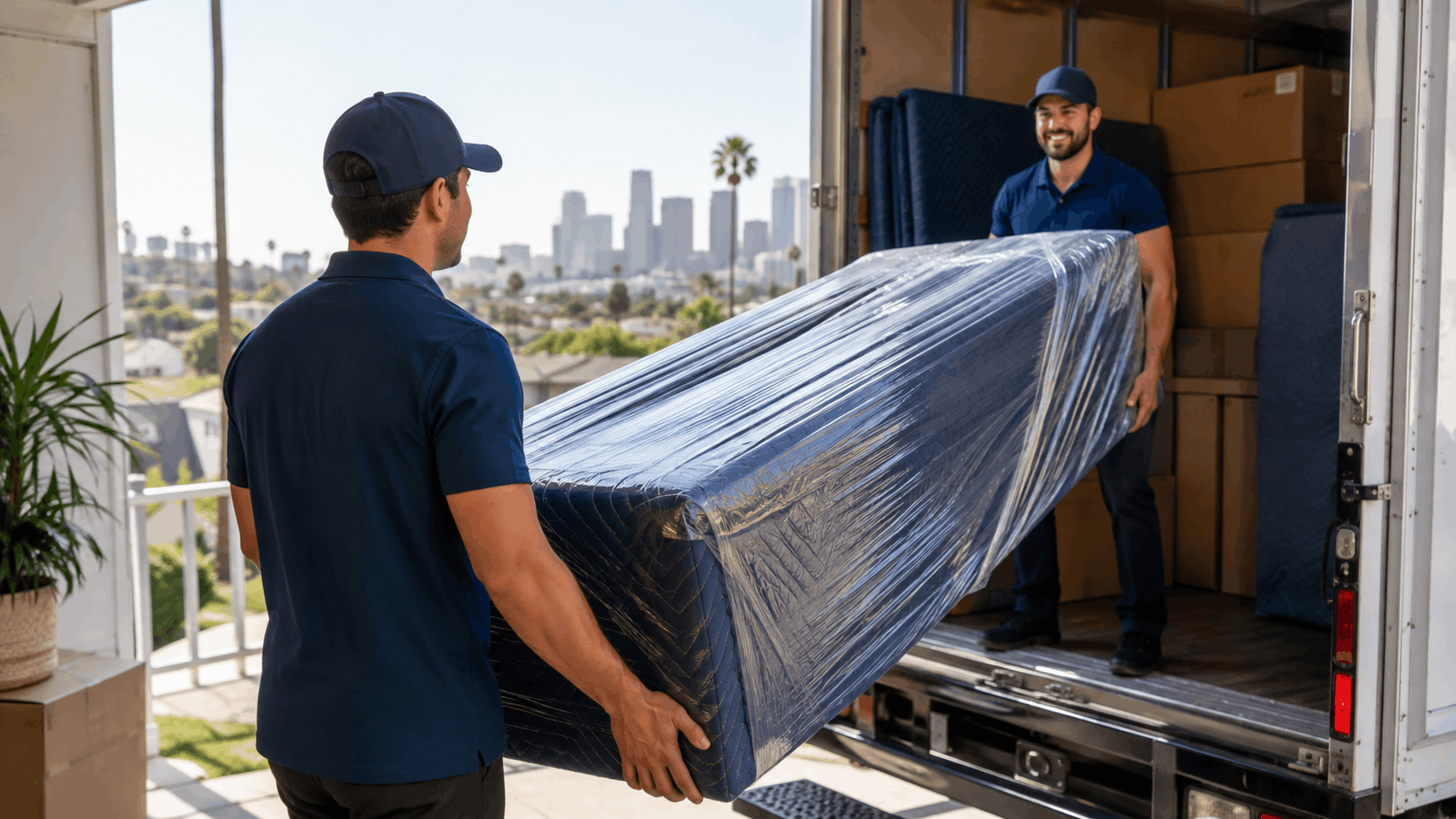
Need Help in Los Angeles?
Popeye Moving & Storage serves Los Angeles and all of Los Angeles County.
Questions to Ask Before You Book an LA Mover
A good quote call is a two-way conversation. The right questions reveal whether a company is legitimate long before moving day. Use this hiring movers checklist on every call.
These questions for movers each tie back to verification and protection. How a company answers tells you almost everything.
Can You Share Your CAL-T or USDOT Number?
Start by asking for the numbers. For a local move, request the CAL-T number. For an interstate move, ask for the USDOT number. A legitimate company gives these up without hesitation.
Get the numbers in writing, not just spoken over the phone. Then confirm them independently using the BHGS license lookup or the FMCSA SAFER system. Do not rely on the company's word alone.
If a mover stalls, changes the subject, or claims it does not need a number, end the call. Every licensed household goods carrier in California has one and can share it. Silence on this question is an answer in itself.
This single step filters out most illegal operators. The ones who pass are worth a closer look.
What Valuation Coverage Do You Offer?
Valuation coverage decides how much you get back if something is damaged or lost. There are two main levels, and you should understand both before you choose. The difference can be thousands of dollars.
Released value protection is the basic, no-cost option. It pays a small amount per pound, often around 60 cents, no matter what the item is worth. A dropped 10-pound electronic would pay about six dollars under this level, which rarely covers the real loss.
Full value protection costs more but pays to repair or replace items at their actual value. For homes with valuable furniture, art, or electronics, this level makes far more sense. Ask what each option costs and what it covers.
A good mover explains both clearly and helps you pick the right level for your belongings. If a company glosses over valuation, push for details before you sign.
How Do You Handle Damage Claims?
Even careful moves can go wrong, so ask how the company handles damage claims. A clear claims process is a sign of a company that stands behind its work. Vague answers suggest they hope you never file one.
Ask how you report damage, what documentation you need, and how long resolution usually takes. A reasonable process involves reporting the damage promptly, submitting photos and inventory records, and getting a response within a set window, often a few weeks.
Find out who handles the claim and whether it goes through their insurance carrier. A company that documents your move well makes claims easier because the records already exist. Good paperwork works in your favor here.
If a mover cannot describe its claims process, that is a warning. The time to learn how claims work is before you book, not after a dish shatters.
Do You Use Employees or Day Laborers?
Ask whether the crew is made up of trained employees or day laborers picked up for the job. This matters more than it sounds. It affects both the quality of the move and who is liable if something goes wrong.
Trained crews know how to protect floors, wrap furniture, and lift safely. Day laborers hired for a single job may lack that training, which raises the risk of damage and injury. Experience shows in how a crew handles your belongings.
Liability is the bigger issue. If a company subcontracts to uninsured workers, coverage can get murky when there is a claim. An injured day laborer on your property could become your problem if the company is not covering them.
Ask directly whether the crew is insured and employed by the company. A trained, insured crew keeps the move smooth and the liability where it belongs. Our teams are our own people, not day-of hires.
Final Thoughts
Hiring a mover in Los Angeles comes down to a few minutes of homework. Confirm the license, the bond, and the insurance before you sign, and most scams fall away. The Silver Lake homeowner lost her belongings because no one told her these checks existed.
Bonded protects you from dishonest work. Insured protects you from damage and injury. Licensed means the state can hold the company accountable. A real mover carries all three and hands you the numbers to prove it.
Every LA neighborhood adds its own challenges, from Koreatown high-rises to the hills of Silver Lake and the historic homes of West Adams. The right coverage turns those challenges into a routine day of work rather than a costly mess.

Frequently Asked Questions
- What does it mean when a Los Angeles mover is bonded and insured?
- Bonded means the company carries a surety bond that pays you if it fails to finish a job or a crew member acts dishonestly, such as theft. Insured means the company carries policies that cover damage to your belongings and injuries to workers during the move. Together they protect you from both dishonest behavior and accidental loss. A legitimate LA mover holds both, plus a valid state license.
- How do I verify a moving company's license in California?
- For in-state moves, ask for the company's CAL-T number and search it on the BHGS license lookup to confirm active status. For interstate moves, use the FMCSA SAFER system to check the USDOT number, operating authority, and insurance on file. Confirm the business name and address match the records. This free check takes about fifteen minutes and filters out most illegal operators.
- What is a CAL-T number and why does it matter?
- A CAL-T number is the household mover permit number, now issued and overseen by the Bureau of Household Goods and Services, held by companies that move household goods within the state. It proves the mover meets state requirements for bonding, insurance, and safe operation. When you look up a CAL-T number, an active status confirms the mover legally exists and can be held accountable. A company without one is operating illegally in California.
- Do I need a USDOT number check for a local LA move?
- For a move that stays inside California, the CAL-T number from BHGS is what you verify. A USDOT number applies to interstate moves regulated by the federal FMCSA. If you are moving from Los Angeles to another state, check both the CAL-T and USDOT records to confirm the company has authority for the type of move you need.
- What insurance should a mover carry for my belongings?
- A legitimate mover carries cargo insurance for your household goods, general liability for damage to property like doorframes and walls, and workers' compensation for the crew. Cargo coverage pays for lost or damaged items, while liability and workers' comp keep other risks off your shoulders. Ask for the actual coverage limits, since state minimums may not fully cover high-value belongings.
- How much does it cost to hire bonded and insured movers in Los Angeles?
- Local LA moves are often priced hourly, commonly ranging from about $120 to $200 per hour for a two- or three-person crew, depending on truck size and season. Larger homes or long-distance jobs are usually quoted by weight and distance. Factors like stairs, hillside access, high-rise elevators, and packing services affect the total. Ask for a written estimate so the price is clear up front.
- What are the biggest signs of a moving scam in LA?
- The clearest red flags are no written estimate, cash-only demands, large upfront deposits, and unmarked or rented trucks with no logo. Watch for companies that refuse to share a CAL-T or USDOT number or a physical address. A price that jumps on moving day, or a crew that holds your load hostage until you pay more, points to an illegal operator you should avoid.
- Can building management require proof of insurance from my mover?
- Yes. Many Los Angeles high-rises and HOA communities require a certificate of insurance before they allow a move. The COI often must name the building as additionally insured and list specific coverage limits. Buildings in Downtown, Koreatown, Playa Vista, and Warner Center commonly enforce this. Tell your mover early so the correct certificate is ready and your move is not delayed at the door.
- What should I do if a mover damages my property?
- Document the damage right away with photos and note it on the inventory list and bill of lading before the crew leaves. Report the damage to the company promptly and ask about its claims process. An insured mover files the claim through its coverage and works toward a resolution, usually within a few weeks. Keeping your paperwork and photos organized makes the claim smoother and fairer.
- How far in advance should I book verified movers in Los Angeles?
- Book at least two to four weeks ahead for most moves. End-of-month dates and the summer season fill up early, so aim for four to six weeks during those busy windows. Last-minute moves are possible but leave fewer verified options and higher prices. Booking early gives you time to check credentials and secure a licensed, bonded, and insured crew for your preferred date. Protecting your move starts with a mover you can verify. Popeye Moving & Storage Co. operates as a licensed, bonded, and insured company across Los Angeles, and we welcome you to confirm every credential before you book. Call us or reach out through our contact page for a free consultation and a clear written estimate. Let our team handle your move with the coverage and care your belongings deserve.
Popeye Moving & Storage Co. Team Team
Licensed moving and storage professionals serving Los Angeles and Los Angeles County.
Licensed in California · License #CAL T 189749 | USDOT 1472924 | MC 498816C
Why trust Popeye Moving & Storage?
Founded in 1994, Popeye Moving & Storage is a licensed and insured moving and storage service serving Los Angeles and Los Angeles County. All content is reviewed by our licensed technicians.

Need Help in Los Angeles?
Popeye Moving & Storage serves Los Angeles and all of Los Angeles County.
Related Articles
CPUC License Lookup Moved: How to Verify an LA Mover in 60 Seconds
Learn how LA residents can verify any mover's state license in about a minute, spot moving scam red flags, and hire a licensed, accountable Los Angeles mover.
Licensed California Movers Verification: How to Confirm Before Booking
Learn how to verify a mover's state license before booking in Los Angeles, spot unlicensed mover red flags, and confirm the paperwork a legitimate California mover must provide.

South Park DTLA Movers: High-Rise Building COI and Elevator Reservations
A local guide to South Park DTLA high-rise moves, covering COI requirements, freight elevator reservations, building rules, and how to plan a move near L.A. Live.