How-To Guides
LADOT Moving Truck Parking Permits: Complete Application Guide
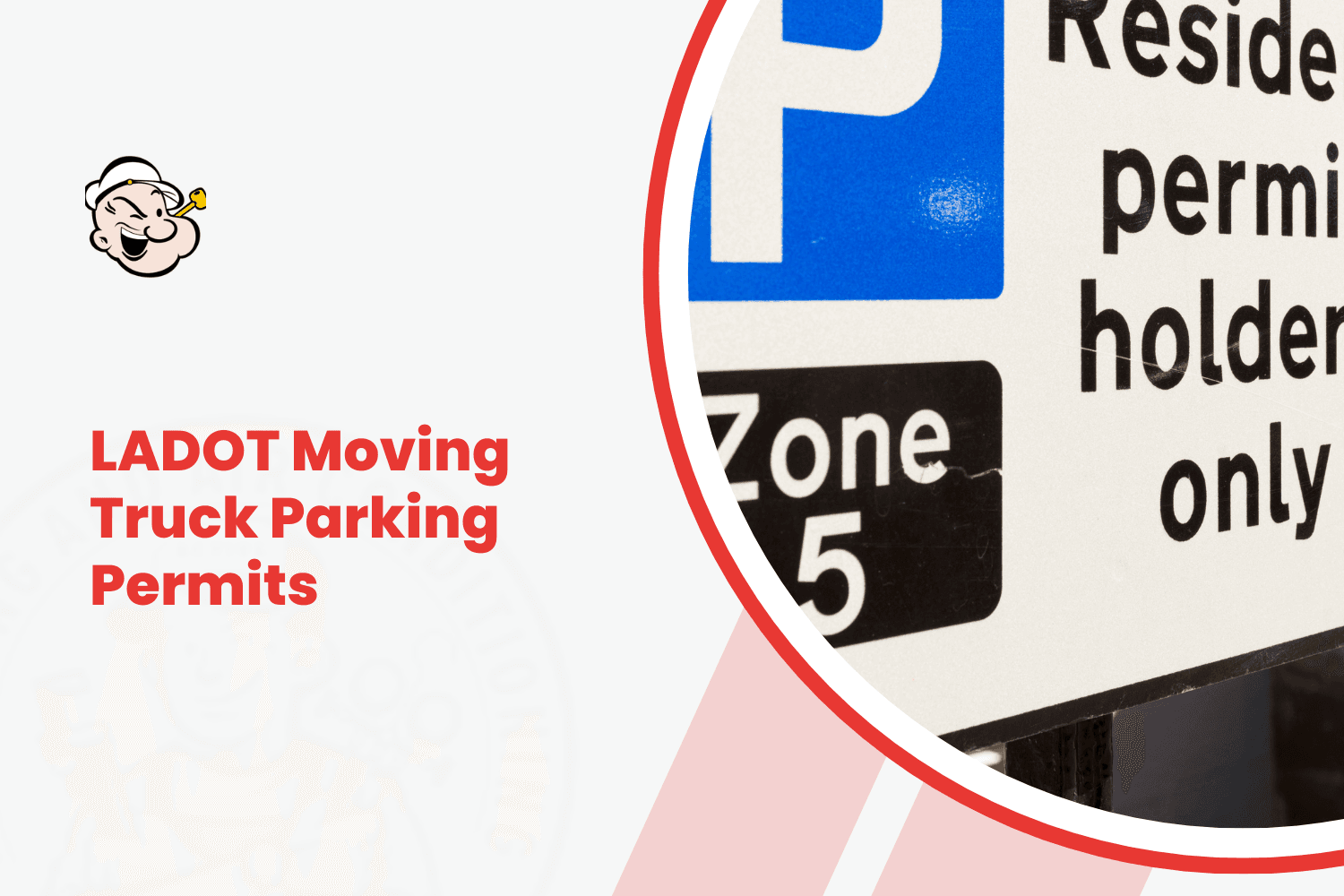
Key Takeaways
- LADOT temporary no-parking signs reserve legal curb space for moving trucks and must be posted in advance exactly as LADOT instructs.
- Skipping the permit risks parking tickets, towing and impound fees, and costly crew downtime.
- LADOT asks for at least five working days of notice, with extra lead time sensible during summer and month-end peaks.
- The oversize vehicle parking permit is published at $10 per day for up to three days, but it does not reserve a space; only the no-parking signs do.
- Neighborhoods like Silver Lake, Koreatown, and the Hollywood Hills present unique parking challenges that require advance planning.
- Popeye Moving & Storage Co. handles permit applications, sign posting, and on-site problem solving as part of their moving service.
- Common mistakes that void permits include late sign posting, incorrect addresses, and overlapping with street sweeping schedules.
- Always have a backup parking plan and communicate with neighbors before moving day to avoid last-minute surprises.
In This Article
Imagine pulling up to a narrow side street in Silver Lake on a Saturday morning with a 26-foot moving truck, only to find every inch of curb space taken by parked cars. There is no room to double-park, the neighbors are not happy, and the movers are now standing around charging by the hour. This exact scenario plays out across Los Angeles more often than most people realize - and it is almost always preventable with a single piece of paperwork from LADOT.
This article breaks down everything involved in getting an LADOT moving truck parking permit - the different permit types, the step-by-step application process, current fees, processing timelines, restricted areas, and the neighborhood-specific headaches that make LA moves uniquely challenging. The information here comes from years of hands-on experience. Popeye Moving & Storage Co. in Los Angeles has handled hundreds of permitted moves in neighborhoods from Echo Park to Century City, and the lessons learned on those streets are baked into every section below.
Whether you are a renter leaving a Koreatown walk-up or a homeowner relocating from a hillside property in Mount Washington, this guide gives you the information you need to avoid tickets, towing, and costly delays on moving day.

What Is an LADOT Moving Truck Parking Permit and Why Do You Need One?
An LADOT temporary no-parking permit is a document issued by the Los Angeles Department of Transportation that authorizes a moving company or resident to temporarily reserve curb space on a public street. The reserved area gives a moving truck a legal place to park, load, or unload without competing for spots with every other car on the block.
Without an oversize vehicle permit or temporary no-parking permit in Los Angeles, moving day becomes a gamble. A truck circling the block wastes time, and double-parking on a busy street like Vermont Avenue or Hyperion invites tickets and towing. The table below summarizes the difference between having a permit and going without one.
| Scenario | With LADOT Permit | Without Permit |
|---|---|---|
| Curb space | Reserved and legally protected | First-come, first-served - no guarantee |
| Parking citations | Other vehicles in zone can be ticketed/towed | Your truck risks parking tickets |
| Towing risk | Vehicles ignoring signs can be towed | Your truck may be towed, with impound fees |
| Time lost | Crew starts on schedule | Crew waits, hourly labor costs climb |
| Neighbor relations | Official signs set expectations | Double-parking blocks driveways, creates conflict |
How Temporary No-Parking Permits Work in Los Angeles
Once LADOT approves a temporary no-parking request, the applicant receives official signs that must be posted along the reserved curb space in advance, following the posting instructions LADOT issues with them. These signs specify the date, time window, and the block face where parking is prohibited. Once properly posted, vehicles parked in the zone during the restricted time can be cited or towed by LADOT parking enforcement.
The permit legally blocks off a section of street parking for a set number of hours on a specific day. Most residential moves reserve two to four parking spaces worth of curb - roughly 40 to 80 feet - which is enough for a standard moving truck. The signs act as both a legal notice and a practical signal to neighbors that they need to move their cars before the posted date.
What Happens If You Skip the Permit
Skipping the permit is a common and expensive mistake. LA parking tickets for moving truck violations are costly, and a tow adds impound fees plus storage charges for every day the vehicle sits in the lot.
On narrow residential streets in Los Feliz or Hancock Park, double-parking a large truck blocks the entire lane. That creates a traffic hazard and draws attention from parking enforcement fast. Meanwhile, the moving crew is standing idle, and hourly labor costs keep adding up. A permit suddenly looks like a bargain compared to that math.
When a Permit Is Not Required
Not every move needs a city permit. Homes with a private driveway long enough to park a moving truck - common in neighborhoods like Encino and Sherman Oaks - can often skip the LADOT application entirely. The same goes for apartment buildings or commercial properties with a loading dock or dedicated freight entrance.
Newer residential complexes along Wilshire Boulevard and many DTLA high-rises have designated move-in zones managed by building management. In those cases, the building coordinates the logistics, and a separate city permit is not required. Always check with the property manager before assuming, though - some buildings still require a street permit if their loading area is too small for larger trucks.
Get Your Free Quote
Tell us about your move and we'll get back to you fast.
Types of LADOT Permits for Moving Day
LADOT offers several permit categories that apply to moving situations. Picking the right one depends on the type of move, the truck size, and the location. Applying for the wrong permit wastes time and money, so it is worth sorting this out early. The table below outlines the three most relevant permit types for moving day in Los Angeles.
| Permit Type | Best For | Typical Use Case |
|---|---|---|
| Temporary No-Parking | Residential street moves | Reserving curb space in Koreatown, Highland Park, Westlake |
| Oversize Vehicle | Large trucks on restricted streets | 26-foot trucks on narrow hillside roads in Laurel Canyon or Hollywood Hills |
| Special/Commercial | Office and high-rise relocations | Business moves along Figueroa, Broadway DTLA, Century City office parks |
Temporary No-Parking Permits for Residential Moves
The standard residential moving permit is the most common type. It reserves curb space on a public street for a specific date and time window. This is the permit most renters and homeowners need in neighborhoods like Koreatown, Highland Park, and Westlake - places where street parking is the only option and competition for spots is fierce.
A curb reservation permit covers a designated number of linear feet along one side of the street. For a typical local residential move, two to four spaces is usually enough. The permit specifies the exact block, side of the street, and hours of coverage.
Oversize Vehicle Permits for Large Moving Trucks
Some streets in Los Angeles have width or length restrictions that require a separate oversize vehicle permit from LADOT. This comes into play most often on designated hillside streets in areas like Laurel Canyon, Mount Washington, and the Hollywood Hills, where roads barely accommodate two passing cars, let alone a full-size moving truck.
Commercial trucks carrying a logo or longer than 22 feet may not park overnight on Los Angeles city streets, so a move that keeps the truck in place overnight needs an oversize vehicle parking permit, published at $10 per day for up to three days. That permit covers the truck's size and overnight parking but does not reserve a space - only the no-parking signs do - so many moves need both. Crews handling specialty moves in these areas often need to plan the route in advance to confirm the truck can physically make it to the property.
Special Permits for Commercial and High-Rise Moves
Commercial relocations in business districts add layers of complexity. A move along Figueroa Street, Broadway in DTLA, or through Century City office parks may require coordination with building management, freight elevator reservations, and separate loading zone permits from LADOT or the building itself.
For office and business moves, the DTLA loading zone permit process often overlaps with metered parking zones and rush-hour no-stopping restrictions. Some commercial corridors require a special event-style permit if the truck will be parked for an extended period during business hours. Coordinating all of these pieces is where working with an experienced Los Angeles moving company pays off.

Need Help in Los Angeles?
Popeye Moving & Storage serves Los Angeles and all of Los Angeles County.
Step-by-Step LADOT Moving Permit Application Process
The LADOT permit application is straightforward once you know what to gather and where to submit it. Applications can be filed online, by phone on (213) 485-2298 between 8 a.m. and 12:30 p.m. Monday to Friday, or in person at a DOT Public Service Center. The process involves providing specific details about the move location, truck size, and desired date, then waiting for approval before posting the official no-parking signs.
- Gather all required details about the move location, truck, and date
- Submit the application online, by phone or in person at least five working days before the move
- Pay the permit fee at the time of submission
- Receive the approved permit and official no-parking signs
- Post the signs along the reserved curb space exactly as LADOT's instructions specify
Gathering the Information You Need Before Applying
Before starting the application, have the following ready:
- Exact street address of the move (origin or destination, whichever needs the permit)
- Nearest cross streets on both sides
- Preferred date and time window for the reserved space
- Moving truck length, width, and height
- Number of curb spaces or linear feet needed
- A simple site diagram if the block has unusual features like a dead end or median
Popeye Moving & Storage Co. in Los Angeles typically helps customers gather this information during the booking process. Since the crew already knows what size truck the job requires and has likely worked the same block before, they can provide the exact dimensions and suggest the best curb section to reserve.
Submitting the Application Online or In Person
LADOT's online portal is the fastest way to file. The site walks applicants through each field, and payment is processed electronically. For those who prefer paper, the LADOT permits office accepts in-person applications during business hours.
LADOT asks for at least five working days before the move date. During peak moving season - June through September - and around month-end dates, demand is higher, so filing earlier than the minimum is safer. A late application risks denial, and there is no way to rush a permit that was never submitted on time.
Posting the No-Parking Signs Correctly
This step trips up more people than any other part of the process. The approved no-parking signs must be posted along the reserved curb space ahead of the permitted start time, exactly as LADOT's instructions specify. Signs need to be placed at a readable height and spaced so that anyone parking on the block can clearly see them.
LADOT's instructions set how many signs are needed and where they go. If signs are placed too low, on the wrong side of the street, or posted later than LADOT requires, the permit's enforcement authority may be voided. That means LADOT parking enforcement will not tow vehicles blocking the space, and the moving crew is stuck without a loading zone.
LADOT Moving Permit Fees and Processing Times
Knowing the cost and timeline helps with budgeting and scheduling. LADOT permit fees are relatively modest compared to the cost of parking tickets and towing, but they do vary based on the number of spaces reserved and the duration. Processing times also shift depending on the season and application volume.
Current Fee Schedule for Moving Truck Permits
LADOT charges a non-refundable fee for temporary no-parking signs. Fee figures published around the web vary widely and are unreliable, so confirm the current amount with LADOT. The oversize vehicle parking permit is a separate charge, published at $10 per day for up to three days.
LADOT sets the fee, so the most reliable figure is always the one LADOT quotes for the specific request. Always check the LADOT website for the most current pricing before applying.
How Long Approval Takes and Rush Options
LADOT's stated minimum is five working days for the no-parking signs, and online or mailed oversize vehicle permit applications can take up to two weeks, while in-person applications are issued faster. During summer months and the last week of each month - when lease cycles drive a spike in moves - demand is higher. Filing early is the single best way to avoid a scheduling headache.
Rush or expedited processing is limited and not always available. LADOT does not guarantee same-week turnaround, and last-minute requests during peak periods are frequently denied. If a move date shifts, contact LADOT immediately to request a date change rather than filing a brand-new application from scratch.

Neighborhood-Specific Parking Challenges Across Los Angeles
Los Angeles is not one city when it comes to parking - it is dozens of micro-environments, each with its own quirks. A permit strategy that works perfectly in a flat, wide-street neighborhood like Palms might fall apart on a steep, winding road in the Hollywood Hills. Here is what experienced movers know about the trickiest areas in town.
Tight Streets in Silver Lake, Echo Park, and Los Feliz
These eastside neighborhoods are some of the most challenging for moving trucks in all of LA. The streets are narrow, hilly, and lined with parked cars bumper to bumper.
- Silver Lake: Streets off Sunset Boulevard near the reservoir have barely enough room for two-way traffic. Moving truck parking in Silver Lake requires a permit almost every time.
- Echo Park: The narrow streets around Echo Park Lake and up toward Elysian Park create tight turning radii that limit truck size. A 26-foot truck on some of these blocks is a squeeze.
- Los Feliz: Micheltorena Street's steep grade is notorious. The winding roads off Glendale Boulevard add to the challenge, especially for moving day logistics.
For apartment moves in these areas, a permit is not optional - it is the difference between a three-hour move and an all-day ordeal.
Permit Parking Districts in Koreatown, Hollywood, and Westwood
Preferential parking districts layer another level of restriction on top of normal street rules. Parts of Koreatown are covered by preferential parking restrictions. Hollywood has similar restrictions near major studios and tourist corridors. And near UCLA in Westwood, moving permits must account for the campus-area parking restrictions that dominate the surrounding blocks.
- Koreatown: Dense population, high-rise apartments, and almost zero open curb space. Permit parking enforcement is aggressive here.
- Hollywood: Parking restrictions near Highland and Vine, plus film shoot permit conflicts, can complicate moving day plans.
- Westwood: Between UCLA events and resident-only zones, a moving truck cannot circle the block and hope for a spot. A permit is the only reliable option.
Downtown LA Loft Districts and High-Rise Corridors
DTLA moves come with a unique set of demands that go beyond curb space. Freight elevator scheduling at buildings on Spring Street or in the Arts District often needs to be booked weeks in advance. Metered parking zones along Broadway require permits that coordinate with LADOT meter operations.
- Arts District: Loading docks are limited and shared among multiple tenants. First-come access means a permit and early arrival are both necessary.
- Grand Avenue and Hope Street: Rush-hour no-stopping zones from 7-9 AM and 4-7 PM eliminate parking options during the busiest parts of the day.
- Spring Street lofts: Many converted buildings have no dedicated loading areas, so commercial moving crews rely entirely on street permits.
Need Help in Los Angeles?
Popeye Moving & Storage serves Los Angeles and all of Los Angeles County.
Common Mistakes That Delay or Void Your LADOT Permit
Even with the best intentions, small errors in the permit process can cause big problems on moving day. These are the most frequent mistakes Popeye Moving & Storage Co. has seen customers and other moving companies make over years of working across Los Angeles.
Applying Too Late or With Incorrect Address Details
The most common problem is timing. Filing with less than LADOT's five working days of notice - especially during summer - risks the request not being processed in time. The second most common issue is address errors. A typo in the street number or listing the wrong cross streets can result in a permit that does not match the actual location.
LADOT checks every application against their GIS system. If the address does not align with a valid block face in their database, the application gets flagged and kicked back. Double-checking the address against Google Maps and confirming the nearest cross streets before submitting saves days of back-and-forth.
Not Posting Signs Early Enough or in the Right Spots
Posting signs later than LADOT's instructions require can void the permit entirely. If LADOT enforcement shows up and confirms the signs were posted late, they will not tow vehicles blocking the reserved space.
Other common sign posting mistakes include placing signs too low on a pole or tree where they are hidden by parked cars, not posting enough signs per block face, or accidentally placing signs on the wrong side of the street. Each of these errors weakens the permit's enforcement authority and can leave the moving crew without a place to park.
Ignoring Street Sweeping and Restricted Zones
A moving permit does not override other parking restrictions. Red curb zones, fire hydrant clearances within 15 feet, bus stop areas, and street sweeping schedules all still apply. If the permitted zone overlaps with a Tuesday street sweeping schedule, the moving truck still needs to be gone during sweeping hours.
Some streets near schools in neighborhoods like Atwater Village or Mid-City have restricted hours during drop-off and pick-up times. These windows - typically 7-8 AM and 2-3 PM - conflict with common moving schedules. Checking for school zone restrictions before choosing a permit time window avoids a frustrating conflict on the day of the move.

How Popeye Moving and Storage Co. Helps With the Permit Process
Dealing with LADOT paperwork while also packing boxes and coordinating utilities is a lot for anyone. That is where working with a local Los Angeles moving company that knows the permit process inside and out makes a real difference. Popeye Moving & Storage Co. treats permit coordination as a standard part of the moving plan - not an afterthought or an upsell.
Permit Coordination as Part of the Moving Plan
When a customer books a move through Popeye Moving & Storage Co., the team handles the LADOT permit application from start to finish. That includes measuring the truck length for the specific job, identifying the best curb section to reserve based on the property layout, and timing the sign posting to meet LADOT's posting requirements.
Years of residential moves across Los Angeles mean the crew already knows which blocks in Highland Park have posted permit parking, which Echo Park streets are too narrow for a 26-footer, and which Koreatown buildings share alley access that might work as a backup loading spot. That kind of street-level familiarity is hard to replicate with a Google search.
On-Site Problem Solving When Parking Plans Change
Even the best-planned permit can run into trouble. A car owner ignores the posted signs and leaves their vehicle in the reserved zone. A utility company tears up the street without notice. A film crew takes over the block for a shoot that was permitted after the moving permit was filed.
Experienced local movers adapt because they have seen it all before. Popeye's crews know alternate loading spots on nearby blocks, can coordinate a rapid call to LADOT enforcement for a tow, and carry enough equipment to shuttle items from a farther staging point if needed. That on-the-ground problem-solving ability is what separates a company that has worked every corner of LA from one that is new to the area.
Need Help in Los Angeles?
Popeye Moving & Storage serves Los Angeles and all of Los Angeles County.
Tips for a Smooth Moving Day Even With a Permit in Hand
Getting the permit approved is only half the battle. The other half is making sure everything runs smoothly once the truck arrives. These tips come directly from real moves across Los Angeles - the kind of details that do not show up in the LADOT application but make all the difference on the ground.
Arrive Early and Document the Permitted Zone
Show up before the permitted window starts. Walk the block and take clear photos of every posted sign, including their placement height and spacing. Photograph any vehicles still parked in the zone - capture their license plates and the time.
This documentation serves two purposes. First, it gives LADOT enforcement the information they need to issue citations or authorize a tow if a car does not move. Second, it protects the permit holder if any disputes arise later about whether the signs were properly posted. A few minutes of photos can save hours of headaches.
Have a Backup Parking Plan Ready
Even with a valid permit, things go sideways. The backup plan might be a nearby alley, a sympathetic neighbor's driveway, or a commercial loading zone on the next block. In dense areas like Mid-Wilshire or the Fairfax district, knowing these options in advance can save the entire move.
Popeye Moving & Storage Co. crews do a pre-move site check for exactly this reason. They scout the block, note alternate loading spots, and confirm that the primary permit location is realistic for the truck size. For moves involving full-service packing and large trucks, the site check is especially valuable because there is more at stake if the plan falls through.
Communicate With Neighbors Before Moving Day
A quick knock on the door or a friendly note taped to the building entrance goes a long way. Let neighbors know the date and time window, point out the posted signs, and ask them to move their cars if possible. In close-knit neighborhoods like Atwater Village or Leimert Park, this courtesy almost always gets results.
Most people are happy to cooperate when they get a heads-up instead of waking up to a tow truck. A personal touch costs nothing and often clears the permitted zone faster than waiting for LADOT enforcement to respond. It also starts the relationship with new neighbors on the right note - something that matters in a city where you might share a street with the same people for years.

Final Thoughts
An LADOT moving truck parking permit is one of those small steps that prevents a cascade of expensive problems on moving day. The application process is manageable - especially with a local moving company handling the details - and the cost is a fraction of what tickets, towing, and crew downtime would add up to.
For anyone planning a move in Los Angeles, the advice is simple: apply early, post signs correctly, and have a backup plan. And if the permit process feels like one too many things on the to-do list, reach out to Popeye Moving & Storage Co. to let a team that has done this hundreds of times handle it. The crew knows every neighborhood, every tricky block, and every shortcut in the LADOT system - and they are ready to put that experience to work on your move.
Frequently Asked Questions
- How far in advance should I apply for an LADOT moving truck parking permit?
- LADOT asks for at least five working days before the scheduled move date. During peak season - particularly June through September and the last few days of any month - demand is higher, and online or mailed oversize vehicle permit applications can take up to two weeks. Filing two full weeks early gives a comfortable buffer and avoids the stress of a denied or delayed application when the moving truck is already booked.
- How much does an LADOT moving permit cost?
- LADOT charges a non-refundable fee for a temporary no-parking reservation, and fee figures published around the web vary widely, so confirm the current amount with LADOT. The oversize vehicle parking permit is a separate charge, published at $10 per day for up to three days. Check the LADOT website directly for the most up-to-date fee schedule before applying.
- Can my moving company apply for the LADOT permit on my behalf?
- Yes, many Los Angeles moving companies handle the permit application as part of their service. Popeye Moving & Storage Co. regularly files LADOT permits for clients, managing everything from address verification to sign posting. The customer typically just needs to authorize the application and confirm the move address. This saves time and reduces the chance of errors that could delay approval.
- What do I do if a car is still parked in my permitted zone on moving day?
- Call LADOT parking enforcement and provide the permit number, the vehicle's license plate, and the exact location. Request a citation and tow. Response times vary depending on the day and district workload - sometimes 30 minutes, sometimes over an hour. Having a backup loading spot scouted in advance is always smart in case enforcement takes longer than expected to arrive and clear the space.
- Do I need a permit if my building has a loading zone or driveway?
- Private driveways and building loading docks generally do not require a city permit for moving truck access. However, the building manager may have separate reservation requirements, particularly in DTLA lofts, newer Wilshire corridor complexes, and large apartment communities . Always confirm with the property management office before assuming no permit is needed - some buildings charge their own move-in fee or require advance scheduling.
- Can I get an LADOT moving permit for a weekend move?
- Yes, LADOT issues permits for weekend moves. LADOT's sign posting instructions still apply, so check how far ahead the signs must go up and plan the posting day around the weekend. Weekend moves are popular in Los Angeles, so applying early is especially important. Processing times do not speed up just because the move falls on a Saturday or Sunday.
- Are there streets in LA where moving truck permits are not allowed?
- Certain arterial roads, bus-only lanes, and peak-hour restricted streets may not qualify for temporary no-parking permits. Sections of Wilshire Boulevard, Olympic Boulevard, and other major corridors fall into this category. LADOT reviews each application based on the specific block and may deny permits where a parked moving truck would create a traffic safety issue or violate existing transit lane restrictions.
- What size moving truck requires a separate oversize vehicle permit?
- Commercial trucks carrying a logo or longer than 22 feet may not park overnight on Los Angeles city streets without an oversize vehicle parking permit, published at $10 per day for up to three days. That permit does not reserve a space, so a move usually needs the no-parking signs as well. When booking a move in a hillside area, confirm the truck size with both the moving company and LADOT to avoid a last-minute permit issue.
- Can I cancel or reschedule my LADOT moving permit?
- LADOT describes the fee for temporary no-parking signs as non-refundable, so confirm the date before applying. If a schedule change becomes apparent, contact LADOT as soon as possible to ask what options exist for the new date.
- Does an LADOT moving permit guarantee I will not get a parking ticket?
- The permit protects only the reserved curb zone during the approved time window. If the moving truck parks outside the designated area, blocks a fire hydrant, occupies a bus stop, or stays past the approved hours, parking citations can still be issued. Staying within the boundaries of the permit - in both location and time - is the only way to avoid tickets on moving day.
P
Popeye Moving & Storage Co. Team Team
Licensed moving and storage professionals serving Los Angeles and Los Angeles County.
Licensed in California · License #CAL T 189749 | USDOT 1472924 | MC 498816C
Why trust Popeye Moving & Storage?
Founded in 1994, Popeye Moving & Storage is a licensed and insured moving and storage service serving Los Angeles and Los Angeles County. All content is reviewed by our licensed technicians.

Need Help in Los Angeles?
Popeye Moving & Storage serves Los Angeles and all of Los Angeles County.
Related Articles
How-To Guides
Beverly Hills Moving Permits and Restrictions: What You Need Before Moving Day
Beverly Hills moving permits, time restrictions, and street-by-street rules explained - what you need before moving day to avoid fines, towing, and delays.
How-To Guides
Moving to Santa Monica: Parking Rules, Street Restrictions, and Building Access
Everything new Santa Monica residents need to know about permit parking zones, moving truck restrictions, building elevator rules, and city permits before moving day.
Tips & Advice
Moving With Pets in Los Angeles: A Neighborhood-by-Neighborhood Guide
Moving with a dog or cat in LA? From leash laws and parks in Burbank and Long Beach to pet-friendly buildings in Downtown LA and Pasadena—what to plan before move day.